
GLP-1 weight loss results are, by a wide margin, the largest average effect of any FDA-approved obesity treatment short of surgery: pivotal trials for drugs like Wegovy and Zepbound show roughly 15% to 21% of starting body weight lost over 68 to 72 weeks. That’s a real, well-documented clinical effect, not marketing language, and it’s the reason this drug class has reshaped obesity medicine faster than almost any other development in decades.
It’s also not the whole story. The trial averages above come from people who stayed in a closely monitored research study, and real-world results tend to run lower once cost, side effects, and inconsistent use enter the picture. These medications require an ongoing prescription, carry a genuine side-effect profile that includes a boxed warning, and for most people, the benefit fades within months of stopping. None of that makes the class ineffective. It does mean the honest answer to “do GLP-1 drugs work for weight loss” is “yes, substantially, for as long as you keep taking one, with trade-offs worth understanding before you start.”
This guide covers the entire GLP-1 and dual GLP-1/GIP class as it stands in October 2026: semaglutide (Ozempic, Wegovy, Rybelsus), tirzepatide (Mounjaro, Zepbound), liraglutide (Saxenda), the newly approved oral option orforglipron (Foundayo), and what remains investigational, including retatrutide. It’s built from current FDA prescribing information, the pivotal trials behind each approval, government and institutional sources on safety and coverage, and current pricing and policy reporting, not from a hands-on test of any product. Nothing here is personalized medical advice, and nothing in this guide is a reason to start, stop, or change a prescription medicine without a clinician who knows your health history.
Think of this as the central hub for every GLP-1-related question on this site. If you came here wondering specifically about Wegovy’s price, Mounjaro versus Zepbound, or what happens to your weight after you stop, you’ll find a solid, evidence-based answer in the relevant section below, along with a pointer to a more focused guide on that exact question elsewhere on this site. If you’re earlier in the research process and mainly trying to understand the whole category before narrowing in on one drug or one decision, read straight through; the sections build on each other, starting with the biology, moving through the evidence and safety picture, and ending with the practical cost, access, and decision-making questions most readers actually came here to resolve.
GLP-1 Weight Loss at a Glance
Start with the short version, then use the rest of this guide to check it against the evidence, the safety picture, and your own situation.
The Direct Answer and How Sure We Are
Two different questions are worth separating here: what the research shows, and how confident that research actually lets us be.
What the Evidence Shows at a Glance
GLP-1 and GLP-1/GIP medications produce the largest average weight loss of any non-surgical obesity treatment, with pivotal trials reporting roughly 15% of body weight lost with semaglutide (Wegovy) and roughly 21% with tirzepatide (Zepbound) over 68 to 72 weeks, alongside a real and sometimes serious side-effect profile. Weight tends to return within a year of stopping, cost without insurance commonly runs $300 to $1,300 a month depending on the drug and program, and the class carries a boxed warning along with common digestive side effects.
How Confident We Are and Why
We’re highly confident in the general size and direction of the effect, since it’s been demonstrated across multiple large, randomized, FDA-reviewed trials for more than one drug in this class, not a single study. We’re less confident about exact numbers for the newest entrants, like orforglipron, where the published trial data is still recent and some figures in circulation vary slightly by source; we flag that explicitly where it comes up. We’re also confident that the biggest open question for most readers isn’t “does this work,” but “is it worth the cost, the side effects, and the commitment to ongoing treatment for my own situation,” which is a judgment call this guide can help inform but can’t make for you.
How We Researched and Organized This Guide
A topic this wide needs a clear framework before diving into any single drug’s numbers.
The Sources and Evidence Hierarchy We Used
This guide draws on FDA prescribing information for each approved product, the peer-reviewed pivotal trials behind each approval (the STEP program for semaglutide, SURMOUNT for tirzepatide, SCALE for liraglutide, and ATTAIN for orforglipron), government and institutional sources including the National Institute of Diabetes and Digestive and Kidney Diseases (NIDDK) and the Centers for Medicare & Medicaid Services (CMS), and current manufacturer pricing pages and policy reporting for cost and access facts. Manufacturer claims and marketing pages were used only to verify product facts like dosing, packaging, and current price, never as evidence of effectiveness. Where a figure comes from a single trade-press summary rather than a primary trial report or an official label, we say so.
What This Guide Is and Isn’t
This is a desk-research guide, assembled from published trials, labels, and current sourcing, not a hands-on test of any medication. Nobody involved in writing it took, prescribed, or lab-tested any of these drugs, and no personal or patient experience is described anywhere in it. It’s also not a single-product review or a ranking that crowns one drug “best,” since different GLP-1 medications are approved for overlapping but distinct uses and fit different people differently. Think of it instead as the hub for this entire drug class on this site: the place to understand the whole landscape before going deeper into a specific drug, a specific comparison, or a specific safety question through the more focused guides linked throughout.
| Question | Short answer |
|---|---|
| Does this drug class produce meaningful weight loss? | Yes. Pivotal trials report roughly 15% (semaglutide) to 21% (tirzepatide) of body weight lost on average over 68-72 weeks, among the largest effects of any non-surgical treatment. |
| How strong is the evidence? | Strong for the approved drugs. Each is backed by large, randomized, FDA-reviewed trials, not a single small study or manufacturer claim. |
| What’s the biggest limitation? | The benefit requires ongoing treatment. Weight tends to return substantially within about a year of stopping, and real-world results often run below trial averages. |
| What’s the biggest safety concern? | A class-wide boxed warning tied to thyroid C-cell tumors seen in animal studies, plus common digestive side effects and less common but serious risks like gallbladder disease and pancreatitis. |
| Who tends to qualify? | Adults with a BMI of 30 or higher, or 27 or higher with a weight-related condition such as high blood pressure, type 2 diabetes, or sleep apnea, per current FDA labeling for most products in this class. |
| What does it cost? | Commonly $300 to $1,300+ a month without insurance, depending on the specific drug, dose, and whether a manufacturer cash-pay program applies; insurance coverage varies widely by plan. |
| What are the realistic alternatives? | Bariatric surgery (larger, more durable effect, surgical risk), intensive lifestyle programs (smaller effect, no drug risk), and older oral medications like phentermine or orlistat (smaller effect, different risk profile). |
Table 1 method: figures summarize the detailed trial data, FDA labeling, and pricing information covered in the rest of this guide, each cited at the point where it’s discussed in full. This table is a navigation aid, not a substitute for the sections it summarizes.
What GLP-1 Medications Are and Why This Class Matters
Understanding where this drug class came from makes the rest of this guide easier to follow, including why it looks so different from older weight-loss drugs.
The Incretin Hormone Behind the Class
Every drug in this guide traces back to the same starting point: a hormone your digestive system already makes.
What GLP-1 Actually Is in Your Body
Glucagon-like peptide-1, or GLP-1, is a hormone released by cells in your intestine within minutes of eating, as part of a normal digestive signal known as the incretin effect. Among other jobs, natural GLP-1 helps trigger insulin release after a meal, slows the stomach’s emptying rate, and sends a fullness signal to the brain. The catch is that your body breaks down natural GLP-1 within a couple of minutes, which is far too fast for it to work as an ongoing weight-management tool on its own.
How a Medication Can Mimic a Natural Hormone
GLP-1 receptor agonist medications are built to activate the same receptors as natural GLP-1, but with chemical modifications that let them stay active in the body for hours (in the case of oral drugs taken daily) or days (in the case of weekly injections) instead of minutes. That extended activity is what turns a brief, mealtime digestive signal into a sustained effect on appetite and fullness that can be dosed on a weekly or daily schedule. Tirzepatide goes a step further, activating a second incretin receptor (GIP, or glucose-dependent insulinotropic polypeptide) at the same time, which appears to be part of why its trials show a larger average effect than single-receptor GLP-1 drugs.
From a Diabetes Niche to the Center of Obesity Care
This entire drug class started in diabetes treatment, and that history explains some of the confusion readers run into with brand names today.
Why Earlier Obesity Drugs Didn’t Last
Obesity drug history includes more than one cautionary tale. Fenfluramine-phentermine (“fen-phen”) was pulled from the market in 1997 over heart valve damage, and sibutramine (Meridia), an appetite suppressant that worked through a completely different mechanism than this guide’s drug class, was withdrawn in 2010 after a large cardiovascular-outcomes trial linked it to an increased rate of heart attack and stroke in patients with existing heart disease. Those withdrawals left a lasting mark on obesity medicine: regulators became considerably more cautious about new weight-loss drug approvals, and for years afterward, the field moved slowly and conservatively. Through the 2000s and early 2010s, the few FDA-approved weight-loss drugs that remained tended to produce modest average results, typically in the mid-single-digit percentage range of body weight, which limited how central medication could be in obesity treatment compared with diet, exercise, and, for some patients, surgery.
What Changed Clinically With This Drug Class
GLP-1 receptor agonists entered the picture first as diabetes treatments. Liraglutide was approved for type 2 diabetes in 2010 under the brand name Victoza, and researchers noticed a consistent side effect in those trials: people lost more weight than expected for a diabetes drug. That observation led directly to dedicated obesity trials, first for liraglutide at a higher dose (Saxenda, approved 2014), and later for semaglutide and tirzepatide at doses and formulations specifically tested for weight loss rather than blood sugar alone. Each successive drug in this lineage has produced a larger average trial effect than the one before it: roughly 8% with liraglutide, roughly 15% with semaglutide, and roughly 21% with tirzepatide in their respective pivotal trials, covered with full context later in this guide. That steady, drug-by-drug increase in average effect size, each one FDA-reviewed and reproducible rather than a single favorable study, is the main reason this class now dominates the conversation about prescription weight-loss treatment in a way no earlier drug category has.
How GLP-1 and GLP-1/GIP Medications Work in the Body
The size of this class’s weight-loss effect connects directly to where and how these drugs act, which is worth understanding before looking at specific trial numbers.
The Appetite and Satiety Mechanism
Appetite reduction, not a change in metabolism or fat burning, is the primary way this drug class is understood to work.
Brain-Level Effects on Hunger and Reward
GLP-1 receptor agonists activate receptors in the hypothalamus and brainstem, brain regions central to regulating hunger, fullness, and some aspects of food-related reward. That activation is thought to reduce hunger signals and increase feelings of satiety, known clinically as the sense of fullness after eating, which in practice tends to mean smaller portions feel adequately filling and the mental effort of resisting food cues decreases for many users. This appetite-centered mechanism is the main reason these drugs are described as working “with” the body’s hunger signals rather than purely through willpower or calorie restriction alone.
Gastric Emptying and the Early-Fullness Effect
These medications also slow gastric emptying, meaning food stays in the stomach longer after a meal, which extends the feeling of fullness but is also the same mechanism behind much of the nausea, bloating, and early fullness that make eating normal-sized meals difficult for some users, especially early in treatment. The same action that makes a smaller meal feel satisfying is, for a meaningful share of people starting this class of drugs, the reason the first several weeks can be uncomfortable. That’s part of why every product in this class is dosed on a slow escalation schedule rather than starting at the full treatment dose.
Mechanistic Plausibility vs. What’s Actually Proven
A clear biological mechanism explains why a drug’s effect is plausible. It doesn’t, by itself, tell you how large that effect actually turns out to be in real people, and this class offers a good example of why that distinction matters.
What the Mechanism Can Explain
The appetite and gastric-emptying mechanism described above offers a biologically coherent explanation for why GLP-1 medications reduce food intake and why that reduction is sustained over weeks and months rather than fading quickly the way willpower-based dieting often does. It also helps explain the class’s side-effect pattern, since the same signaling pathway that reduces appetite is implicated in the digestive side effects covered later in this guide’s safety section.
Why This Matters More Than It Might Seem
It’s worth being specific about why this distinction gets its own section here rather than a passing mention. Appetite regulation in the body involves a whole network of hormones beyond GLP-1 alone, including ghrelin (often called a “hunger hormone,” released mainly by the stomach) and leptin (released by fat tissue and involved in longer-term energy balance signaling to the brain). A GLP-1 medication doesn’t directly replace or override that whole network; it adds a strong, sustained signal into one part of it. That’s a biologically coherent and genuinely useful intervention, but it’s also a reasonable part of why responses vary so much from person to person, and why the mechanism description above is a starting point for understanding this drug class, not a complete account of everyone’s individual hunger and fullness experience.
What Mechanism Alone Cannot Prove
A proposed mechanism cannot, on its own, tell you the actual average percentage of body weight a specific drug and dose produces in human trials, how that compares with a placebo group doing the same lifestyle program, or how side effects balance against benefit for a specific person. Those questions can only be answered by the kind of randomized, controlled human trials covered in the next major section of this guide, which is exactly why the weight-loss and safety numbers for each drug come from clinical trial data rather than from the mechanism description above. Readers who want the biological “why” should treat this section as context, not as a substitute for the trial evidence that follows.

The Current GLP-1 Product Landscape
Brand names in this category multiply fast, and mixing them up is one of the most common sources of confusion for readers researching this topic. Here’s how the landscape actually breaks down.
Semaglutide: Ozempic, Wegovy, and Rybelsus
Semaglutide is a single active ingredient sold under three different brand names, each approved for a different purpose and often dosed differently.
Approval History and Indications
Novo Nordisk’s semaglutide first reached the market as Ozempic, an injectable approved for type 2 diabetes in December 2017. Wegovy, a higher-dose injectable version of the same active ingredient, was FDA-approved in June 2021 specifically for chronic weight management, the first new chronic weight-management drug approval in seven years at the time. In March 2024, Wegovy’s label was expanded to include reducing the risk of major cardiovascular events (heart attack, stroke, and cardiovascular death) in adults with established cardiovascular disease and obesity or overweight, a use that doesn’t require a diabetes diagnosis. Rybelsus, an oral semaglutide tablet, was approved in September 2019, also for type 2 diabetes rather than weight management. A separate, higher-dose 25 mg oral semaglutide tablet was approved under the Wegovy name for chronic weight management in late 2025, giving semaglutide both an injectable and an oral path specifically for weight loss.
Dosing and Administration Differences
Ozempic and the original Wegovy injection are both once-weekly subcutaneous injections, but they’re titrated to different maintenance doses: Ozempic tops out at 2 mg weekly for its diabetes indication, while Wegovy is titrated up to 2.4 mg weekly for weight management, following a gradual dose-escalation schedule over about 16 to 20 weeks. Rybelsus is taken once daily on an empty stomach with a small amount of water, at least 30 minutes before food, drink, or other oral medications, a strict timing requirement tied to how the tablet’s absorption-enhancing ingredient works. None of these forms are interchangeable milligram-for-milligram just because they share an active ingredient; switching between them, or between brand names, is a decision for a prescriber, not something to do unprompted based on cost alone. Readers specifically comparing these two brand names in more depth may want our planned guide to Ozempic’s weight-loss results and our planned Wegovy dosage guide.
Tirzepatide: Mounjaro and Zepbound
Tirzepatide followed a similar path to market as semaglutide, diabetes approval first, but it’s a chemically different molecule with a second mechanism layered on top.
Approval History and the Dual-Mechanism Design
Eli Lilly’s tirzepatide was FDA-approved as Mounjaro for type 2 diabetes in May 2022, and as Zepbound for chronic weight management in November 2023. Unlike semaglutide, tirzepatide activates receptors for both GLP-1 and GIP (glucose-dependent insulinotropic polypeptide), a second incretin hormone involved in insulin secretion and, in animal and early human research, appetite regulation. That dual-receptor design is the proposed biological reason tirzepatide’s trials report a larger average weight-loss effect than single-receptor GLP-1 drugs, though as with any mechanism explanation, the trial data covered later in this guide is what actually demonstrates the size of that difference in humans, not the mechanism alone. In December 2024, Zepbound’s label was also expanded to include treating moderate-to-severe obstructive sleep apnea in adults with obesity, making it the first drug in this class approved for a sleep-apnea indication specifically.
Dosing, Administration, and the Sleep Apnea Indication
Both Mounjaro and Zepbound are once-weekly subcutaneous injections, escalated gradually from a 2.5 mg starting dose up to a maintenance dose as high as 15 mg weekly depending on tolerability and response. Zepbound is also available through the manufacturer’s direct-to-consumer vial program at several of its lower and mid-range doses, a pricing and access structure covered in detail in this guide’s cost section. Readers weighing tirzepatide against semaglutide directly may want our planned Mounjaro vs. Zepbound comparison and our planned semaglutide vs. tirzepatide guide, which go deeper into head-to-head considerations than this hub does.
Liraglutide (Saxenda): The Earlier-Generation Option
Before semaglutide and tirzepatide arrived, liraglutide was the newest GLP-1 option for weight loss, and it still has a role for some patients.
Why It’s Prescribed Less Often Now
Saxenda (liraglutide 3 mg) was FDA-approved for chronic weight management in December 2014, years before Wegovy or Zepbound existed. Its pivotal trial data, covered in detail later in this guide, shows a smaller average weight-loss effect than either semaglutide or tirzepatide, and it requires a once-daily injection rather than a once-weekly one, which is a meaningfully bigger day-to-day commitment. Those two factors, a smaller average effect and more frequent dosing, are the main reasons prescribers now turn to it less often as a first choice compared with the newer weekly options.
Who Might Still Be a Reasonable Fit
Liraglutide still matters for a few real situations: some people tolerate it better than semaglutide or tirzepatide, some insurance plans cover it more favorably, some prescribers use it as a lower-intensity starting point, and it has a longer safety track record simply because it’s been on the market longer. It’s also sometimes used in adolescents, since liraglutide has pediatric obesity data going back further than the newer drugs. Cost may shift further in liraglutide’s favor over time: FDA approved a generic version of liraglutide’s diabetes-dose injection (generic Victoza) in February 2025, though as of this guide’s publication a generic version of the higher weight-management dose used in Saxenda hadn’t been separately confirmed as available, so ask your pharmacist directly about current generic status if cost is the deciding factor for you. None of this makes liraglutide the better choice for most adults today, but “older” doesn’t automatically mean “worse” for every individual situation.
Newly Approved and Investigational Options
The GLP-1 landscape is still actively expanding, and two developments are worth understanding separately: what’s newly approved, and what’s still unproven in humans.
Orforglipron (Foundayo): The First Oral Non-Peptide GLP-1
In April 2026, the FDA approved orforglipron, sold under the brand name Foundayo, for treating obesity and overweight with weight-related comorbidities in adults. Orforglipron is chemically different from Rybelsus: it’s a small-molecule, non-peptide GLP-1 receptor agonist, which means it doesn’t require the strict empty-stomach, wait-before-eating rules that oral semaglutide does. Foundayo is taken once daily and, according to its approval coverage, can be taken at any time of day without food or water restrictions, a meaningful convenience difference from every other product in this section. In its pivotal ATTAIN-1 trial, orforglipron produced weight loss in roughly the high-single-digit to low-double-digit percentage range at 72 weeks depending on dose, a smaller average effect than Zepbound’s trial results but still substantially larger than older oral weight-loss drugs; we cover the specific trial figures, with appropriate caveats about dose reporting, in the evidence section below.
Retatrutide, CagriSema, and What Remains Investigational
Retatrutide, a triple agonist that targets GLP-1, GIP, and glucagon receptors simultaneously, has reported some of the largest weight-loss figures seen in this drug class to date in its Phase 3 TRIUMPH program, but it had not received FDA approval as of this guide’s publication and remains investigational. CagriSema, a combination of semaglutide with a second hormone analog called cagrilintide, is similarly still in development. We mention both because readers researching this topic will likely encounter headlines about them, but it’s worth being direct about the distinction: investigational trial results, however large, aren’t the same thing as an FDA-approved treatment with a finalized label, confirmed long-term safety data, and an actual prescription available today. Treat any specific number attached to an unapproved drug as a preliminary research finding, not a settled fact, until FDA approval and a final label exist.
How to Tell These Drugs Apart When Reading About Them
Brand-name confusion is one of the most common, and most avoidable, sources of misunderstanding in this entire category.
Generic Names vs. Brand Names
Every drug in this guide has one generic (chemical) name and, often, more than one brand name, and the two aren’t interchangeable concepts. Semaglutide is the generic name shared by Ozempic, Wegovy, and Rybelsus; tirzepatide is the generic name shared by Mounjaro and Zepbound. When a headline or a friend says “I’m on Ozempic for weight loss,” what’s actually happening, medically, is that semaglutide is being prescribed off-label, using the diabetes-approved brand and dose rather than the weight-management-approved one. That distinction matters for insurance coverage, for the exact dose being used, and for which clinical trial data actually applies to that specific use.
Why the Same Active Ingredient Can Have Different Approved Uses
FDA approves a drug for a specific use, dose, and population based on the trials submitted for that specific application, not for an active ingredient in the abstract. That’s why Ozempic and Wegovy, despite sharing semaglutide as an active ingredient, have separate labels, separate approved maintenance doses, and separate indications: Ozempic’s label reflects the diabetes trials it was approved on, while Wegovy’s reflects the separate STEP program covered later in this guide. Understanding this pattern once makes the rest of this guide, and most other reporting on this drug class, considerably easier to follow without a dedicated terminology section every time.
| Drug (brand names) | Active mechanism | FDA status | Primary approved use(s) | Typical administration |
|---|---|---|---|---|
| Semaglutide (Ozempic) | GLP-1 receptor agonist | Approved, Dec. 2017 | Type 2 diabetes | Weekly injection |
| Semaglutide (Wegovy) | GLP-1 receptor agonist | Approved, June 2021; cardiovascular-risk indication added March 2024 | Chronic weight management; cardiovascular risk reduction in adults with established heart disease and obesity/overweight | Weekly injection; a separate 25 mg oral tablet was approved for weight management in late 2025 |
| Semaglutide (Rybelsus) | GLP-1 receptor agonist | Approved, Sept. 2019 | Type 2 diabetes | Daily oral tablet, strict empty-stomach timing |
| Tirzepatide (Mounjaro) | Dual GLP-1/GIP receptor agonist | Approved, May 2022 | Type 2 diabetes | Weekly injection |
| Tirzepatide (Zepbound) | Dual GLP-1/GIP receptor agonist | Approved, Nov. 2023; sleep-apnea indication added Dec. 2024 | Chronic weight management; moderate-to-severe obstructive sleep apnea with obesity | Weekly injection |
| Liraglutide (Saxenda) | GLP-1 receptor agonist | Approved, Dec. 2014 | Chronic weight management (also approved in some adolescents) | Daily injection |
| Orforglipron (Foundayo) | Oral non-peptide GLP-1 receptor agonist | Approved, April 2026 | Obesity/overweight with weight-related comorbidities | Daily oral tablet, no food or water timing restrictions |
| Retatrutide | Triple GLP-1/GIP/glucagon receptor agonist | Investigational; not FDA-approved | Not applicable (Phase 3 trials only) | Weekly injection, under study |
| CagriSema (semaglutide + cagrilintide) | GLP-1 receptor agonist plus amylin-analog combination | Investigational; not FDA-approved | Not applicable (late-stage trials only) | Weekly injection, under study |
Table 2 method: approval dates and indications are drawn from each product’s FDA prescribing information and the manufacturer approval announcements cited in this guide’s Sources section. Investigational drugs are labeled as such and carry no confirmed indication or administration route until FDA approval and a final label exist.
How Much Weight Loss Do GLP-1 Medications Actually Produce?
This is the section most readers come to this guide for, and it’s where reading the numbers in context matters most, since the different trials behind these drugs weren’t designed as head-to-head comparisons of each other.
Semaglutide’s Trial Evidence (the STEP Program)
Wegovy’s approval rests on one of the largest, most specifically designed weight-loss trial programs in obesity medicine to date.
STEP 1: Results in Adults Without Diabetes
Readers wanting a deeper, dedicated breakdown of this specific drug’s results should see our planned Wegovy weight loss results guide and our planned Ozempic weight loss results guide, which go further into subgroup data than this hub covers.
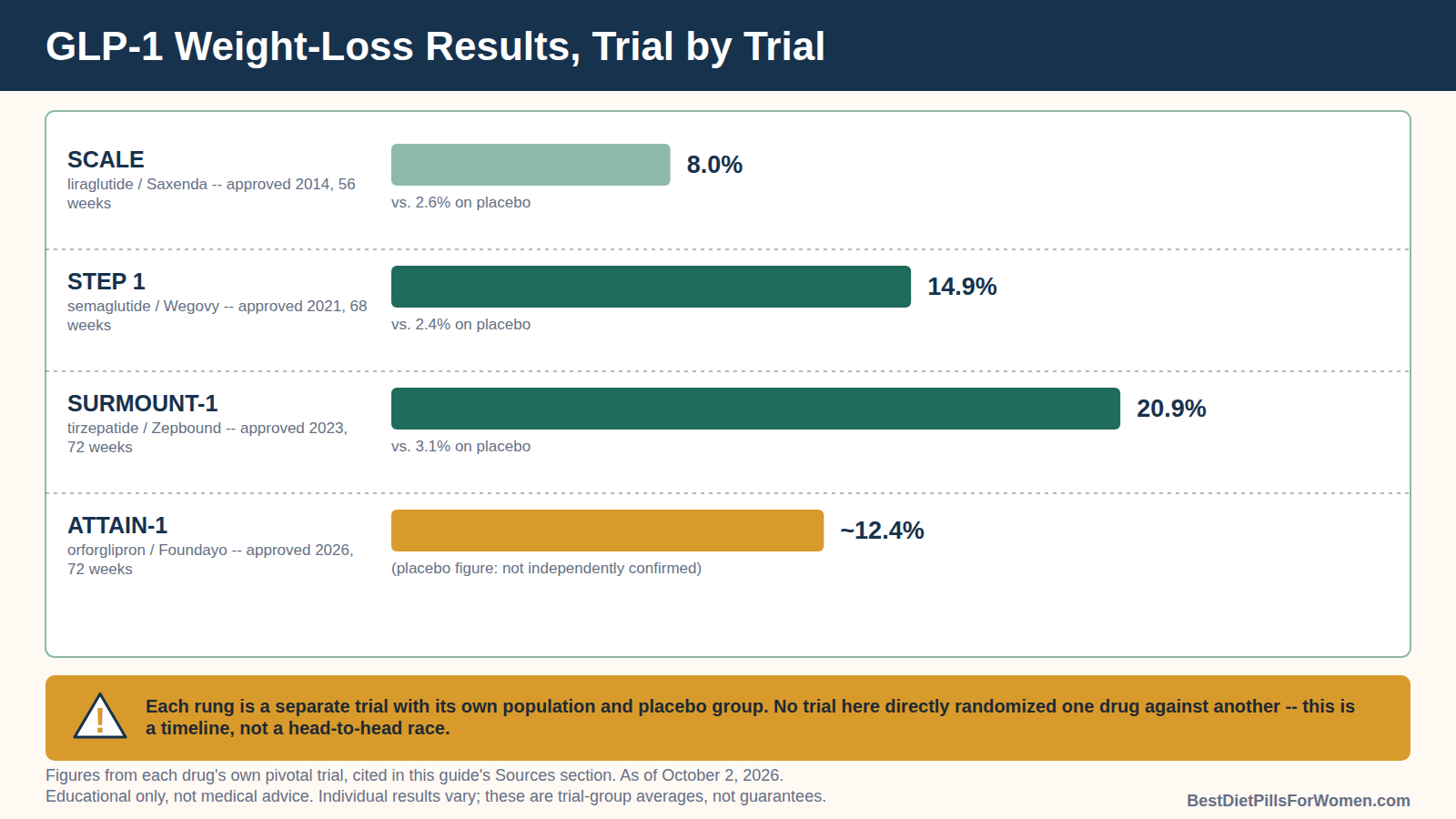
In STEP 1, the pivotal trial behind Wegovy’s original approval, 1,961 adults with obesity or overweight and at least one weight-related condition, with diabetes specifically excluded from this trial, were randomly assigned to semaglutide 2.4 mg weekly or placebo, both alongside lifestyle counseling, for 68 weeks. The semaglutide group lost an average of 14.9% of body weight, compared with 2.4% on placebo, and 86.4% of the semaglutide group lost at least 5% of their starting weight, versus 31.5% on placebo. About 4.5% of the semaglutide group stopped treatment specifically because of gastrointestinal side effects, compared with 0.8% on placebo, a gap covered in more detail in this guide’s safety section.
How the Numbers Are Measured, and Why It Matters
Trial results in this category are often reported two different ways: a “treatment-policy” estimate, which counts everyone as randomized whether or not they stayed on the drug for the full trial, and a “trial-product” or on-treatment estimate, which reflects only people who completed the trial as planned. The 14.9% figure above is the treatment-policy number, generally considered the more realistic reflection of what a new patient population might experience, including the portion of people who stop early. Readers who see a somewhat higher published figure for the same trial are often looking at the on-treatment estimate instead, which isn’t a contradiction, just a different way of counting the same underlying data.
Companion trials in the same STEP program tested semaglutide in different populations and settings, and the pattern held up consistently rather than looking like a one-trial fluke. STEP 2, which enrolled adults with type 2 diabetes (a population generally harder to produce large weight loss in), found an average 9.6% weight loss with semaglutide versus 3.4% on placebo at 68 weeks, a smaller effect than STEP 1 but still several times the placebo response. STEP 3, which paired semaglutide with an eight-week low-calorie diet and more intensive behavioral counseling than STEP 1’s standard lifestyle support, found an average 16.0% weight loss versus 5.7% on placebo at 68 weeks, suggesting that adding more structured behavioral support on top of the medication can push the average result higher still. Together, these companion trials are a meaningful part of why regulators and clinicians treat semaglutide’s weight effect as reproducible across different populations and support intensities, rather than a single-trial result that might not generalize.
Tirzepatide’s Trial Evidence (the SURMOUNT Program)
Tirzepatide’s trial program reported the largest average weight-loss figures of any FDA-approved medication in this guide.
SURMOUNT-1: Results in Adults Without Diabetes
In SURMOUNT-1, the pivotal trial behind Zepbound’s approval, 2,539 adults with obesity or overweight and at least one weight-related condition, again excluding diabetes, were randomly assigned to one of three tirzepatide doses (5 mg, 10 mg, or 15 mg weekly) or placebo, alongside lifestyle counseling, for 72 weeks. Average weight loss was 15.0% at the 5 mg dose, 19.5% at 10 mg, and 20.9% at the highest 15 mg dose, compared with 3.1% on placebo, using the treatment-policy estimate described above. A commonly cited completer-only (“on-treatment”) figure for the highest dose runs higher, up to around 22.5%, which reflects the subset of participants who stayed on treatment for the full trial rather than everyone originally randomized.
Why Tirzepatide’s Numbers Run Higher Than Semaglutide’s
No trial has directly randomized semaglutide against tirzepatide head-to-head for weight loss in people without diabetes as of this guide’s publication, so STEP 1 and SURMOUNT-1 are separate trials with separate populations, not a controlled comparison of one drug against the other. With that caveat firmly in place, tirzepatide’s dual GLP-1/GIP mechanism is the leading proposed explanation for why its trial produced a larger average effect, and a real-world cohort analysis published after both drugs were on the market found a similar pattern favoring tirzepatide, which adds some weight to that interpretation without resolving it as a true head-to-head finding. Readers who want the deeper comparison, including indirect evidence and practical trade-offs beyond the headline percentages, should see our planned semaglutide vs. tirzepatide guide.
Liraglutide and Orforglipron’s Trial Evidence
The two most recently discussed entrants in this guide sit at opposite ends of the product landscape, one much older and one brand new, and their trial data looks different from the headline semaglutide and tirzepatide numbers above.
The SCALE Program for Liraglutide
In the SCALE Obesity and Prediabetes trial, 3,731 adults without diabetes were randomized to liraglutide 3 mg daily (Saxenda’s dose) or placebo, both with lifestyle counseling, for 56 weeks. Average weight loss was 8.0% with liraglutide, compared with 2.6% on placebo. That’s roughly half of semaglutide’s STEP 1 result and well under half of tirzepatide’s SURMOUNT-1 result, which is the main quantitative reason this guide, and most current prescribing practice, treats liraglutide as the lower-intensity, earlier-generation option within this drug class rather than a routine first choice for most adults today.
The ATTAIN Program for Orforglipron
Coverage of orforglipron’s ATTAIN-1 trial reports weight loss at 72 weeks somewhere in the high-single-digit to low-double-digit percentage range depending on dose, with figures as reported by trade press running from roughly 7.8% at a lower dose up to roughly 12.4% at the highest dose studied. We’re flagging this one with extra care: because orforglipron was approved only recently, the exact dose labels attached to each percentage have varied slightly across the secondary sources available at the time of this guide’s research, and we were not able to independently confirm every dose-to-result pairing against the final published trial report. The general magnitude, an effect smaller than tirzepatide’s and somewhat smaller than semaglutide’s injectable results but still clearly larger than older oral weight-loss drugs, is more reliable than any single decimal point in that range; readers making a specific decision about orforglipron should check its current FDA label directly for the confirmed figures.
Why Trial Averages Don’t Predict Any One Person’s Result
Every percentage in this section describes a group average, and averages hide a wide spread of individual experience that matters enormously for any one reader.
Responder Variation Within Each Trial
Across the STEP and SURMOUNT trials, a meaningful share of participants lost far more than the group average, and a smaller share lost little or nothing. In STEP 1, for example, about half of the semaglutide group lost at least 15% of body weight, while a minority lost less than 5%. That spread means a 14.9% or 20.9% group average is a useful planning figure, not a personal guarantee, and it’s one of the reasons a prescriber will typically check in on your progress a few months into treatment rather than assuming the trial average applies automatically to you.
Real-World Results vs. Clinical-Trial Results
A large retrospective study using electronic health records from more than 51,000 patients treated between 2018 and 2024 found that real-world weight loss on injectable semaglutide or tirzepatide ran substantially below the clinical-trial averages above: about 4.7% of body weight among patients with at least six months of an active prescription, and about 7% among those on continuous therapy for a full year. That gap likely reflects a mix of factors that clinical trials are specifically designed to minimize but real-world care often can’t: inconsistent adherence, cost-driven dose interruptions, insurance-related treatment gaps, and a general population that isn’t selected and monitored the way a trial cohort is. It’s an important, humbling number for anyone assuming their own result will automatically match a pivotal trial’s headline figure, and it’s one more reason the “why real-world results run lower” conversation belongs in any realistic expectation-setting before starting this drug class.
Health Benefits Beyond the Scale
Weight loss itself is only part of what these trials have measured, and for some readers, the evidence on health outcomes beyond the number on the scale matters just as much as the percentage.
Cardiovascular Risk Reduction (the SELECT Trial)
The SELECT trial, a dedicated cardiovascular-outcomes study rather than a weight-loss trial, followed 17,604 adults aged 45 and older with established cardiovascular disease and a BMI of 27 or higher, but without diabetes, for up to five years. Participants taking semaglutide 2.4 mg had a 20% lower relative risk of major adverse cardiovascular events (a composite of cardiovascular death, non-fatal heart attack, and non-fatal stroke) compared with placebo, a result significant enough that it became the basis for Wegovy’s cardiovascular-risk-reduction label expansion in March 2024, covered earlier in this guide’s product-landscape section. This is a genuinely different kind of evidence than a weight-loss percentage: it directly measures hard cardiovascular outcomes rather than inferring heart-health benefit from weight loss alone, and it’s one of the most clinically important findings in this drug class’s entire evidence base.
Blood Pressure, Blood Sugar, and Other Metabolic Improvements
Across the STEP, SURMOUNT, and SCALE trial programs, participants losing weight on these medications also showed consistent secondary improvements in blood pressure, triglycerides, and, for those with prediabetes or diabetes, blood sugar control. Early orforglipron coverage reported similar secondary improvements in blood pressure and cholesterol markers alongside its weight-loss results. These secondary findings are generally understood as downstream effects of weight loss and the drugs’ direct metabolic actions working together, rather than a separate, independent mechanism, and they’re a meaningful part of why prescribers often discuss this drug class in terms of overall cardiometabolic health, not only the number on a scale.
| Trial (drug) | Duration | Population | Average weight loss (drug) | Average weight loss (placebo) |
|---|---|---|---|---|
| STEP 1 (semaglutide 2.4 mg, Wegovy) | 68 weeks | Adults with obesity/overweight, diabetes excluded, N=1,961 | 14.9% | 2.4% |
| SURMOUNT-1 (tirzepatide 15 mg, Zepbound) | 72 weeks | Adults with obesity/overweight, diabetes excluded, N=2,539 | 20.9% | 3.1% |
| SCALE (liraglutide 3 mg, Saxenda) | 56 weeks | Adults with obesity/overweight, diabetes excluded, N=3,731 | 8.0% | 2.6% |
| ATTAIN-1 (orforglipron, Foundayo, highest reported dose) | 72 weeks | Adults with obesity/overweight; dose-specific figures still being independently confirmed against the final label | ~12.4% (reported) | Not independently confirmed for this guide |
| TRIUMPH-1 (retatrutide, investigational, not FDA-approved) | 80 weeks | Adults with obesity/overweight, diabetes excluded | ~28.3% (12 mg dose, reported) | Not independently confirmed for this guide |
Table 3 method: figures are each trial’s own reported treatment-policy or intention-to-treat average except where noted, drawn from the trial reports and coverage cited in this guide’s Sources section. These are separate trials with different populations, doses, and durations; none of them directly compared one of these drugs against another in the same study, so this table is a side-by-side summary of each drug’s own evidence, not a head-to-head result.
Safety and Side Effects Across the GLP-1 Class
Every drug in this guide carries a genuine side-effect profile, including risks serious enough that FDA requires a boxed warning, its strongest form of caution, on the label. Weighing that profile honestly against the benefit above is a core part of this decision.
Common, Expected Side Effects
The most frequent side effects in this class trace directly back to the gastric-emptying mechanism described earlier in this guide.
Gastrointestinal Effects and Why They Happen
Nausea, vomiting, diarrhea, constipation, and abdominal pain are the most commonly reported side effects across every drug in this class, consistently showing up as the top adverse events in each pivotal trial. These effects are generally most intense during the initial dose-escalation period and during any dose increase, and they tend to ease, though not always disappear completely, once a person has been on a stable dose for several weeks. They’re a direct extension of the same slowed gastric emptying that helps produce the drug’s appetite-suppressing effect, which is part of why the side effects and the intended benefit are, to some extent, two sides of the same mechanism rather than unrelated problems.
Managing GI Side Effects During Dose Escalation
Every product in this class uses a gradual dose-escalation schedule specifically to reduce how severe these digestive effects are, and skipping ahead in that schedule, or restarting at a higher dose after a long gap off the medicine, is one of the more common reasons people experience worse symptoms than the label’s escalation plan is designed to prevent. Common, non-prescription strategies that prescribers often discuss include eating smaller meals, eating more slowly, reducing high-fat or very rich foods around dose increases, and staying ahead of dehydration, though any strategy beyond general eating adjustments should go through your prescriber rather than being self-directed, especially if symptoms are severe or persistent.
Serious but Uncommon Risks
Beyond the common digestive effects, this drug class carries a set of less frequent but more serious risks worth understanding clearly.
Gallbladder Disease and Pancreatitis
Gallbladder-related problems, including gallstones and inflammation of the gallbladder, occur more often with GLP-1 medications than with placebo; in STEP 1, gallbladder-related adverse events were reported in 1.6% of the semaglutide group versus 0.7% on placebo. Rapid or substantial weight loss itself is a known, separate risk factor for gallstones regardless of the method used to achieve it, which may explain some, though not necessarily all, of this difference. Acute pancreatitis, inflammation of the pancreas, has also been reported in people using GLP-1 medications and appears as a specific warning on every product label in this class, though it occurs infrequently in the trial populations studied so far.
Kidney Injury, Aspiration Risk, and Eye Complications
Acute kidney injury has been reported with this drug class, most often tied to dehydration from severe vomiting or diarrhea rather than a direct toxic effect on the kidneys, which is part of why staying hydrated during side effects matters beyond simple comfort. Anesthesiologists have also raised aspiration concerns during procedures requiring sedation, since delayed gastric emptying can mean the stomach isn’t empty even after a standard fasting period; many surgical and anesthesia groups now recommend holding GLP-1 medications for a period before elective procedures, a question worth raising directly with both your prescriber and your surgical team if you have a procedure scheduled. Separately, a large diabetes trial of injectable semaglutide (SUSTAIN-6) found a higher rate of diabetic retinopathy complications in participants who already had retinopathy at the start of the trial, a finding that led to specific label caution for people with existing diabetic eye disease; this signal came from a diabetes-dose trial rather than the weight-management trials covered elsewhere in this guide, but it’s relevant to anyone with pre-existing diabetic retinopathy considering any drug in this class.
The Thyroid Boxed Warning and Who Should Avoid This Class
One warning sits above all the others in how seriously FDA treats it, and it’s worth understanding exactly what it does, and doesn’t, currently show.
Thyroid C-Cell Tumors and the Boxed Warning
Every approved drug in this class carries a boxed warning, FDA’s most serious labeling requirement, about thyroid C-cell tumors observed in rodent studies. It isn’t known whether these drugs cause a similar tumor, including a rare cancer called medullary thyroid carcinoma, in humans, since this finding comes from animal studies rather than confirmed human cases; the warning exists as a precaution based on that animal signal, not as a documented human cancer risk with a known rate. Because of this warning, these medications are contraindicated, meaning they should not be used, in anyone with a personal or family history of medullary thyroid carcinoma or a rare inherited condition called multiple endocrine neoplasia syndrome type 2 (MEN 2).
Pregnancy, Breastfeeding, and Eating-Disorder History
GLP-1 medications are not recommended during pregnancy, and current labeling generally calls for discontinuing treatment at least two months before a planned pregnancy, based on developmental effects seen in animal studies and a lack of adequate human safety data. Data on use during breastfeeding is similarly limited, and the decision should be made with a clinician who can weigh the specific situation. These medications also haven’t been established as safe or appropriate for people with a current or recent eating disorder, and appetite-suppressing effects can interact in complicated ways with disordered eating patterns, which is a conversation worth having directly and honestly with a prescriber rather than navigating alone. In a related and recent development, FDA requested in 2026 that manufacturers remove an earlier caution about suicidal thoughts and behavior from GLP-1 labels, after a comprehensive agency review found no increased risk associated with the drug class itself; the original caution had been added based on signals observed with older, unrelated weight-loss drugs rather than from this class’s own trial data, and FDA’s review is a useful example of how a safety signal gets investigated and, in this case, resolved over time.
Interactions and What Monitoring Looks Like
This drug class interacts with other medications in specific, predictable ways, and typical monitoring reflects those interactions.
Interactions With Diabetes Medications and Oral Drugs
Combining a GLP-1 medication with insulin or a sulfonylurea (an older class of diabetes pills) raises the risk of hypoglycemia, low blood sugar, and often calls for a dose adjustment to one or both medications under a prescriber’s direction. Because these drugs slow gastric emptying, they can also affect how quickly other oral medications are absorbed, which is why your prescriber and pharmacist should know every medication and supplement you’re taking, including hormonal birth control pills, before starting treatment. This isn’t typically a reason to avoid the combination altogether; it’s a reason for a pharmacist to review your full medication list before you start. Anyone taking a blood thinner such as warfarin may need closer monitoring during dose changes, since changes in appetite and food intake can affect how the body processes some of these medications, and anyone regularly using NSAIDs (common over-the-counter pain relievers like ibuprofen) alongside significant GI side effects such as vomiting or diarrhea should be aware that dehydration from either source can compound the kidney-related risk covered earlier in this guide’s safety section.
What a Typical Monitoring Plan Includes
Monitoring commonly includes periodic check-ins on weight, blood sugar (especially for anyone with diabetes or prediabetes), kidney function, and a review of side effects and tolerability, with the exact schedule depending on your prescriber’s practice and your individual health profile. Anyone with a history of gallbladder disease, pancreatitis, or significant kidney problems should expect a more detailed conversation about those specific risks before starting, and anyone noticing severe, persistent abdominal pain, signs of a severe allergic reaction, or a possible gallbladder problem during treatment should contact their prescriber promptly rather than waiting for a scheduled follow-up.
| Effect or risk | Common or serious | Approximate frequency pattern | Practical context |
|---|---|---|---|
| Nausea, vomiting, diarrhea, constipation | Common | Most frequent adverse events in every pivotal trial; most intense during dose escalation | Usually eases at a stable dose; severe or persistent symptoms warrant a call to your prescriber |
| Gallbladder disease (gallstones, cholecystitis) | Less common, can be serious | Reported in roughly 1.6% of the semaglutide group vs. 0.7% on placebo in STEP 1 | Linked partly to rapid weight loss itself, not only the drug; persistent right-upper-abdomen pain needs medical attention |
| Acute pancreatitis | Uncommon, serious | Specifically warned about on every label in this class | Severe abdominal pain, sometimes with vomiting, needs prompt medical evaluation |
| Acute kidney injury | Uncommon, serious | Usually tied to dehydration from severe GI symptoms | Staying hydrated during side effects is a practical risk-reduction step |
| Thyroid C-cell tumors (boxed warning) | Rare in animal studies; human risk unconfirmed | Based on rodent data, not a confirmed human rate | Contraindicated with personal/family history of medullary thyroid cancer or MEN 2 |
| Diabetic retinopathy complications | Uncommon, serious, specific to pre-existing retinopathy | Seen in a diabetes-dose trial (SUSTAIN-6) among those with existing eye disease | Relevant mainly to people with pre-existing diabetic retinopathy |
| Hypoglycemia (low blood sugar) | Uncommon alone; more common combined with insulin/sulfonylureas | Rises specifically when combined with certain diabetes medications | Often managed with a dose adjustment under a prescriber’s direction |
Table 4 method: frequency figures are drawn from the specific pivotal trial noted in each row and from current FDA prescribing information; rows without a specific percentage reflect label-level warnings rather than a single confirmed population rate, and are described accordingly.
Who Is Actually a Candidate for GLP-1 Treatment?
Eligibility for this drug class follows a fairly standardized framework across most products, with some meaningful nuances worth understanding, especially for women navigating specific life stages or conditions.
The BMI and Comorbidity Framework Clinicians Use
FDA labeling sets the baseline eligibility criteria that most prescribers start from, even though real-world decisions involve more than a single number.
Standard Eligibility Thresholds
Current FDA labeling for Wegovy, Zepbound, and Saxenda generally covers adults with a body mass index (BMI) of 30 or higher (classified as obesity), or a BMI of 27 or higher with at least one weight-related condition such as high blood pressure, type 2 diabetes, high cholesterol, or obstructive sleep apnea. Wegovy’s cardiovascular-risk-reduction indication, added in 2024, instead requires established cardiovascular disease plus obesity or overweight, without requiring a separate weight-related comorbidity. Some products in this class are also approved for adolescents 12 and older with obesity, using pediatric-specific BMI criteria rather than the adult thresholds above.
Why BMI Alone Is an Imperfect Filter
BMI is a simple, widely used screening tool, but it doesn’t directly measure body composition, and it can misclassify some genuinely healthy, muscular, or differently-built individuals as having a weight-related risk they don’t actually have, while potentially under-flagging risk in others. Most experienced prescribers treat the BMI and comorbidity thresholds as a starting screen, not a complete clinical picture, and weigh them alongside waist circumference, blood work, personal and family health history, and the specific weight-related conditions a given patient actually has or is at risk for. Waist circumference in particular has drawn growing clinical attention as a marker of the kind of abdominal fat most tied to cardiometabolic risk, since two people with the identical BMI can carry very different amounts of abdominal fat and, correspondingly, very different real health risk. If your BMI sits right at a label threshold, that’s a conversation to have directly with a clinician rather than a self-diagnosis to make alone from a calculator.
Starting Weight, Rate of Loss, and When to Reassess Your Plan
Eligibility is the first gate, but what happens in the months after starting treatment is just as important to plan for realistically.
What a Typical First Few Months Look Like
Because every product in this class uses a gradual dose-escalation schedule, the first one to three months typically involve smaller weight changes than the headline trial percentages above, with the pace of loss generally picking up once a person reaches a stable, higher dose. It’s common, and expected, for early weight changes to be modest and for side effects to be most noticeable during this same window, which is part of why abandoning treatment in month one based on a disappointing scale number alone often means stopping before the medication has had a realistic chance to show its full effect.
Signs the Current Dose or Drug Isn’t the Right Fit
That said, not every plan needs to run its full course before being reconsidered. Little to no weight change after several months at a stable, maximum tolerated dose, side effects that remain severe or unmanageable even after adjustment strategies have been tried, or a new health development that changes your risk profile are all reasonable, concrete reasons to revisit the plan with your prescriber, whether that means a dose change, a switch to a different drug in this class, or a different approach altogether. A realistic, time-bound checkpoint, often three to six months, agreed on with your prescriber before you start, tends to make this kind of reassessment far less emotionally fraught than an open-ended “wait and see.”
Considerations Specific to Women
Two situations come up often enough in women’s weight-management care that they deserve their own discussion here, even though neither currently carries its own distinct FDA indication within this drug class.
PCOS and Insulin Resistance
Polycystic ovary syndrome (PCOS) frequently involves insulin resistance, and many women with PCOS who also meet the BMI and comorbidity criteria above can be reasonable candidates for GLP-1 treatment through the same general obesity pathway used for any other qualifying patient. There is currently no FDA-approved indication specifically naming PCOS for any drug in this class, so eligibility runs through the standard weight-related criteria rather than a PCOS-specific approval, and research specifically on GLP-1 use in PCOS, while promising in smaller studies, is less extensive than the large pivotal trials behind the core obesity indication. Readers wanting the fuller women’s-health picture on this topic may want our existing guide to weight loss pills for PCOS.
Perimenopause, Menopause, and Midlife Weight Change
Many women notice weight redistribution, particularly toward the abdomen, along with changes in insulin sensitivity during perimenopause and menopause, even without a prior diagnosis of obesity-related disease. The major GLP-1 pivotal trials enrolled substantial numbers of midlife and postmenopausal women, but most weren’t specifically designed to report results by menopausal status as a primary analysis, so this guide doesn’t cite a menopause-specific effect size separate from the overall trial averages above. That’s a genuine evidence gap worth naming honestly rather than filling in with an invented number: the general eligibility and effectiveness picture in this guide applies to midlife women the same way it applies to any other qualifying adult, but a menopause-specific breakdown of results isn’t something the current major trials were built to answer in detail. Readers specifically focused on this life stage may want our planned guide to weight loss pills for women over 40.
When a Clinician Might Say Wait, or No
Eligibility on paper doesn’t always mean a clinician will recommend starting right away, and there are situations where a different conversation needs to happen first.
Situations That Call for a Different Conversation First
A personal or family history of medullary thyroid carcinoma or MEN 2 rules this entire drug class out, as covered in the safety section above. A current pregnancy, a plan to become pregnant soon, a current or recent eating disorder, a history of pancreatitis, or significant, poorly characterized gastrointestinal disease are all situations where a prescriber is likely to want a more careful, individualized conversation before prescribing, and in some cases may recommend against this drug class entirely in favor of a different approach. None of these situations are moral judgments about the person; they’re clinical reasons a specific drug’s risk-benefit balance looks different for that specific situation.
When a Specialist Referral Makes Sense
Complex cases, including severe obesity with multiple serious comorbidities, a history of bariatric surgery, significant kidney or liver disease, or a complicated psychiatric or eating-disorder history, often benefit from a referral to an obesity-medicine specialist, an endocrinologist, or a multidisciplinary weight-management program rather than starting treatment through a general primary-care visit alone. That’s not a sign the drug class is off the table; it’s a sign the decision benefits from more specialized expertise than a routine visit typically allows for.
Cost and Access to GLP-1 Medications
For most readers, cost is where the GLP-1 conversation actually gets complicated, since the effectiveness evidence above only matters if a specific option is realistically affordable and accessible.
What These Drugs Cost Without Insurance
List prices for this drug class are notoriously high, but they aren’t the only number that matters.
List Prices vs. Manufacturer Cash-Pay Programs
Without insurance, list prices for brand-name GLP-1 medications in this class have historically run well over $1,000 a month, but both major manufacturers now offer direct-to-consumer cash-pay programs that bring the effective price down considerably for patients willing to pay out of pocket and bypass insurance billing. As of mid-2026, reporting on these programs described Novo Nordisk’s NovoCare pharmacy offering Wegovy at roughly $199 to $399 a month depending on dose and current promotions, and Eli Lilly’s LillyDirect self-pay vial program offering Zepbound at roughly $299 to $449 a month depending on dose. These programs require patients to have their own valid prescription; they don’t include a clinician visit, and pricing has moved more than once in the past two years as the two manufacturers have competed for cash-pay patients, so treat any specific figure here as a snapshot rather than a permanent price, and confirm the current number directly on the manufacturer’s own page before budgeting. Readers wanting a deeper, more frequently updated look at a single drug’s pricing should see our planned Wegovy cost guide, our planned Ozempic cost guide, and our planned Zepbound cost guide.
Beyond the manufacturer programs above, patient-assistance programs for those who qualify by income, and formal insurance appeals when a plan initially denies coverage, are both worth exploring before assuming a high list price is the final word; many prescriber offices have staff specifically experienced in helping patients navigate manufacturer savings cards and appeals paperwork, and that administrative help is often underused simply because patients don’t know to ask for it.
Compounded Versions and Why They Carry Extra Risk
Compounded semaglutide and tirzepatide, made by compounding pharmacies rather than the brand manufacturer, have been advertised at substantially lower prices, sometimes under $200 a month, through various online clinics and telehealth services. These compounded products are not FDA-approved; FDA doesn’t review a compounded drug’s safety, effectiveness, or manufacturing quality the way it reviews an approved drug like Wegovy or Zepbound, and the agency has previously warned about dosing errors, contamination, and the use of non-recommended salt forms of these active ingredients in some compounded products. Large-scale compounding of semaglutide and tirzepatide was more widely tolerated for a period while both drugs sat on FDA’s official drug-shortage list, a legal pathway that allows broader compounding during a genuine supply shortage; once FDA removed each drug from that shortage list, large-batch compounding of a copy of an already-approved drug became far more legally restricted, even though some compounding has continued under narrower exceptions, such as for patients with a documented medical need for a different dose or formulation than what’s commercially available. A lower price on a compounded version isn’t the same kind of purchase as a lower price on the brand manufacturer’s own cash-pay program for its FDA-approved product, and that distinction is worth understanding clearly before choosing a compounded option primarily to save money.
Insurance and Government Coverage
Insurance coverage for this drug class has historically been inconsistent, and 2026 brought the most significant government policy shift so far.
Employer and Marketplace Insurance Patterns
Coverage for GLP-1 weight-management drugs through employer-sponsored and marketplace health plans varies widely and has generally required prior authorization, meaning your prescriber must document that you meet specific clinical criteria before the plan will pay. Some employers explicitly exclude weight-management drugs from their pharmacy benefit altogether, even when the same active ingredient is covered for a diabetes diagnosis under a different brand name, which is one practical reason some patients and prescribers discuss the diabetes-indicated version of a drug in situations where that’s clinically appropriate and accurately documented. Coverage details differ enough from plan to plan that calling your specific insurer directly, and asking your prescriber’s office about their prior-authorization experience with your plan, is more useful than any general statement this guide could make. Readers wanting a deeper look at coverage specifically should see our planned GLP-1 insurance coverage guide.
Medicare and Medicaid: What’s Changing in 2026
Traditional Medicare Part D has historically excluded weight-loss drugs from coverage by statute, though some patients gained a narrower path to coverage when Wegovy’s cardiovascular-risk-reduction indication was added in 2024, since some Part D plans covered it under that indication for patients with established heart disease rather than under an obesity indication alone. In a more significant change, the Centers for Medicare & Medicaid Services launched the “Medicare GLP-1 Bridge,” a time-limited demonstration program beginning July 1, 2026, and running through December 31, 2027, intended to expand access to GLP-1 medications for weight management outside the standard Part D benefit structure, reportedly at a fixed monthly copay in the neighborhood of $50 for eligible beneficiaries who meet documented clinical criteria. Because this is a new program and reporting on its exact eligibility rules, specific covered drug list, and enrollment process has varied somewhat across sources at the time of this guide’s research, readers covered by Medicare should confirm current details directly with CMS or their Part D plan rather than relying on any single secondary source, including this one, for the fine print. Medicaid coverage for this drug class varies by state and has also been shifting; check your specific state program directly for current rules.
| Option | Typical monthly cost without insurance | Access path | Date checked |
|---|---|---|---|
| Wegovy (semaglutide injection), NovoCare cash-pay | Roughly $199-$399 depending on dose and promotions | Requires a valid prescription; manufacturer direct-pay program | October 2026 |
| Zepbound (tirzepatide injection), LillyDirect vials | Roughly $299-$449 depending on dose | Requires a valid prescription; manufacturer direct-pay program | October 2026 |
| Brand-name list price (either drug, no manufacturer program, no insurance) | Often well over $1,000 | Standard pharmacy billing | October 2026 |
| Compounded semaglutide/tirzepatide | Often under $200-$300 | Not FDA-approved; quality and dosing not independently verified by FDA | October 2026 |
| Insurance (employer/marketplace) | Varies by plan; commonly requires prior authorization | Depends entirely on individual plan’s formulary and documentation rules | October 2026 |
| Medicare GLP-1 Bridge demonstration | Reported fixed copay near $50/month for eligible beneficiaries | New CMS demonstration program, July 2026-December 2027; confirm current eligibility directly with CMS or your Part D plan | October 2026 |
Table 5 method: prices reflect manufacturer and pricing-page reporting current as of early-to-mid 2026, cited in this guide’s Sources section; manufacturer cash-pay pricing has changed more than once in recent years and should be reconfirmed directly before you budget around any figure here.
What Happens When You Stop: Discontinuation and Long-Term Considerations
One of the most consequential facts about this drug class is also one of the least discussed in casual conversation: for most people, the benefit depends on staying on treatment.
The Weight-Regain Evidence
Two separate trials, one for semaglutide and one for tirzepatide, were specifically designed to answer what happens after stopping, and both found a similar pattern.
Semaglutide Withdrawal Data (STEP 4)
In the STEP 4 trial, participants first took semaglutide 2.4 mg for a 20-week lead-in period, during which the group lost an average of roughly 10% of body weight, before being randomly assigned to either continue semaglutide or switch to a placebo injection for an additional 48 weeks. Those who continued semaglutide lost additional weight, reaching roughly 17% total loss from the original baseline, while those switched to placebo regained a substantial share of what they’d lost, ending the trial with meaningfully less total weight loss than the continuation group despite having started from the same point. This result is one of the clearest pieces of evidence that semaglutide’s weight-management effect depends on continued use, rather than resetting the body’s long-term weight regulation permanently after a defined treatment course.
Tirzepatide Withdrawal Data (SURMOUNT-4)
SURMOUNT-4 followed a similar design for tirzepatide: a 36-week lead-in period on open-label tirzepatide, reaching an average weight loss of roughly 21% from baseline, followed by randomization to continue tirzepatide or switch to placebo for an additional 52 weeks. Participants who continued tirzepatide lost further weight, reaching roughly 25% total loss from the original baseline, while those switched to placebo regained a substantial share of the weight they’d lost during the lead-in period. As with STEP 4, the core finding is the same: stopping treatment leads to meaningful weight regain within about a year for most people in these trials, which is consistent evidence across two different drugs in this class rather than a single isolated finding. Readers specifically weighing whether or how to stop should see our planned guide to GLP-1 weight regain, which goes deeper into tapering approaches and what to expect than this hub’s overview.
Real-World Persistence: Why So Many People Actually Stop
Beyond the controlled withdrawal trials above, a separate body of research has simply tracked how long people stay on these medications once they’re prescribed in routine care, outside of a research study, and the pattern is sobering.
The Danish Registry Findings
A large Danish registry study following 77,310 people without diabetes who started semaglutide for weight loss found that about 18% had already stopped by three months, and about 52% had stopped within 12 months. The study population had a median age of 50 and was 71% female, making it a reasonably close match to much of this guide’s own readership. Younger patients, men, people with lower incomes, and people with more coexisting health conditions showed somewhat higher discontinuation rates, but the researchers specifically noted they couldn’t identify a clear subgroup immune to high stopping rates; the pattern showed up broadly across the population studied.
Cost and Side Effects as the Leading Reasons
The study’s authors pointed to cost as a likely major driver, since even in Denmark’s more socialized health system, GLP-1 medications for weight loss specifically require out-of-pocket payment, a dynamic that plausibly applies with at least as much force in the more variable U.S. insurance landscape covered earlier in this guide’s cost section. Gastrointestinal side effects were the other leading reason cited, with researchers suggesting that patients may not always receive adequate upfront counseling about what to expect, which is part of why this guide’s safety section spends real space on how to manage, rather than simply tolerate, those early side effects. Taken together with the STEP 4 and SURMOUNT-4 withdrawal-trial data above, this registry finding is a useful reality check: even setting aside the question of what happens physiologically after stopping, a large share of real-world patients stop these medications well before the one- to two-year mark that the pivotal trials were designed around, for reasons that are themselves worth planning for before you start rather than discovering partway through treatment.
Planning for the Long Term
Given the regain pattern above, it’s worth planning for this drug class the way you’d plan for any other chronic, ongoing treatment rather than a short-term fix.
Tapering, Maintenance Dosing, and Realistic Expectations
Current prescribing practice generally treats GLP-1 medications for weight management as a long-term, potentially indefinite treatment for appropriate candidates, similar in concept to how blood pressure or cholesterol medications are often used, rather than a defined-length course meant to be completed and discontinued. Some prescribers explore a lower maintenance dose once a weight goal is reached, though the trial evidence specifically supporting that approach is more limited than the evidence for staying on the dose that produced results in the first place; any change to your own dose or treatment plan should go through your prescriber rather than being self-directed based on how you feel in a given week. Setting expectations honestly before starting, including the real possibility of needing this medication indefinitely to maintain results, tends to lead to a more sustainable decision than assuming a fixed-length course will produce a permanent result.
Muscle Loss and Why Strength Training Matters
Body-composition sub-studies of these trials have found that a meaningful share of the weight lost on GLP-1 medications, in some analyses roughly a quarter to a third of total weight lost, is lean mass rather than fat mass, a pattern that shows up with rapid weight loss generally and isn’t unique to this drug class. That finding is part of why many obesity-medicine specialists now specifically recommend resistance training and adequate protein intake alongside GLP-1 treatment, aiming to preserve muscle mass during a period of significant calorie deficit, rather than treating the medication as a substitute for any physical activity at all. Some of the same research has also looked at bone mineral density during rapid weight loss on these medications, since substantial weight loss by any method can be associated with some bone density decline; findings so far are preliminary and mixed rather than conclusive, and this remains an area specialists are actively watching, particularly for postmenopausal women, who already face age-related bone density changes independent of any weight-loss method. This is an active area of ongoing research and clinical guidance, not a settled, fully resolved question, so specific recommendations may continue to evolve, and a reader with existing osteoporosis or a strong family history of it may want to raise bone health specifically with her prescriber before starting.
Comparing GLP-1 Medications to Other Weight-Loss Approaches
GLP-1 medications are the most effective non-surgical option in this guide, but “most effective” doesn’t automatically mean “right for everyone,” and a fair comparison means being honest about what the realistic alternatives actually offer.
GLP-1s vs. Bariatric Surgery
Bariatric surgery remains the single most effective weight-loss intervention available, and recent real-world data puts that gap in sharp relief.
Weight-Loss Magnitude and Durability
A large retrospective comparative-effectiveness study using electronic health records from more than 51,000 patients with a BMI of 35 or higher, treated between 2018 and 2024, found that patients who had sleeve gastrectomy or gastric bypass lost an average of about 24% of total body weight at two years, compared with about 4.7% among GLP-1 patients with at least six months of an active prescription, and about 7% among those on continuous GLP-1 therapy for a full year. That’s a substantially larger real-world gap than the headline clinical-trial numbers earlier in this guide would suggest on their own, and the study’s authors specifically noted that real-world GLP-1 outcomes ran well below trial-level results even among patients who kept an active prescription the whole year. Longer-term surgical data, including the decades-long Swedish Obese Subjects study, has also linked bariatric surgery to reduced long-term mortality and diabetes remission in appropriately selected patients, a durability advantage that GLP-1 medications haven’t yet been tracked long enough to match in comparable long-term outcome data.
Risk, Reversibility, and Who Each Tends to Fit
Surgery carries risks GLP-1 medications don’t: a surgical procedure and recovery period, a small but real risk of surgical complications, and changes to digestive anatomy that are difficult or impossible to fully reverse depending on the specific procedure. GLP-1 medications, by contrast, don’t require surgery or anesthesia and can be stopped at any time, though stopping also means losing the benefit, as the previous section covered in detail. In practice, surgery tends to fit patients with very high BMI, significant comorbidities, and a clear understanding of the procedure’s permanence, while GLP-1 medications tend to fit a broader range of patients willing to commit to ongoing treatment and able to tolerate or manage the side-effect profile. Increasingly, the two aren’t necessarily competing options for the same patient: some people use a GLP-1 medication before surgery to reduce surgical risk, and some use one afterward to manage weight regain following a surgical procedure. Readers wanting a deeper, dedicated look at this specific comparison should see our planned bariatric surgery vs. GLP-1 guide.
GLP-1s vs. Lifestyle-Only Programs and Older Medications
Not every reader is a candidate for, or interested in, either surgery or a GLP-1 prescription, and the older end of the weight-loss toolkit still has a real, evidence-backed role.
Intensive Lifestyle Intervention Evidence
The Diabetes Prevention Program, a landmark NIH-funded trial, found that an intensive lifestyle intervention, combining structured diet changes, increased physical activity, and regular behavioral support, produced durable weight loss and a substantial reduction in progression from prediabetes to type 2 diabetes over multiple years of follow-up, without any medication at all. The average weight effect in trials like this tends to run smaller than GLP-1 results, commonly in the mid-single-digit percentage range at one year, but it comes with no drug cost, no prescription-related side effects, and benefits, like improved fitness and blood-pressure control, that extend beyond the number on the scale. For some readers, especially those who don’t meet GLP-1 eligibility criteria, can’t access or afford a prescription, or simply want to try a non-drug approach first, a structured lifestyle program is a legitimate, evidence-backed starting point rather than a consolation prize.
Phentermine, Orlistat, and Other Oral Prescription or OTC Options
Phentermine, an older stimulant-based appetite suppressant typically approved for short-term use, and orlistat, a fat-absorption blocker available both by prescription (Xenical) and over the counter at a lower dose (Alli), remain available options with smaller average effect sizes than GLP-1 medications, generally in the mid-single-digit-to-low-double-digit percentage range depending on the specific drug, dose, and study. Both carry their own distinct side-effect and risk profiles: phentermine’s stimulant properties raise cardiovascular and blood-pressure considerations and it’s a controlled substance with misuse potential, while orlistat’s fat-malabsorption mechanism commonly causes digestive side effects tied directly to dietary fat intake. Neither is a like-for-like substitute for a GLP-1 medication’s effect size, but both are meaningfully less expensive and more widely accessible, which keeps them in the realistic conversation for some readers, particularly as a lower-cost or lower-commitment starting point before considering this guide’s more intensive options. Readers wanting the fuller landscape of prescription and over-the-counter options beyond this guide’s main focus should see our guide comparing prescription and OTC weight loss pills.
| Approach | Typical evidence quality | Typical average effect | Key advantage | Key limitation |
|---|---|---|---|---|
| GLP-1/GIP medications (this guide) | Strong; large randomized trials for approved products | ~8%-21% of body weight in pivotal trials, depending on drug and dose | Largest non-surgical effect; strong, reproducible trial evidence | Requires ongoing treatment; real cost and side-effect burden; weight tends to return after stopping |
| Bariatric surgery | Strong; extensive long-term outcome data | ~24%+ of total body weight at 2 years in real-world comparative data | Largest overall effect; strongest long-term durability and outcome data | Surgical risk; largely irreversible anatomical change; not appropriate for every patient |
| Intensive lifestyle intervention | Strong; large NIH-funded trials | Commonly mid-single-digit percentage range at 1 year | No drug cost or drug-related side effects; broad health benefits beyond weight | Smaller average effect; requires sustained behavior change without medication support |
| Phentermine (prescription) | Moderate; mostly short-term trial data | Commonly mid-single-digit-to-low-double-digit percentage range | Inexpensive; long track record; oral, no injection | Stimulant risk profile; typically approved only for short-term use; controlled substance |
| Orlistat (prescription Xenical / OTC Alli) | Moderate; multiple trials, modest effect | Commonly low-to-mid single-digit percentage range | Available over the counter at a lower dose; non-stimulant | Smaller effect; digestive side effects tied to dietary fat intake |
Table 6 method: effect-size ranges summarize the trial evidence and general clinical literature cited throughout this guide for each approach; figures for different approaches come from different trial designs and populations, so this table is a side-by-side orientation tool, not a controlled head-to-head comparison.
Making the Decision: Practical Guidance for Readers
Everything in this guide is meant to support one practical outcome: a more informed, specific conversation with a clinician, rather than a confident guess made alone from marketing or social media.
Questions Worth Bringing to a Clinician
Walking into an appointment with specific questions tends to produce a more useful conversation than a general “should I try this” opener.
Questions About Eligibility and Realistic Goals
Worth asking directly: does my BMI and health history actually meet this drug class’s current criteria, which specific drug and dose would you recommend starting with and why, and what’s a realistic weight-loss expectation for someone with my starting point and health profile, rather than the trial average alone. It’s also worth asking how your specific health conditions, like PCOS, prediabetes, or a thyroid condition unrelated to the boxed warning above, might affect the plan, and what success would need to look like at three, six, and twelve months for the two of you to consider the treatment working.
Questions About Safety and Monitoring
Worth asking directly: does anything in my personal or family medical history rule this out, what side effects should prompt an urgent call versus a routine mention at my next visit, how will we monitor for the specific risks covered in this guide’s safety section, and what the plan is if side effects are hard to tolerate at a given dose. If you’re on other medications, especially insulin, a sulfonylurea, or hormonal birth control, ask specifically how this new medication might interact with what you’re already taking.
What to Expect in Your First Doctor’s Visit
Knowing roughly what a first appointment about this drug class looks like tends to make the whole process feel less uncertain.
What the Clinician Will Likely Ask
Expect questions about your weight history, prior weight-loss attempts, your full medication and supplement list, your personal and family medical history (especially thyroid cancer, pancreatitis, and gallbladder disease), any plans around pregnancy, and your goals for treatment. Many prescribers will also check basic labs, such as blood sugar and kidney function, either at that visit or shortly after, particularly if you have other risk factors. None of this is unusual or a sign of a problem; it’s the standard groundwork for prescribing any medication in this class responsibly.
What to Bring or Prepare
Bringing a current medication and supplement list, your recent weight history if you have it, and specific questions from this guide’s earlier sections, especially around eligibility, safety, and cost, tends to make the visit considerably more productive than going in with an open-ended “what should I do.” If you’ve already researched a specific drug or program, like a particular manufacturer cash-pay option or a specific insurance prior-authorization process, mentioning that directly can also save time, since many prescribers’ offices have handled similar requests before and may already know the practical steps involved.
Red Flags Worth Noticing Before You Start
Not every path to one of these medications looks the same, and some paths carry meaningfully more risk than others.
Signs a Product or Source Isn’t Legitimate
Be cautious of any online seller offering these medications without requiring a real prescription or a legitimate clinical evaluation, any price that seems dramatically lower than the manufacturer’s own cash-pay program with no clear explanation, and any product claiming “FDA-approved” status for an unapproved compounded version or an investigational drug like retatrutide. A legitimate telehealth prescriber will ask about your health history, generally require some form of clinical documentation like a BMI or weight-related condition, and dispense through a verifiable, licensed pharmacy, whether that’s a standard retail pharmacy or a manufacturer’s own direct-pay program.
When to Seek Immediate Medical Care
Seek prompt medical attention for severe or persistent abdominal pain, especially if it radiates to the back (a possible sign of pancreatitis), signs of a severe allergic reaction such as difficulty breathing or facial swelling, symptoms of severe dehydration from persistent vomiting or diarrhea, or a lump or swelling in the neck that could suggest a thyroid problem. None of this is a substitute for your prescriber’s specific guidance for your situation, and if you ever think you’re having a medical emergency, call 911 or your local emergency number rather than waiting to reach your regular prescriber.
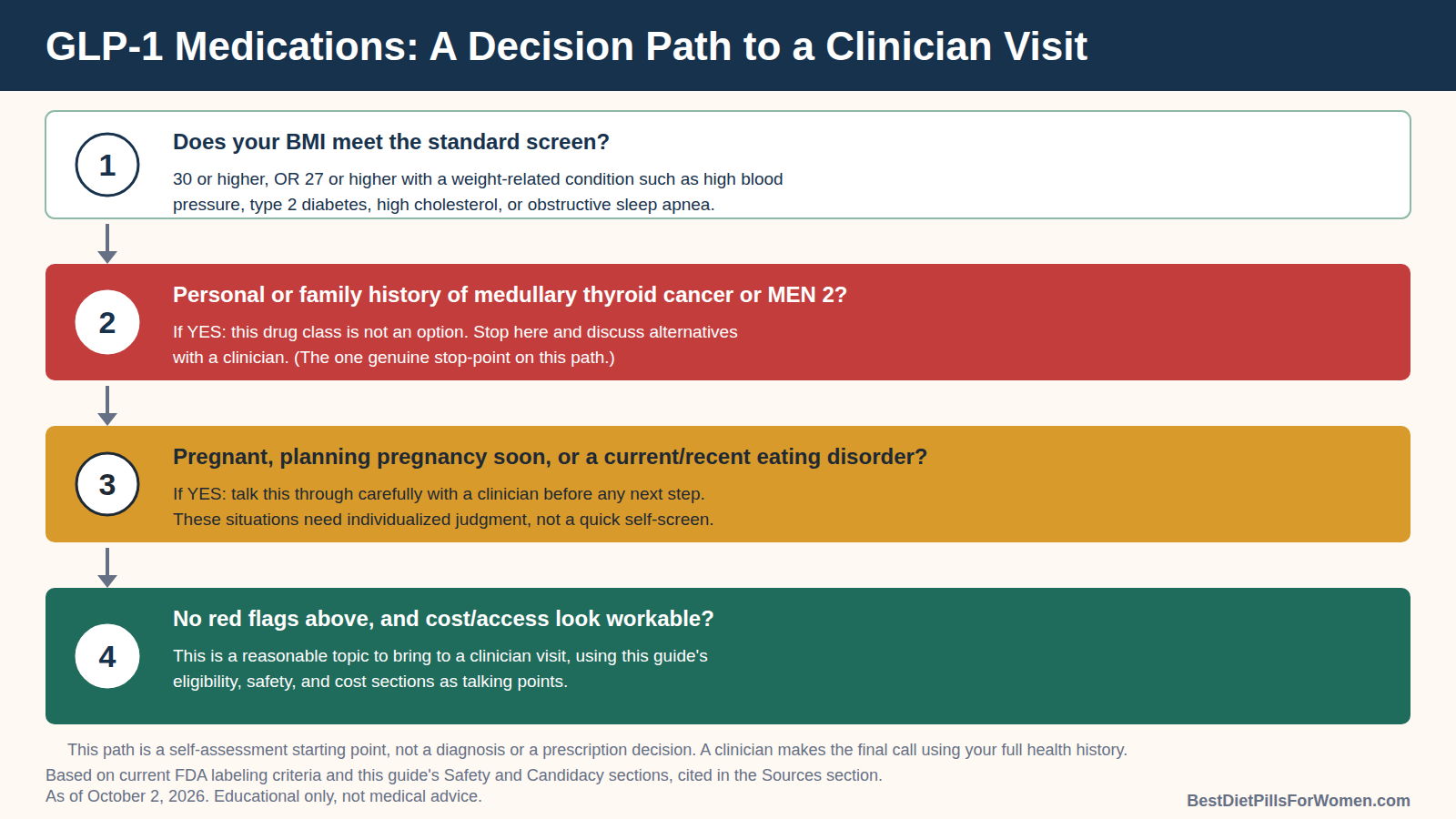
Frequently Asked Questions About GLP-1 Weight Loss
These are additional, genuine reader questions that the sections above touch on briefly but that deserve a direct, standalone answer.
Effectiveness and Mechanism
Three questions come up constantly once someone understands the basic trial numbers.
Will a GLP-1 Medication Definitely Work for Me?
No single medication works identically for every person, and this drug class is no exception. Pivotal trials report strong group averages, roughly 8% to 21% of body weight depending on the specific drug, but individual results within those same trials ranged from minimal to substantial, and real-world results across a broader population have run below trial averages. A realistic expectation is “likely meaningful weight loss for most people who tolerate and stay on treatment,” not a specific, assured percentage set in advance for any one person.
How Long Does It Take to See Results?
Most people begin to notice reduced appetite within the first few weeks, even at a low starting dose, though the largest weight-loss results in the pivotal trials accumulated gradually over many months, with most trials measuring their headline results at 56 to 80 weeks of treatment. Expecting dramatic results in the first month, during which the dose is still being slowly increased for safety and tolerability reasons, tends to set up disappointment; the more realistic timeline is “noticeable appetite change within weeks, substantial weight change over many months.”
Can I Use a GLP-1 Medication Without Diabetes?
Yes. Wegovy, Zepbound, Saxenda, and Foundayo are all approved specifically for weight management and don’t require a diabetes diagnosis, as long as you meet the BMI and comorbidity criteria covered earlier in this guide. Ozempic, Mounjaro, and Rybelsus, by contrast, are approved specifically for type 2 diabetes, and using one of those three off-label purely for weight loss without a diabetes diagnosis is a different, more complicated conversation to have with a prescriber than simply asking for the weight-management-approved version of the same active ingredient.
Safety and Candidacy
These questions come up most often once someone has read the safety section above and wants a more direct, personal-feeling answer.
Are These Medications Safe for Long-Term Use?
The approved drugs in this class have now accumulated several years of real-world use and post-approval safety monitoring on top of their original trial data, and no new safety signal has emerged that’s changed their overall approval status as of this guide’s publication. That said, “long-term” safety data for the newest entrants, like orforglipron, is inherently shorter than for semaglutide or liraglutide simply because they haven’t been on the market as long, and ongoing, lifelong safety monitoring is a normal, continuing part of how every approved drug is tracked, not a sign something is specifically wrong. Discuss your own risk factors directly with a clinician rather than relying on a general safety reputation alone.
Who Should Not Take a GLP-1 Medication?
Anyone with a personal or family history of medullary thyroid carcinoma or MEN 2 should not use any drug in this class, per the boxed warning covered earlier in this guide. Pregnancy, a plan to become pregnant soon, and a current or recent eating disorder are also situations where a prescriber is likely to recommend against starting, or to have a much more careful individualized conversation first. Beyond those clear-cut situations, “who shouldn’t take it” is often a judgment call based on a fuller health history, not a short universal list, which is exactly why this decision runs through a clinician rather than a self-screening checklist alone.
Can I Take a GLP-1 Medication If I Have PCOS?
Many women with PCOS who also meet the standard BMI and weight-related-condition criteria are reasonable candidates for this drug class through the general obesity pathway, since there’s no separate PCOS-specific approval required or currently available for any product in this guide. Smaller studies specifically in PCOS populations have shown promising metabolic and weight results, but the evidence base is less extensive than the large pivotal trials behind the core obesity indication, so discuss your specific situation, including how PCOS-related insulin resistance factors into the decision, directly with a clinician familiar with your case.
Can I Drink Alcohol While Taking a GLP-1 Medication?
There’s no specific prohibition against alcohol on current GLP-1 labels the way there is with some other medications, but there are practical reasons to be cautious. Alcohol can irritate the stomach and may worsen the nausea and digestive discomfort already common with this drug class, and because these medications slow gastric emptying, some people report feeling the effects of alcohol differently, including feeling intoxicated faster or more intensely than before starting treatment. Anyone with diabetes also taking insulin or a sulfonylurea should be especially cautious, since alcohol itself can affect blood sugar in ways that interact with those medications. Moderation, and a direct conversation with your prescriber about your own drinking habits, is a more useful approach than assuming it’s automatically fine or automatically dangerous.
Cost, Access, and Practical Decisions
The last cluster of common questions centers on money and logistics rather than biology.
Why Do These Medications Cost So Much?
List prices reflect a combination of development costs, patent protection, and high demand for a drug class with few FDA-approved alternatives of comparable effectiveness; none of those factors are unique to this drug class, but the scale of demand for GLP-1 medications specifically has kept prices and insurance friction in the headlines more than most other prescription categories in recent memory. Manufacturer cash-pay programs and, more recently, new government coverage pilots like the Medicare GLP-1 Bridge reflect real pressure on manufacturers and policymakers to bring the effective price down for more patients, and that pressure has already moved prices meaningfully over the past two to three years; whether it continues to fall further is something worth tracking rather than assuming.
Will I Regain Weight If I Stop?
Most likely, at least partially, based on the strongest available evidence. Both the STEP 4 trial for semaglutide and the SURMOUNT-4 trial for tirzepatide found substantial weight regain within about a year of switching from the active drug to placebo, after an initial period of weight loss on the medication. That’s a core reason this guide frames the decision to start as closer to “am I ready for an ongoing, potentially long-term treatment” than “am I ready for a one-time fix.”
Can I Combine a GLP-1 Medication With Phentermine or Another Weight-Loss Drug?
Combining a GLP-1 medication with another prescription appetite suppressant isn’t standard, well-studied practice, and the two together could plausibly compound side effects, including cardiovascular and gastrointestinal effects, without a clear evidence base showing an added weight-loss benefit large enough to justify that added risk. Some obesity-medicine specialists do combine therapies in carefully selected, closely monitored patients, but that’s a specialist-level decision built around an individual’s specific history, not a combination to pursue on your own or request casually from a general prescriber. If you’re already taking another weight-loss medication and are considering adding a GLP-1 drug, or vice versa, that’s a conversation for a prescriber experienced in obesity medicine specifically, ideally before you add anything rather than after.
Is a Compounded Version a Safe Way to Save Money?
Compounded semaglutide and tirzepatide aren’t FDA-approved, which means the agency hasn’t independently verified their safety, effectiveness, or manufacturing quality the way it has for Wegovy, Zepbound, Saxenda, or Foundayo. A lower advertised price doesn’t change that regulatory status, and the agency has previously flagged dosing-accuracy and quality concerns with some compounded products in this category. If cost is the main barrier, the manufacturer cash-pay programs covered in this guide’s cost section, insurance appeals, patient-assistance programs, and newer coverage options like the Medicare GLP-1 Bridge are all worth exploring directly before turning to a compounded product primarily to save money.
Does Insurance Require Me to Try Diet and Exercise First?
Many insurance plans do require documented evidence of a prior weight-management attempt, sometimes a formal supervised program, sometimes simply a clinician’s note, before approving a GLP-1 prescription through prior authorization, though the exact requirement varies significantly by plan and isn’t universal. Some plans also require periodic proof of continued weight loss or program participation to keep approving refills, which is worth knowing upfront so you’re not caught off guard partway through treatment. Your prescriber’s office, particularly one experienced with weight-management prior authorizations, is typically the most efficient source for your specific plan’s actual requirements, since general statements about “insurance” rarely match any one plan’s fine print exactly.
The Bottom Line on GLP-1 Weight Loss
Every section in this guide points toward the same underlying conclusion, worth stating plainly now that the full evidence picture is on the table.
What the Total Evidence Means for You
GLP-1 and GLP-1/GIP medications are a genuinely effective, well-evidenced class of weight-management drugs, not a passing trend or a marketing story, and that effectiveness is backed by some of the largest, most carefully designed obesity trials ever run. The evidence also tells a more complete story than the headline weight-loss percentages alone: a dedicated cardiovascular-outcomes trial found a real reduction in heart attacks, strokes, and cardiovascular death in a high-risk population, several drugs in the class now carry more than one FDA-approved use beyond weight loss alone, and the pace of new approvals, from tirzepatide’s dual mechanism to orforglipron’s first oral non-peptide option, suggests this category is still actively evolving rather than settled. At the same time, the honest picture includes real-world persistence data showing that roughly half of new patients in one large registry stopped treatment within a year, mostly over cost and side effects, which is as much a part of “what the evidence shows” as any single trial’s headline percentage.
A fair summary, then, is this: for someone who meets the clinical criteria, can access and afford ongoing treatment, and tolerates the side effects reasonably well, this drug class offers the strongest non-surgical weight-loss evidence available today. For someone who doesn’t meet one or more of those conditions, the honest evidence-based answer is that a different approach, whether that’s a different drug in this class, an older medication, an intensive lifestyle program, or in some cases bariatric surgery, may be the more realistic path to a sustainable result, and none of those alternatives covered in this guide should be dismissed as inferior simply because this drug class currently gets the most attention.
The Biggest Realistic Benefit
The biggest realistic benefit of this drug class is the size and consistency of its documented weight-loss effect: roughly 8% to 21% of body weight across approved products in their own pivotal trials, the largest non-surgical effect of any FDA-approved obesity treatment reviewed in this guide. That effect comes with real, demonstrated improvements in several weight-related health conditions beyond the number on the scale, and it’s reproducible across more than one drug and more than one large trial, which is meaningfully different from a single promising study that hasn’t been confirmed elsewhere.
The Biggest Limitation or Safety Concern
The biggest limitation is that the benefit isn’t permanent on its own: it depends on ongoing treatment, costs real money even with manufacturer discount programs, and comes with a genuine side-effect profile that includes common digestive symptoms and less common but serious risks serious enough to warrant a boxed warning. Real-world results also tend to run below the clinical-trial averages, a gap this guide has tried to be specific and honest about rather than letting the more impressive trial numbers stand in unchallenged. Neither of those facts makes this drug class a bad option; they make it a serious, ongoing medical commitment rather than a quick fix, which is exactly the framing a fair evidence-based guide owes its readers.
A Rational Next Step
None of this is a reason to assume this drug class is automatically right, or automatically wrong, for you specifically.
Questions for a Clinician Visit
Bring this guide’s specific questions, from the eligibility and safety sections above, into an actual appointment with a prescriber who knows your health history, rather than trying to self-diagnose your own candidacy from an article alone. Ask directly about your personal eligibility, your specific risk factors, a realistic timeline, and what the plan looks like if side effects are hard to manage or if cost becomes a barrier partway through treatment. Our broader guide to the best weight loss pills for women and our safety-focused guide to GLP-1 side effects cover more ground than this hub alone if you want to go deeper on a specific piece of the decision before that appointment.
What to Re-Check Before You Spend Money
Prices, insurance rules, and even FDA label details for this entire drug class have changed multiple times within any given year recently, and they’re likely to keep changing. Before committing financially, reconfirm current pricing directly with the manufacturer or your pharmacy, confirm your specific insurance plan’s current coverage and prior-authorization rules, and ask your prescriber whether anything in your personal health history has changed since you last discussed this option. The honest bottom line for almost every reader is that this is a genuinely effective, well-studied, but serious and ongoing medical decision, deserving the same specific, evidence-based questions this guide has walked through, not a blanket yes or no answer in either direction.
Related Reading
- our complete guide to weight loss medications
- Wegovy cost and insurance breakdown
- Wegovy pill (oral semaglutide) cost guide
- Ozempic cost guide
- Wegovy vs. Zepbound comparison
- Ozempic vs. Wegovy comparison
- Mounjaro vs. Zepbound comparison
- semaglutide vs. tirzepatide comparison
- metformin vs. Wegovy comparison
- metformin vs. Zepbound comparison
- Wegovy insurance coverage guide
- Ozempic insurance coverage guide
- weight loss pills vs. GLP-1 injections comparison
- Wegovy pill vs. Wegovy injection comparison
- Wegovy weight-loss results guide
- Ozempic for weight loss guide
- Ozempic weight-loss results guide
- Wegovy dosage and titration guide
Sources
These are the main sources behind this guide, chosen because they are the ones to check first for current facts. Labels, trial reports, prices, and policy details change, so confirm the latest version before you make decisions.
- U.S. Food and Drug Administration. WEGOVY (semaglutide) injection, for subcutaneous use — prescribing information, label archive version 215256s030 (2026 posting). https://www.accessdata.fda.gov/drugsatfda_docs/label/2026/215256s030lbl.pdf
- U.S. Food and Drug Administration. ZEPBOUND (tirzepatide) injection, for subcutaneous use — prescribing information, label archive version 217806Orig1s050 (2026 posting). https://www.accessdata.fda.gov/drugsatfda_docs/label/2026/217806Orig1s050lbl.pdf
- U.S. Food and Drug Administration. SAXENDA (liraglutide) injection, for subcutaneous use — prescribing information, label archive version 206321s025 (2026 posting). https://www.accessdata.fda.gov/drugsatfda_docs/label/2026/206321s025lbl.pdf
- Wilding, J.P.H., et al. Once-Weekly Semaglutide in Adults with Overweight or Obesity (STEP 1). New England Journal of Medicine, 2021. Read via PubMed abstract record. https://pubmed.ncbi.nlm.nih.gov/33567185/
- Jastreboff, A.M., et al. Tirzepatide Once Weekly for the Treatment of Obesity (SURMOUNT-1). New England Journal of Medicine, 2022. Read via secondary trial-summary coverage; the complete primary report was not independently re-read in full in this research session . https://www.nejm.org/doi/10.1056/NEJMoa2206038
- Pi-Sunyer, X., et al. A Randomized, Controlled Trial of 3.0 mg of Liraglutide in Weight Management (SCALE). New England Journal of Medicine, 2015. Read via secondary trial-summary coverage; the complete primary report was not independently re-read in full in this research session . https://www.nejm.org/doi/10.1056/NEJMoa1411892
- American College of Cardiology, clinical trial summary. SELECT: Semaglutide Reduces Risk of MACE in Adults With Overweight or Obesity, summarizing results presented at the American Heart Association 2023 meeting and published in the New England Journal of Medicine (Lincoff et al., 2023). https://www.acc.org/Latest-in-Cardiology/Articles/2023/08/10/14/29/SELECT-Semaglutide-Reduces-Risk-of-MACE-in-Adults-With-Overweight-or-Obesity
- National Institute of Diabetes and Digestive and Kidney Diseases (NIDDK), part of the National Institutes of Health. New in Medications for Weight Management. https://www.niddk.nih.gov/health-information/professionals/diabetes-discoveries-practice/new-in-medications-for-weight-management
- HMP Global Learning Network / Formulary & Reimbursement Management Collection, reporting on the CMS Medicare GLP-1 Bridge demonstration program (July 1, 2026-December 31, 2027). Exact eligibility criteria and the final covered-drug list should be reconfirmed directly against CMS’s own materials before publication . https://www.hmpgloballearningnetwork.com/site/frmc/news/cms-launches-medicare-glp-1-bridge-expand-affordable-access-weight-loss-medications
- Eli Lilly and Company, investor news release. FDA Approves Lilly’s Foundayo(TM) (orforglipron), the Only GLP-1 Pill for Weight Loss That Can Be Taken at Any Time of Day Without Food or Water Restrictions (April 1, 2026). https://investor.lilly.com/node/54076

