
The best weight loss pills for PCOS, judged by the strength of the evidence, are the GLP-1 medicines, semaglutide and tirzepatide, followed by metformin, the older insulin-sensitizing drug most women with PCOS try first. A 2025 meta-analysis pooling 13 randomized trials found GLP-1 receptor agonists outperformed metformin on weight, waist size and insulin resistance in women with PCOS specifically, not just in general obesity trials. What PCOS adds isn’t a different verdict about which drugs work; it’s a different, often-overlooked set of questions about fertility, contraception and misdiagnosis that don’t come up the same way in general weight-loss guides.
Here’s the catch: several of the most heavily marketed “PCOS weight loss” supplements, myo-inositol chief among them, have real research behind them for ovulation and insulin resistance but notably weak evidence for weight loss itself, a distinction that gets blurred constantly in product marketing. And there’s a genuinely new piece of context worth knowing before reading further: in May 2026, the condition long called polycystic ovary syndrome (PCOS) was formally renamed polyendocrine metabolic ovarian syndrome (PMOS) by a global consensus of specialty societies, though “PCOS” remains the term most people search for and most U.S. patient resources still use during a planned three-year transition. This guide uses “PCOS” throughout for that reason, with the rename explained in the next section.
This guide checks what the trial evidence actually shows for metformin, GLP-1 medicines, older prescription pills and popular supplements specifically in women with PCOS, works through a fertility-and-contraception picture that looks different here than in any other life stage we cover, and separates true weight-loss drugs from PCOS medications, like spironolactone, that often get lumped in with them by mistake. It’s part of our wider coverage of the best weight loss pills for women, our guide to the best appetite suppressant for women, and our OTC appetite suppressant guide, and it’s meant to sharpen the questions you bring to a clinician, not to tell you to start or stop anything.
Best Weight Loss Pills for PCOS: The Short Answer
Start with the conclusions, then check them against the sections that follow. Each answer says how sure we are and what limits it.
The Direct Answer and How Sure We Are
What Are the Best Weight Loss Pills for PCOS?
GLP-1 receptor agonists, semaglutide (Wegovy) and tirzepatide (Zepbound) chief among them, have the strongest PCOS-specific evidence: a 2025 meta-analysis of 13 randomized trials in women with PCOS found significantly greater weight loss, waist-size reduction and insulin-resistance improvement with a GLP-1 drug than with metformin or placebo. Metformin remains the best-studied and cheapest option, with a real but considerably smaller average effect on weight, mainly useful as an insulin sensitizer that can be combined with a GLP-1 medicine or used on its own.
That’s a more specific answer than “these drugs work in general obesity,” but the underlying trials are still relatively small and short (most 12 to 24 weeks), and a formal, PCOS-specific tirzepatide randomized trial hadn’t been published in what we reviewed; the strongest tirzepatide numbers come from a large real-world cohort, not a randomized trial, a distinction covered in detail later in this guide.
How Sure We Are About That Answer
We’re most confident that GLP-1 drugs outperform metformin on average in PCOS specifically, since that comparison has now been tested directly in randomized trials rather than inferred from general-population data. We’re less confident about how any individual woman will respond, about long-term outcomes beyond a year, and about several PCOS-specific questions, fertility restoration chief among them, that the general weight-loss literature simply doesn’t address.
How We Judged “Best”
No independent lab tested these products side by side in women with PCOS. “Best” here means best-supported by PCOS-specific and general obesity evidence together, not a taste test or a ranked countdown.
The Four Criteria We Used
We weighed four things for every option: the size and quality of human evidence, with extra weight given to trials conducted specifically in women with PCOS rather than general obesity populations; the safety and fertility profile most relevant to a group of reproductive-age women whose ovulation may be suppressed, unpredictable, or actively being treated; practical access, including cost and prescription requirements; and how honestly a product’s marketing matches what trials actually show, a question that matters more than usual given how heavily PCOS supplements are marketed. No option scored perfectly on all four.
What This Assessment Is and Isn’t
This is a synthesis of labels, trial data and meta-analyses, not a clinical recommendation, a product test or firsthand use of any drug or supplement discussed. Nothing here tells a reader to start, stop or change a medicine, a contraceptive method, or a fertility treatment; that decision belongs to a woman and her clinician, ideally one experienced in PCOS specifically.
The Options at a Glance
Table 1 puts the main options next to each other before the rest of this guide goes deeper on each one.
The Summary Table
| Option | Main evidence | Average result | Biggest PCOS-specific consideration |
|---|---|---|---|
| Metformin (prescription) | Meta-analysis of 32 RCTs | BMI −0.53 kg/m² vs. placebo; −1.09 kg/m² with added lifestyle changes | Inexpensive, well-studied first-line insulin sensitizer; modest weight effect alone |
| GLP-1 agonists: semaglutide, liraglutide, exenatide (prescription) | Meta-analysis of 13 RCTs in PCOS | −3.57 kg and BMI −1.59 vs. control | Also lowers androgens; can restore ovulation, which raises the contraception question |
| Tirzepatide (Zepbound; prescription) | Real-world cohort, n=4,241 women with PCOS | −18.81% average body weight at 10 months | Strong real-world numbers, but not a randomized PCOS-specific trial |
| Semaglutide + metformin combination | RCT in PCOS-related infertility, n=64 | 54.83% reached >10% weight loss vs. 0% with metformin alone | Trial population was actively trying to conceive; built-in treatment washout |
| Myo-inositol / D-chiro-inositol (OTC supplement) | Guideline meta-analysis, 30 trials | Effect on BMI called “very uncertain”; some signal for ovulation | Heavily marketed for weight; evidence is strongest for ovulation, not weight |
| Orlistat (OTC alli / prescription Xenical) | Meta-analysis vs. metformin, 5 RCTs | −1.29 kg vs. metformin, not statistically significant | Fewer side effects than metformin in this comparison |
| Phentermine, Qsymia, Contrave (prescription) | General obesity trials | Similar to results in our general women’s weight loss guide | No PCOS-specific trials; same pregnancy and blood-pressure cautions apply |
| Spironolactone (prescription) | Not a weight-loss drug | Not applicable | Treats hirsutism and acne, not weight; frequently confused with diet pills |
| Combined oral contraceptive | Not a weight-loss treatment | No consistent weight-loss effect | First-line for cycle regulation and androgen symptoms, not weight |
Table 1 method: effect sizes and trial counts are as reported in the meta-analyses, randomized trial and real-world cohort report, read through full texts, abstracts and page summaries as of September 25, 2026, and no result was recalculated. The tirzepatide row comes from a retrospective real-world cohort, not a randomized trial, and is not directly comparable to the randomized-trial rows above it.
How to Read the Table
Read the third column as results from separate studies with different designs, doses and follow-up lengths, not as a head-to-head contest. The GLP-1 and metformin rows come from trials genuinely conducted in women with PCOS, which makes them more directly relevant here than most general obesity data; the tirzepatide row is real-world and retrospective, which tends to run larger than trial numbers, and is flagged as such rather than presented as equivalent evidence.
The fourth column is where PCOS actually changes the calculus, more than the second and third columns do. Spironolactone and combined oral contraceptives appear in this table specifically because they’re so often confused with “PCOS diet pills” in searches and product marketing, not because they compete with the medicines above them on weight. The sections that follow work through each row in more depth, starting with what PCOS actually is, why it was renamed in 2026, and why it makes weight loss biologically harder in the first place.
What PCOS Is—and Why It Was Renamed PMOS in 2026
Understanding why PCOS makes weight loss harder starts with understanding what’s actually going on hormonally, and, as of this year, what the condition is now formally called.
The 2026 Global Rename, Explained
This is genuinely new information as of this guide’s publication, and it’s worth getting straight before anything else.
Why Specialists Renamed PCOS to PMOS
On May 12, 2026, a global consensus process led by researchers at Monash University and Oulu University, published in The Lancet and endorsed by more than 50 patient and professional organizations including the Endocrine Society, formally renamed polycystic ovary syndrome (PCOS) to polyendocrine metabolic ovarian syndrome (PMOS). The stated reason wasn’t cosmetic: the old name centered on ovarian cysts, but research shows the follicles involved don’t actually behave like true cysts and don’t necessarily increase in number, while the name said nothing about the condition’s much broader hormonal, metabolic, skin and mental-health effects. A patient survey behind the change found 86% support for a more accurate, symptom-based name, with respondents citing stigma, confusion and delayed diagnosis tied to the old terminology.
The diagnostic criteria themselves didn’t change, only the name. A three-year transition period is underway, with full incorporation into the next International Guideline update expected in 2028.
What This Means for This Guide (and for You)
This guide uses “PCOS” throughout, because that’s still the term almost everyone searches for and the term U.S. government patient resources like the Office on Women’s Health continue to use as of this writing. If a clinician, a lab report, or a newer research paper uses “PMOS” instead, know that it refers to the exact same condition with the exact same diagnostic criteria discussed in this guide; the two names will likely coexist in everyday use for at least the next few years. Unlike our menopause, perimenopause and women over 40 guides, PCOS isn’t tied to a specific age band; it can affect a woman from her teenage years onward and sometimes overlaps with those later life stages.
How PCOS Actually Causes Weight Gain
The name changed, but the biology it describes is well established, and it’s specifically why weight loss can feel like an uphill fight for many women with this condition.
Insulin Resistance and the Androgen Loop
Insulin resistance affects roughly 70% of women with PCOS, largely independent of body weight itself, meaning even women with PCOS who aren’t overweight often show it. The mechanism works as a loop: insulin resistance causes the body to produce more insulin to compensate, and that extra insulin pushes the ovaries to produce more androgens (male-pattern hormones like testosterone), which in turn disrupts normal ovulation and, separately, promotes fat storage, particularly around the abdomen. That’s part of why PCOS is associated with roughly four times the risk of developing type 2 diabetes compared with women without it, and with diagnosis coming an average of four years earlier, based on a Danish national registry study of nearly 20,000 women with PCOS.
The same hormonal pattern raises the stakes beyond diabetes risk alone. Chronic anovulation means the uterine lining isn’t regularly shed the way it is with a typical monthly cycle, which over years can raise the risk of endometrial cancer, one reason the Office on Women’s Health lists it among PCOS’s long-term health risks alongside high blood pressure, unhealthy cholesterol and sleep apnea. None of that is inevitable, and none of it is a reason for alarm about any single missed period, but it’s part of why clinicians tend to treat PCOS as more than a fertility or cosmetic issue, and why the medications covered in this guide are often framed around long-term metabolic health, not just a number on a scale.
Why Diet and Exercise Alone Often Fall Short
Standard calorie-based advice assumes a fairly linear relationship between eating less, moving more and losing weight, but insulin resistance complicates that relationship by making the body more efficient at storing calories as fat and by driving hunger and cravings through insulin’s effects on appetite-regulating hormones. That doesn’t mean diet and exercise don’t matter, weight loss of even 5% to 10% of body weight has been shown to improve ovulation and cycle regularity in PCOS, but it does explain why many women with PCOS report following the same advice that works for friends without the condition and seeing far less result, which is where medications that specifically target insulin resistance, rather than appetite alone, tend to earn their place in a treatment plan.
How PCOS Is Diagnosed, and Why That Matters Before Choosing a Pill
Every medication decision in this guide assumes an accurate diagnosis first, which is a bigger assumption than it sounds, since PCOS has no single definitive test.
The Rotterdam Criteria
Most clinicians in the U.S. still diagnose PCOS using a framework agreed on at a 2003 consensus meeting in Rotterdam, even as the name changes around it.
What Are the Rotterdam Criteria for PCOS?
The Rotterdam criteria require at least two of three features: irregular or absent ovulation, clinical or blood-test signs of excess androgens (like excess facial or body hair, acne, or elevated testosterone), and polycystic-appearing ovaries on ultrasound. Reported prevalence ranges from about 5% to 26% of reproductive-age women depending on which criteria are used, with the Office on Women’s Health citing roughly 1 in 10.
Because only two of three features are required, two women can both carry a PCOS diagnosis while having quite different symptom profiles, one with irregular cycles and normal-looking ovaries, another with regular cycles but clear androgen excess and polycystic-appearing ovaries. That variability is one reason a single “PCOS diet pill” recommendation rarely fits everyone equally well, and it’s a theme this guide returns to repeatedly.
Researchers sometimes group these combinations into four phenotypes, labeled A through D: phenotype A combines all three Rotterdam features and tends to carry the most pronounced insulin resistance and metabolic risk; phenotype B has irregular ovulation and androgen excess without the ovarian ultrasound finding; phenotype C has androgen excess and polycystic-appearing ovaries with regular ovulation; and phenotype D, sometimes debated as a true form of PCOS at all, has irregular ovulation and polycystic-appearing ovaries without androgen excess, generally the mildest metabolic profile of the four. Knowing a phenotype isn’t required to use this guide, but it helps explain why a friend’s PCOS experience, and her medication response, may look nothing like another woman’s.
Elevated anti-Müllerian hormone (AMH) is increasingly used as a supplementary marker alongside or instead of an ultrasound in some clinics, since it correlates with the number of small ovarian follicles, though it isn’t yet a formal replacement for the Rotterdam ultrasound criterion in most U.S. practice.
Lean PCOS vs. Weight-Related PCOS
Not every woman with PCOS is overweight; a meaningful minority have what’s sometimes called “lean PCOS,” normal or low body weight alongside the same hormonal pattern, often still with underlying insulin resistance despite a normal BMI. That distinction matters for this guide specifically because most weight loss pills, by definition, are aimed at women who are overweight or have obesity; a lean woman with PCOS whose main concerns are irregular cycles or androgen symptoms is typically better served by the medications discussed later in this guide for those specific problems, like combined oral contraceptives or spironolactone, rather than by a weight loss drug she may not be a candidate for in the first place.
Ruling Out Look-Alikes Before Treatment
PCOS shares symptoms with several other conditions, which is part of why an accurate diagnosis, not just a self-assessment based on irregular periods, matters before starting any treatment discussed in this guide.
What Conditions Can Mimic PCOS?
Thyroid disorders, high prolactin levels, and a rare adrenal condition called nonclassic congenital adrenal hyperplasia can all cause irregular periods and androgen-related symptoms that look similar to PCOS on the surface, which is why guidelines call for ruling these out before finalizing a PCOS diagnosis. A clinician typically checks thyroid-stimulating hormone and prolactin levels as a routine part of that workup, sometimes alongside a 17-hydroxyprogesterone test for the adrenal condition, especially if symptoms are severe or started unusually early.
What a Prescriber Typically Checks Before Prescribing
Beyond confirming the diagnosis itself, a prescriber considering any medication in this guide will typically ask about menstrual history, pregnancy plans and current contraception, family history of type 2 diabetes, blood pressure, and any prior mental-health history, since several options covered later carry mood-related warnings. Blood work often includes a fasting glucose or hemoglobin A1c, a lipid panel, and sometimes a fasting insulin level, since insulin resistance, not weight alone, is often the more clinically useful number for deciding between options like metformin and a GLP-1 medicine.
Does Metformin Help With Weight Loss in PCOS?
Metformin is usually the first medication a clinician raises for PCOS, not primarily as a weight-loss drug but as an insulin sensitizer, and it’s worth understanding what it actually does and doesn’t do for weight specifically.
What 32 Trials Show
A 2026 systematic review and meta-analysis pooled decades of randomized trials to answer this question more precisely than any single study could.
Does Metformin Cause Weight Loss in PCOS?
Yes, but modestly: a meta-analysis of 32 randomized controlled trials found metformin reduced BMI by an average of 0.53 kg/m² compared with placebo, roughly one to two pounds for an average-height woman, rising to 0.89 kg/m² in women with a BMI of 25 or higher. That’s a real, moderate-certainty effect, not a dramatic one, and it’s considerably smaller than what GLP-1 medicines produce, covered in the next section.
Adding Lifestyle Changes to the Mix
When metformin was combined with structured lifestyle changes, diet and activity counseling, and compared against placebo plus the same lifestyle changes, the average BMI reduction roughly doubled to 1.09 kg/m², still a moderate-certainty finding but a meaningfully larger effect than metformin produces on its own. That pattern, medication working better alongside lifestyle support than in place of it, shows up repeatedly across the options in this guide and is worth keeping in mind regardless of which medication a woman and her clinician land on.
Metformin’s Trade-offs
Metformin’s biggest practical downside isn’t a serious safety risk for most women; it’s a common, unpleasant, and often underestimated side effect.
What Are Metformin’s Main Side Effects?
Gastrointestinal side effects, nausea, diarrhea and stomach upset, are metformin’s most common complaint, with the same 32-trial meta-analysis finding these effects roughly 7.67 times more likely with metformin than with placebo. Extended-release formulations and starting at a low dose before increasing gradually both tend to reduce these effects considerably.
Many clinicians start conservatively rather than at a full target dose from day one for exactly this reason. Metformin also carries a rare but serious risk of lactic acidosis, mainly in people with significant kidney impairment, which is why kidney function is typically checked before and periodically during treatment, and why anyone with advanced kidney disease should discuss alternatives with a prescriber.
Who Metformin Tends to Fit Best
Metformin tends to fit best for women whose insulin resistance, rather than weight itself, is the primary concern, for women who can’t access or afford a GLP-1 medicine, and for women planning pregnancy soon, since metformin has a longer track record in pregnancy planning contexts than newer GLP-1 drugs, discussed further in the pregnancy and contraception section later in this guide. It’s also commonly used alongside a GLP-1 medicine rather than instead of one, an approach the semaglutide-combination trial covered in the next section tested directly.
Metformin is also relevant to a group this guide otherwise doesn’t focus on: adolescents. PCOS is sometimes diagnosed in the teenage years, and metformin has a longer track record of pediatric and adolescent use than any GLP-1 medicine covered in this guide, which is one reason it’s often the first medication considered when weight-related PCOS symptoms appear before adulthood, always under close specialist supervision rather than as a general-purpose starting point.
Do GLP-1 Weight Loss Pills and Injections Work for PCOS?
GLP-1 medicines have become the most talked-about weight loss option in the country generally, and the PCOS-specific evidence behind them is genuinely stronger than it is for any other drug class covered in this guide.
What the Trial and Real-World Evidence Shows
Table 2 below lays out the numbers behind that claim, drawn from research conducted specifically in women with PCOS rather than extrapolated from general obesity trials.
Semaglutide, Liraglutide and Exenatide: The Meta-Analysis Numbers
| Outcome | GLP-1 agonist vs. control | Statistical significance |
|---|---|---|
| Body weight | −3.57 kg (95% CI −5.15 to −1.99) | P<.0001 |
| BMI | −1.59 (95% CI −2.07 to −1.10) | P<.0001 |
| Waist circumference | −4.97 cm (95% CI −5.56 to −4.37) | P<.0001 |
| HOMA-IR (insulin resistance) | −0.58 (95% CI −0.98 to −0.19) | P=.004 |
| Fasting insulin | −1.40 mIU/L | P=.03 |
Table 2 method: figures come from a 2025 meta-analysis pooling 13 randomized controlled trials (397 women on a GLP-1 receptor agonist, mostly liraglutide and exenatide with a smaller semaglutide subset, versus 330 on metformin and 68 on placebo), read from the full published article as of September 25, 2026; no result was recalculated.
That meta-analysis pooled mostly older GLP-1 drugs (liraglutide and exenatide), with only 23 of 397 participants on semaglutide, so it likely understates what newer, more potent GLP-1 medicines can do. A separate, smaller meta-analysis comparing GLP-1 drugs directly against metformin found a similar pattern for insulin resistance and additionally reported meaningful reductions in testosterone, DHEA-S and androstenedione, the androgens most responsible for PCOS’s hair, skin and cycle symptoms, though it didn’t report weight loss in numeric form.
Tirzepatide: Strong Real-World Numbers, With a Caveat
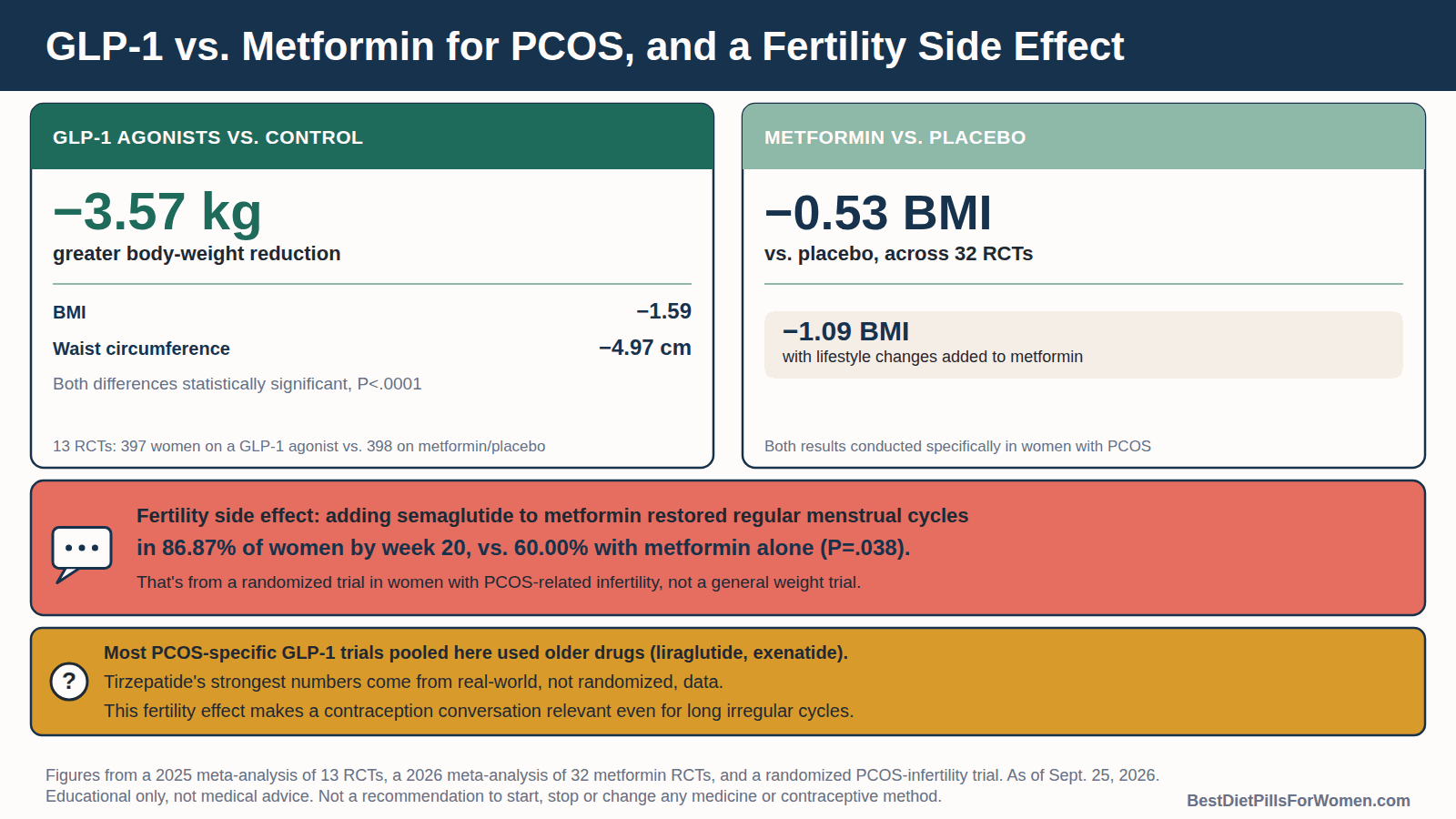
A large real-world cohort of 4,241 women with self-reported PCOS on tirzepatide (Zepbound) through a digital weight-loss clinic found an average weight loss of 18.81% of starting body weight at 10 months, rising to 21.02% among women who actively engaged with the program’s coaching and tracking tools. That’s a substantial number, but it comes from a retrospective, real-world cohort rather than a randomized controlled trial, meaning there’s no placebo comparison and no way to fully separate the drug’s effect from the digital coaching program itself; treat it as encouraging, not as equivalent evidence to the randomized data in Table 2. We haven’t found a published, PCOS-specific randomized trial of tirzepatide as of this writing.
The Fertility Side Effect Few Articles Mention
This is the part of the GLP-1-for-PCOS conversation that gets the least attention relative to how much it matters.
Why Treating Insulin Resistance Can Restore Ovulation
Because insulin resistance is a root driver of PCOS’s ovulation problems, treating it, whether with metformin, a GLP-1 medicine, or meaningful weight loss from any source, can restore regular ovulation as a side effect, sometimes unexpectedly. A randomized trial specifically studying women with PCOS-related infertility found that adding semaglutide to metformin restored regular menstrual cycles in 86.87% of women by week 20, versus 60.00% with metformin alone, a statistically significant difference (P=.038). That trial was designed around fertility, with a built-in eight-week treatment washout before the endpoint was measured, precisely because semaglutide and other GLP-1 medicines carry label guidance to stop the drug well before a planned pregnancy, a point covered in full in the next section.
What That Means If Pregnancy Isn’t the Goal Right Now
If pregnancy isn’t the goal, this fertility-restoring effect is a genuine reason to have a contraception conversation before starting a GLP-1 medicine, metformin, or any treatment that meaningfully improves insulin resistance, even for a woman whose periods have been irregular or absent for years. Infographic 1 below lays out the PCOS-specific evidence numbers from this section side by side, since the fertility angle changes how several of them should be read in practice.
Our guide to weight loss pills vs. injections covers the broader GLP-1-versus-oral-medication decision in more depth for readers weighing format and administration, outside the PCOS-specific context covered here.
Pregnancy, Contraception and Weight Loss Pills in PCOS
Nowhere in this guide does PCOS change the conversation more than here, and it cuts in a direction that surprises many readers: treating PCOS can make pregnancy more likely, not less, even when periods have been irregular for years.
Why This Conversation Looks Different With PCOS
Most weight-loss guides discuss pregnancy as a reason for caution around a drug’s safety profile. In PCOS, the treatment itself can actively change fertility status, which adds a layer most other guides don’t need to cover.
Can You Get Pregnant With PCOS Even With Irregular Periods?
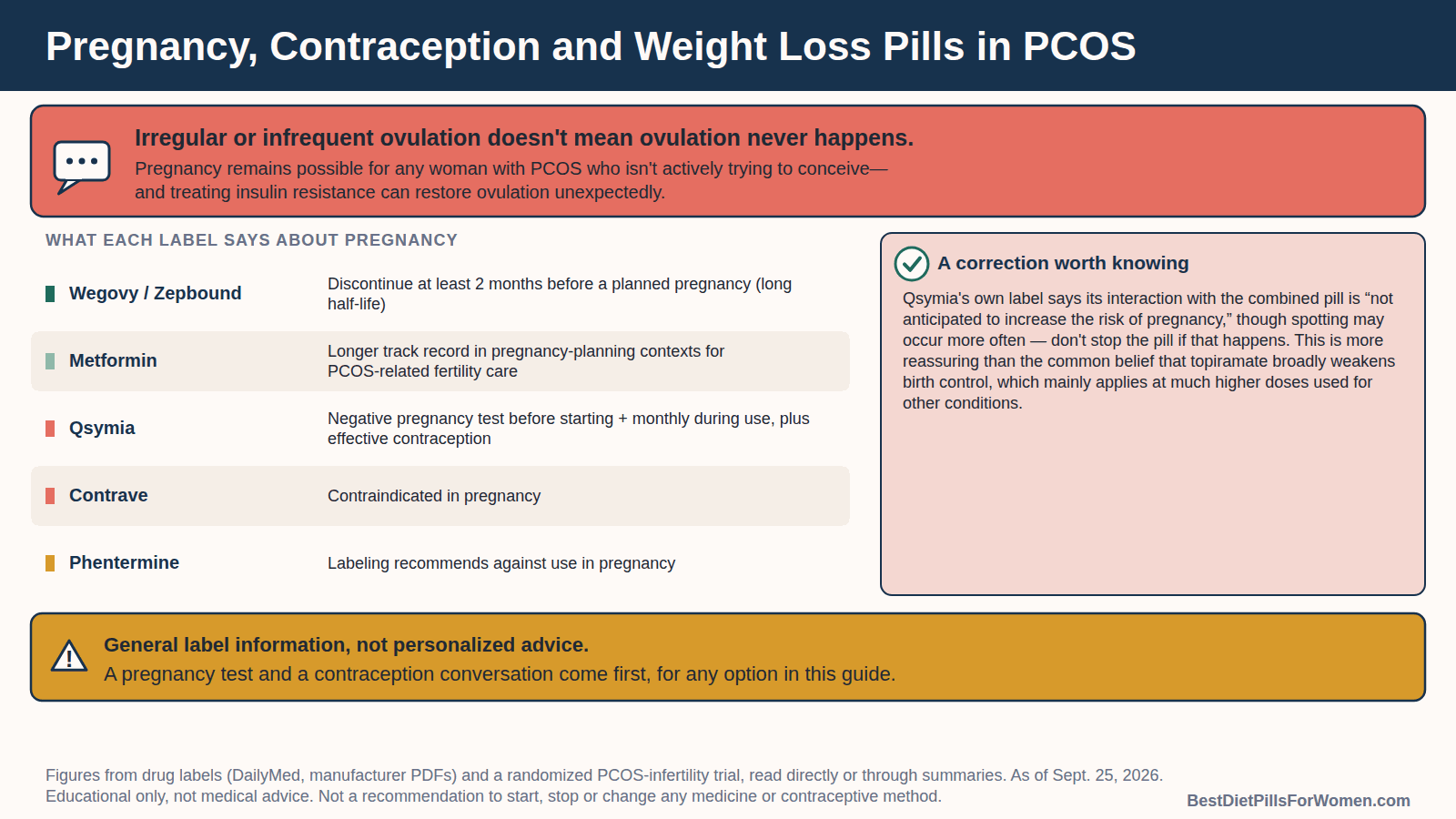
Yes: irregular or infrequent ovulation doesn’t mean ovulation never happens, and it can occur unpredictably, including in a woman who hasn’t had a period in months, which is why contraception is still relevant for any woman with PCOS who isn’t actively trying to conceive. That baseline possibility becomes more relevant, not less, once a woman starts a medication that specifically targets the insulin resistance behind her irregular cycles, as the previous section’s fertility trial demonstrated directly.
What Each Drug’s Label Says About Pregnancy
| Option | What the label or guidance says |
|---|---|
| Wegovy / Zepbound (semaglutide, tirzepatide) | Discontinue at least 2 months before a planned pregnancy, based on the drug’s long half-life |
| Metformin | Widely used before and, under clinician supervision, during early pregnancy in PCOS-related fertility care; not the same long clearance concern as GLP-1 drugs |
| Qsymia (phentermine-topiramate) | Requires a negative pregnancy test before starting and monthly during use, plus effective contraception |
| Contrave (naltrexone-bupropion) | Contraindicated in pregnancy |
| Phentermine | Labeling recommends against use in pregnancy |
| Orlistat (alli / Xenical) | No pregnancy-specific restriction in what we reviewed |
| Myo-inositol | Also studied and sometimes recommended during pregnancy for gestational diabetes prevention in some research, a different context than weight loss |
Table 3 method: this table summarizes prescribing information, manufacturer guidance and the fertility trial cited elsewhere in this guide, read as of September 25, 2026; it is general label information, not personalized medical advice, and it doesn’t cover every possible situation.
Read Table 3 alongside the previous section: several of these drugs are, at the same time, being actively studied as fertility-supporting treatments for women trying to conceive and require specific precautions for women who are not. That dual role is fairly unique to PCOS among the conditions covered across our guides.
Contraception While You’re Managing PCOS Weight
For women with PCOS who aren’t currently trying to conceive, the contraception conversation intersects with weight treatment in a few specific ways worth understanding upfront.
Combined Oral Contraceptives: Cycle Control, Not Weight Loss
Combined oral contraceptives are often a first-line PCOS treatment for irregular cycles and androgen symptoms like acne and excess hair growth, but they have no consistent weight-loss effect, and some women report modest weight gain, mainly from fluid retention, on starting one. They’re included in this guide’s comparisons specifically because they’re so frequently confused with “PCOS diet pills” in searches, not because they compete with the medications discussed earlier on weight itself. Obesity itself also raises the clotting-risk category the CDC assigns to combined hormonal contraceptives, a consideration independent of, and worth discussing alongside, any weight loss medication.
Progestin-only options (a hormonal IUD, implant or minipill) are worth raising with a clinician for women who can’t safely use an estrogen-containing pill, whether because of the clotting-risk factors above or another personal or family history, since they provide contraception without carrying the same estrogen-related cardiovascular considerations.
What the Qsymia Label Actually Says About the Pill
Qsymia’s own prescribing information states that its interaction with a combined oral contraceptive is “not anticipated to increase the risk of pregnancy,” though it can cause more frequent breakthrough spotting, and specifically instructs patients not to stop their contraceptive pill if spotting occurs. This is more reassuring than a common assumption, that topiramate broadly weakens hormonal birth control, which mainly reflects research on much higher topiramate doses (200 mg a day or more) used for conditions like epilepsy, well above Qsymia’s approved dosing range. Given how many women with PCOS are already on a combined oral contraceptive for cycle control, this is a genuinely useful, often-overlooked clarification. Infographic 2 below puts this section’s pregnancy and contraception facts together in one place.
Myo-Inositol and Other Supplements Marketed for PCOS
Search for “PCOS weight loss” and supplements dominate the results, myo-inositol especially. The evidence behind it is real, but it doesn’t say what a lot of product marketing implies.
Myo-Inositol and D-Chiro-Inositol
Inositol is naturally occurring and involved in how cells respond to insulin, which is the biological rationale behind using it for PCOS.
Does Myo-Inositol Help With Weight Loss in PCOS?
Not clearly: a systematic review and meta-analysis of 30 trials and 2,230 participants, conducted to inform the 2023 update to the international PCOS treatment guideline, called inositol’s effect on BMI “very uncertain,” and described the overall metabolic evidence as “limited and inconclusive.” That’s a notably different conclusion than what most inositol product marketing suggests, and it’s worth sitting with: a supplement can have a plausible mechanism and still lack the human evidence to back a specific claim, which is exactly the case here for weight.
Ovulation Support Isn’t the Same Claim as Weight Loss
The same review did find a potential benefit for D-chiro-inositol specifically on ovulation, though it noted inositol overall “may have no effect on other outcomes.” That’s a meaningfully different claim than weight loss, and it’s one reason this guide treats “supports ovulation” and “helps you lose weight” as two separate questions requiring two separate kinds of evidence, even when they’re bundled together on the same product label. A widely sold branded myo-inositol/D-chiro-inositol powder runs about $70 to $93 for a 90-day supply, or roughly $23 to $31 a month, a cost worth weighing against what the evidence actually supports before buying based on a weight-loss claim specifically.
Berberine and Other “Insulin Support” Supplements
Berberine has become one of the most talked-about supplements in weight-loss circles generally, covered in more depth in our berberine for weight loss guide, sometimes marketed as a natural alternative to prescription options, and PCOS marketing has picked up the same language.
What Does the Berberine Evidence Actually Cover?
Berberine has general obesity research behind it, including systematic reviews finding modest reductions in body weight and BMI, but we found no large, PCOS-specific randomized trial establishing a berberine-specific weight-loss effect in women with this condition.
Some laboratory research suggests berberine may increase GLP-1 secretion in cell and animal models, one proposed mechanism for its metabolic effects, but that’s a proposed mechanism, not demonstrated clinical weight loss in PCOS specifically, and it shouldn’t be read as equivalent to the prescription GLP-1 evidence covered earlier in this guide. A popular branded berberine capsule costs around $30 for a 60-capsule bottle, working out to roughly $30 to $45 a month depending on the labeled dose.
Reading Supplement Marketing Claims Skeptically
N-acetylcysteine (NAC) is a third supplement that shows up constantly in PCOS product marketing, and it follows the same pattern as inositol: real research, aimed at a different outcome than weight. A 2025 meta-analysis of 20 trials and 2,515 participants found NAC significantly increased progesterone and endometrial thickness, both fertility-relevant measures, but didn’t report ovulation or pregnancy rates as primary outcomes and didn’t analyze weight or BMI as an outcome at all. Chromium, another ingredient sometimes marketed for insulin support in PCOS products, has its own systematic review showing no meaningful effect on weight in overweight or obese adults generally, a useful reminder that “supports insulin sensitivity” is a mechanism claim, not a demonstrated outcome. Dietary supplements aren’t required to prove effectiveness before being sold, and the FDA doesn’t review or approve them for safety or efficacy the way it does prescription drugs, which is worth remembering every time a PCOS-specific supplement label uses language that sounds more like a drug claim than what its own study data supports. None of this means these ingredients are unsafe or worthless for every purpose; it means the specific claim “will help you lose weight because you have PCOS” deserves more scrutiny than most labels invite. Table 4 audits five of the most common claims one at a time, against the specific evidence for each.
| Marketing claim | Our assessment | Why |
|---|---|---|
| “Myo-inositol helps you lose weight” | Unsupported as stated | Guideline meta-analysis calls the BMI effect “very uncertain” |
| “Inositol supports ovulation and hormone balance” | Plausible, with caveats | Some signal for D-chiro-inositol on ovulation specifically, not a broad guarantee |
| “Berberine is nature’s Ozempic for PCOS” | Misleading without context | General obesity evidence exists; no PCOS-specific RCT found; not equivalent to GLP-1 trial evidence |
| “Chromium improves insulin sensitivity for weight loss” | Unsupported as stated | Systematic review found no meaningful weight effect in overweight/obese adults |
| “This supplement is FDA-approved for PCOS” | False if claimed | Dietary supplements aren’t FDA-approved for safety or efficacy before sale |
Table 4 method: claims are composites of language commonly seen in PCOS supplement marketing, not quotes from a single named product; assessments reflect the specific evidence cited in this guide as of September 25, 2026, not a judgment on every brand or formulation.
Orlistat and Older Prescription Weight Loss Pills in PCOS
Before GLP-1 medicines dominated the conversation, orlistat, phentermine and combination pills like Qsymia and Contrave were the main prescription options, and they still have a place for some women with PCOS.
Orlistat
Orlistat works differently from every other drug in this guide: it blocks roughly 30% of dietary fat from being absorbed in the gut, rather than acting on appetite or insulin. Table 5 compares it directly against metformin in women with PCOS specifically.
Orlistat vs. Metformin, Head to Head
| Outcome | Result | Statistical significance |
|---|---|---|
| Weight | −1.29 kg favoring orlistat | Not significant (95% CI −3.03 to 0.46) |
| BMI | −0.47 favoring orlistat | Not significant (95% CI −1.53 to 0.59) |
| Ovulation rate | RR 0.78 | Not significant |
| Total cholesterol and LDL | Significantly better with orlistat | Significant |
| Adverse events | RR 0.37 (orlistat had fewer) | Significant |
Table 5 method: figures come from a systematic review and meta-analysis of 5 randomized controlled trials in overweight and obese women with PCOS, all approximately 3 months long, read from the full published article as of September 25, 2026; the authors describe the weight and BMI findings as inconclusive given small sample sizes and wide confidence intervals.
The honest reading of this table is that orlistat and metformin performed similarly for weight in this specific comparison, with neither clearly ahead, while orlistat caused meaningfully fewer side effects and had a real edge on cholesterol. Orlistat’s absorption-blocking mechanism means it doesn’t affect insulin resistance directly, so it’s a reasonable option for a woman whose cholesterol or general weight is the bigger concern, but it doesn’t address the insulin-and-androgen loop the way metformin or a GLP-1 medicine does.
The Practical Trade-offs
Orlistat’s most common side effects, oily spotting, gas with discharge and urgent bowel movements, are directly tied to how much fat is in a given meal, and they’re usually manageable by following a lower-fat diet rather than by adjusting the dose. It also reduces absorption of fat-soluble vitamins (A, D, E and K), so a multivitamin taken a few hours apart from a dose is commonly recommended. The OTC version (alli, 60 mg) and the prescription version (Xenical, 120 mg) use the same drug at different doses, giving some women a lower-cost, non-prescription entry point.
Phentermine, Qsymia and Contrave
These three prescription options have solid general-obesity evidence behind them but essentially no PCOS-specific randomized trials, which changes how confidently we can speak about them here.
What Changes About Using Them for PCOS?
Nothing about how phentermine, Qsymia or Contrave work changes because a woman has PCOS; we simply don’t have PCOS-specific trial data the way we do for metformin and GLP-1 medicines, so their expected results come from general obesity trials rather than from research in this population specifically. That’s not a reason to rule them out, but it is a reason to set expectations using general-population averages, covered in our broader women’s weight loss guide, rather than assuming PCOS changes their effectiveness in either direction.
Blood Pressure, Mood and Other Contraindications
Phentermine and Qsymia are both contraindicated with uncontrolled high blood pressure and with a history of heart disease, which is worth flagging given PCOS’s own association with higher cardiometabolic risk generally. Contrave carries a boxed warning for suicidal thoughts and behavior and is contraindicated in anyone with a seizure disorder or a current or prior eating disorder, a combination worth discussing openly with a prescriber given the disordered-eating risk covered later in this guide’s safety section. All three require the same pregnancy precautions detailed in the previous section, regardless of how irregular a woman’s cycles have been.
Medications People Confuse With PCOS Weight Loss Pills
Two categories of medication show up constantly in PCOS medication searches and forum discussions alongside genuine weight loss drugs, even though neither one is meant to treat weight.
Spironolactone
Spironolactone is one of the most commonly prescribed medications for PCOS, which is exactly why it gets mistaken for a diet pill so often.
What Does Spironolactone Actually Treat?
Spironolactone is an anti-androgen medication prescribed for PCOS-related hirsutism (excess hair growth) and acne, not for weight loss, and it has no established role as a weight loss treatment in the research we reviewed. It works by blocking androgen receptors and reducing androgen production, addressing the same hormonal pathway discussed earlier in this guide, but aimed at skin and hair symptoms rather than body weight or insulin resistance directly, and it’s often prescribed alongside, not instead of, a combined oral contraceptive or a weight-focused medication.
Why Pregnancy Planning Matters Here Too
Spironolactone carries a theoretical, animal-study-based concern about feminizing effects on a male fetus if used in early pregnancy, though this hasn’t been confirmed in the limited human data available, and product labeling is inconsistent about whether to avoid it entirely during pregnancy or use it only if benefits clearly outweigh risks. It can also affect menstrual cycles and ovulation, which matters for the same fertility-planning reasons covered in this guide’s pregnancy and contraception section, regardless of which specific symptom it’s being used to treat.
Fertility Medications
The other category readers frequently search alongside weight loss pills for PCOS treats a completely different goal: helping someone get pregnant, not helping them lose weight.
Are Clomiphene and Letrozole Diet Pills?
No: clomiphene and letrozole are ovulation-induction medications prescribed specifically to help women with PCOS conceive, and they have no role in weight management; some are occasionally associated with modest weight changes as a side effect, but that isn’t why they’re prescribed or how their effectiveness is measured. They show up in the same searches as this guide’s topic mainly because PCOS-related infertility and PCOS-related weight concerns often affect the same women at the same time, not because the medications overlap in purpose.
Where They Fit Alongside Weight Management
For a woman actively trying to conceive, weight management and fertility treatment often happen in sequence or in parallel under a reproductive endocrinologist’s guidance, sometimes starting with weight-focused treatment like metformin or a supervised GLP-1 taper before moving to ovulation induction, given how strongly excess weight and insulin resistance can interfere with fertility treatment’s own success rates. A landmark, NICHD-funded randomized trial found letrozole produced significantly more live births than clomiphene in women with PCOS-related infertility (27.5% vs. 19.1% of participants, with no significant difference in twin pregnancy rates), which is why letrozole is now commonly favored as first-line ovulation induction over the older clomiphene. Neither drug is dosed, timed or monitored anything like a weight loss medication, and neither one is a reasonable substitute for one. That sequencing decision is a reproductive medicine question this guide isn’t positioned to answer for any individual reader; it’s raised here only to make clear why these medications appear in PCOS searches without belonging in a weight loss pill comparison.
Safety When Using Weight Loss Pills With PCOS
Every medication in this guide carries its own side-effect profile, and PCOS adds a few considerations that don’t always come up in general weight-loss safety discussions.
Side Effects Common to Several Options
Some side effects show up across multiple drug classes covered in this guide, which makes them worth understanding as a group before looking at any single option in isolation. Table 6 lays out the gastrointestinal pattern for each.
Gastrointestinal Effects
| Option | GI side-effect pattern | Source |
|---|---|---|
| Metformin | About 7.67 times more likely to cause GI effects than placebo | Meta-analysis of 32 RCTs |
| GLP-1 agonists (general population) | Nausea and vomiting are the most common reasons for stopping, typically dose-related | Prescribing information |
| GLP-1 agonists (PCOS meta-analysis) | Higher odds of nausea (OR 3.07), vomiting (OR 2.05) and dizziness (OR 5.58) vs. controls | Meta-analysis of 13 RCTs |
| Orlistat | Oily spotting, gas with discharge, urgency, tied to dietary fat intake | Meta-analysis vs. metformin |
Table 6 method: figures are as reported in the meta-analyses and prescribing information, read as of September 25, 2026; the GLP-1 rows compare a general-population source and a PCOS-specific meta-analysis separately rather than combining them, since the two use different comparison groups.
Starting at a low dose and increasing gradually, a strategy already standard for both metformin and GLP-1 medicines, meaningfully reduces GI side effects for most people, which is one reason abrupt full-dose starts are generally avoided regardless of which option a woman and her clinician choose.
Mood, Blood Pressure and Rare but Serious Risks
Contrave’s boxed warning for suicidal thoughts and behavior, Qsymia and phentermine’s blood pressure and heart-rate cautions, and metformin’s rare lactic acidosis risk in significant kidney impairment were all covered in earlier sections and apply the same way in PCOS as in the general population. New or worsening mood symptoms after starting any medication in this guide are worth reporting to a prescriber rather than dismissing as an expected PCOS symptom, since several of these drugs, not just PCOS itself, can independently affect mood.
Blood pressure and cholesterol cautions carry extra weight in PCOS specifically, since the same insulin resistance and androgen pattern behind weight and cycle problems also raises the odds of high blood pressure and unhealthy cholesterol independent of any medication choice. That’s a reason a baseline blood pressure and lipid check before starting phentermine, Qsymia or Contrave, all of which carry cardiovascular cautions of their own, is worth confirming happened rather than assuming it’s optional.
Combining metformin with a GLP-1 medicine, an approach covered earlier in this guide’s fertility-focused trial, can compound gastrointestinal side effects from each drug individually, which is one reason clinicians often introduce the two sequentially, adjusting one dose before adding or increasing the other, rather than starting both at a full dose on the same day.
Who Needs Extra Caution
Two considerations are worth extra attention specifically because of how common they are within the PCOS population itself, independent of any specific drug choice.
Cardiometabolic Risk and Type 2 Diabetes
Women with PCOS face roughly four times the risk of developing type 2 diabetes compared with women without the condition, and are typically diagnosed about four years earlier, based on a Danish national registry study of nearly 20,000 women with PCOS matched against more than 54,000 controls. That elevated baseline risk is part of why many clinicians screen for prediabetes and diabetes as part of a PCOS workup regardless of weight, and it’s a reason insulin-focused options like metformin and GLP-1 medicines often get prioritized over purely appetite-focused ones like phentermine when both are reasonable choices on paper.
Disordered Eating Risk in PCOS
A 2024 meta-analysis pooling 20 studies across 9 countries, nearly 29,000 women with PCOS compared with more than 258,000 without, found an increased prevalence of binge eating disorder and bulimia nervosa in women with PCOS, a pattern that held regardless of BMI and didn’t extend to anorexia nervosa specifically. That context matters when choosing among the options in this guide: a woman with a current or past eating disorder should discuss that history openly with her prescriber, since it changes which options, Contrave in particular, are appropriate, and it’s a reason a treatment plan built around shame or extreme restriction is unlikely to hold up over time regardless of which medication is involved.
What Weight Loss Pills for PCOS Cost
Cost varies more across the options in this guide than almost any other factor, and it’s worth seeing the full range before deciding where to start.
Prescription Costs
Prescription weight loss drugs, GLP-1 medicines especially, remain expensive without insurance coverage, while metformin sits at the opposite extreme.
GLP-1s vs. Older Prescription Pills
| Option | Monthly self-pay price | Estimated annual cost |
|---|---|---|
| Wegovy pill (1.5 mg to 25 mg) | $149 to $299 | $1,788 to $3,588 |
| Wegovy injection, standard doses | $349 ($399 for 7.2 mg) | $4,188 ($4,788 for 7.2 mg) |
| Zepbound single-dose vials | $299 to $449 | $3,588 to $5,388 |
| Metformin (generic) | About $0 to $20 | About $0 to $240 |
| Contrave | About $199 | About $2,388 |
| Qsymia | About $75 | About $900 |
| Phentermine | About $16 | About $192 |
| Alli (OTC orlistat 60 mg) | About $88 | About $1,056 |
| Xenical (prescription orlistat 120 mg) | About $431 | About $5,172 |
| Myo-inositol powder (branded example) | About $23 to $31 | About $276 to $372 |
| Berberine capsules (branded example) | About $30 to $45 | About $360 to $540 |
| Combined oral contraceptive, generic (for comparison only) | $18 to $248 (about $35 for generic norethindrone) | $216 to $2,976 (about $420 for generic norethindrone) |
Table 7 method: monthly figures are self-pay or lowest-listed prices from manufacturer cost pages, an investor press release, retail price aggregators and branded supplement product pages, read through page summaries on September 25, 2026, and annualized by multiplying by 12; totals exclude clinician visits, lab tests, telehealth fees, shipping and needles, and assume no missed fills.
Why Metformin Is the Budget Outlier
Metformin’s price gap versus every other prescription option is enormous, generic 500 mg tablets run as little as free at some pharmacy membership programs and rarely more than $20 to $25 a month even at full retail, which is a meaningful part of why it remains a common first step even though its average weight effect is smaller than a GLP-1 medicine’s. For a woman weighing cost against effect size, a reasonable, clinician-guided starting point in many cases is metformin alone or combined with lifestyle changes, with a GLP-1 medicine added later if insurance coverage becomes available or if metformin’s effect proves insufficient.
Supplement and Out-of-Pocket Costs
Supplements aren’t free, and their cost is worth weighing against the more modest and, for some ingredients, considerably more uncertain evidence covered earlier in this guide.
Inositol and Berberine Product Pricing
A widely sold myo-inositol/D-chiro-inositol powder runs roughly $276 to $372 a year, and a common berberine capsule product runs roughly $360 to $540 a year, both entirely out of pocket since dietary supplements aren’t covered by prescription insurance. Measured against metformin’s near-zero-to-$240-a-year price range and considerably stronger evidence base, a supplement-first approach to PCOS weight management is, for many women, the more expensive and less well-supported starting point, not the cheaper or safer one it’s often marketed as.
Getting More From Insurance and Savings Programs
Coverage for GLP-1 medicines prescribed for weight loss alone remains inconsistent across private insurance plans and depends heavily on the specific diagnosis code used; a PCOS diagnosis alone doesn’t guarantee coverage the way a type 2 diabetes diagnosis often does for the same drugs. Manufacturer savings cards, covered in Table 7 above, can meaningfully lower the self-pay prices listed there for insured patients who don’t have specific weight-loss drug coverage, and a health savings account or flexible spending account can be used for any prescription medication in this guide, though generally not for dietary supplements, which is worth confirming with a benefits administrator.
Telehealth has made an initial PCOS-related prescription easier to access for many women, particularly for metformin and GLP-1 medicines, which don’t require the in-person exam and monthly pregnancy testing that Qsymia’s more restricted distribution program involves. That convenience is worth weighing alongside the pregnancy and contraception questions covered earlier in this guide; a telehealth visit still needs to cover cycle history, current contraception and pregnancy plans just as thoroughly as an in-person one would, and a reputable telehealth practice should ask about these directly rather than treating a prescription request as routine.
How to Choose: A PCOS-Specific Decision Guide
There’s no single best answer here, but there is a better and worse way to work through the decision, starting with matching the option to where a woman actually is with fertility plans and health priorities, not to whichever drug is most talked about.
If Pregnancy Is Part of Your Timeline
Fertility plans reshape this decision more in PCOS than in almost any other condition covered across our guides, because so many of these same treatments double as fertility-supporting options. Table 8 groups common situations with what this guide’s evidence and labels say about each.
Trying to Conceive Soon
| Your situation | What matters most | Worth raising with a clinician |
|---|---|---|
| Trying to conceive within the next few months | GLP-1 medicines require stopping at least 2 months before conception; metformin has a longer track record in this context | Whether a supervised weight-and-fertility sequence, not weight loss alone, fits your timeline |
| Not trying to conceive, no contraception currently used | Treating insulin resistance can restore ovulation unexpectedly, even after long irregular spells | Which contraceptive method fits alongside your chosen weight treatment |
| Already using a combined oral contraceptive | Obesity raises the CDC’s clotting-risk category for this method, independent of any weight loss drug | Whether your specific risk factors change your contraceptive category |
| Considering Qsymia specifically | Requires a negative pregnancy test before starting and monthly during use, plus effective contraception | Whether the monthly testing requirement fits your routine |
| Considering spironolactone for hirsutism or acne | Not a weight-loss drug; carries its own pregnancy caution | Whether it’s the right fit alongside, not instead of, a weight-focused plan |
| High blood pressure or heart disease | Phentermine, Qsymia and Contrave are contraindicated with uncontrolled blood pressure | Whether your blood pressure needs monitoring after starting any option |
| Considering a supplement first | Myo-inositol and berberine cost real money with weaker weight-specific evidence than metformin | Whether a supplement makes sense alongside, rather than instead of, an evidence-backed medication |
| History of disordered eating | Contrave and highly restrictive approaches carry specific cautions here | Which options are appropriate given that history |
Table 8 method: this table groups the guidance already cited throughout this article by situation rather than by drug; it’s a starting point for a conversation, not a set of eligibility rules, and it doesn’t cover every possible health situation.
Trying to Avoid Pregnancy Right Now
If pregnancy isn’t the goal, the practical takeaway from this guide’s pregnancy and contraception section is simple to state and easy to overlook in practice: don’t assume irregular or absent periods rule out pregnancy, especially once starting a treatment that specifically targets the insulin resistance behind those irregular cycles. A contraception conversation belongs at the start of treatment, not as an afterthought if a cycle unexpectedly returns.
If Your Main Goal Is Long-Term Metabolic Health
Fertility isn’t every reader’s priority, and for many women with PCOS, reducing long-term diabetes and cardiovascular risk is the more pressing concern.
Prioritizing Insulin Resistance and Diabetes Risk
Given the roughly fourfold higher type 2 diabetes risk associated with PCOS, an insulin-focused option, metformin, a GLP-1 medicine, or the two combined, generally addresses more of the underlying problem than an appetite-focused or fat-absorption-focused option alone, even when the numbers on a scale look similar in the short term. This is a conversation worth having explicitly with a clinician rather than defaulting to whichever drug is most heavily marketed at the moment.
Prioritizing Androgen Symptoms Alongside Weight
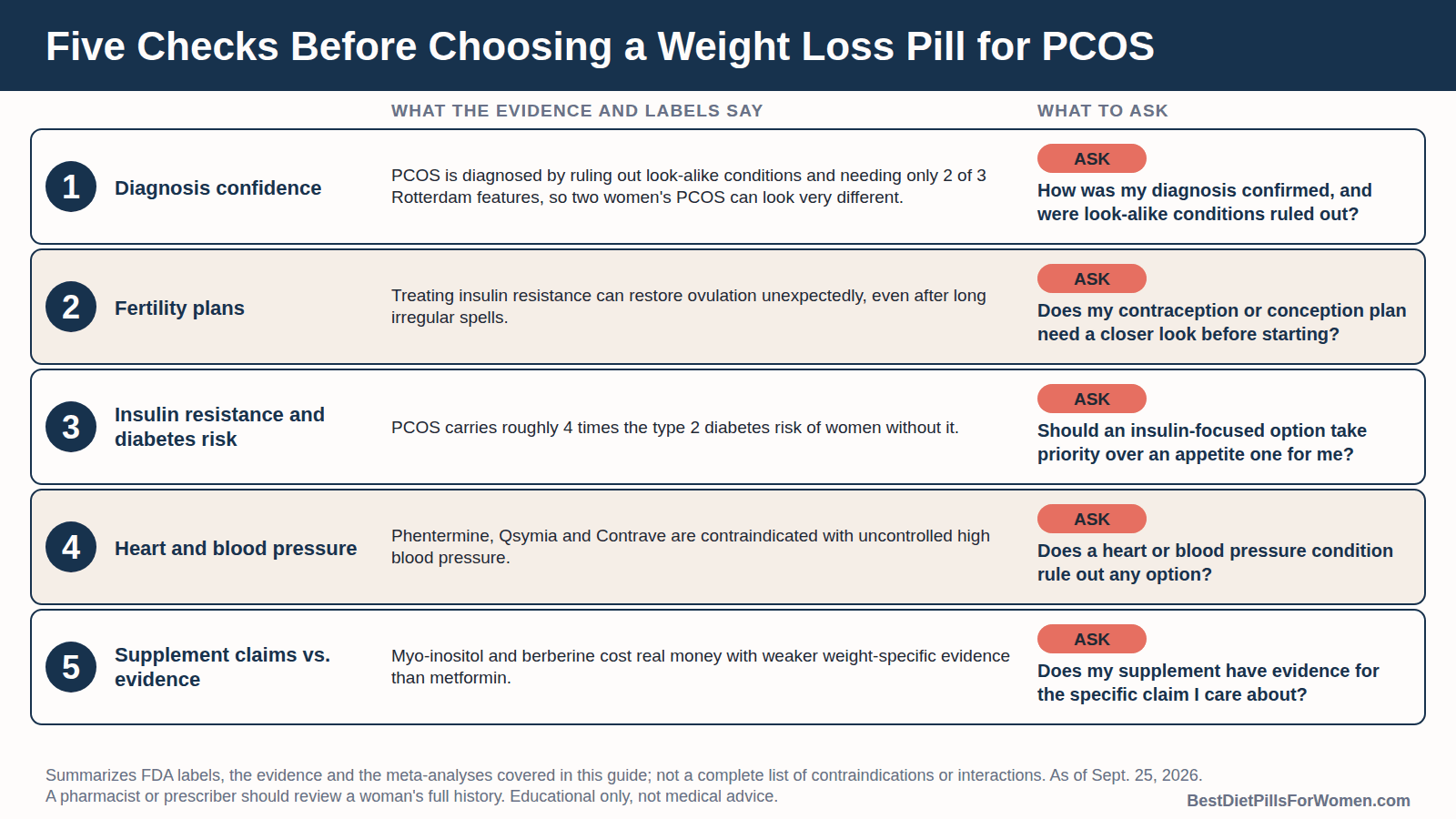
For women whose hirsutism, acne or scalp hair thinning bother them as much as or more than their weight, it’s worth knowing that GLP-1 medicines showed meaningful androgen reductions in the PCOS-specific research covered earlier in this guide, a secondary benefit beyond weight alone, while spironolactone and combined oral contraceptives target those same androgen symptoms directly without meaningfully affecting weight. Infographic 3 below turns the questions in this section into a short checklist to bring to an appointment.
Surgery is also a legitimate option for some women with PCOS and severe obesity: the American Society for Metabolic and Bariatric Surgery recommends considering surgery starting at a BMI of 35 or higher regardless of other conditions, and at 30 to 34.9 when a condition like type 2 diabetes is present, with NIDDK reporting average weight loss of 15% to 30% after surgery, a larger and generally more durable result than most pills achieve. ACOG guidance recommends waiting 12 to 24 months after bariatric surgery before conceiving, one more reason the fertility-planning conversation in this guide applies to a surgical route as much as to any pill. Whether metformin, a GLP-1 medicine, an older prescription pill, surgery, or a structured lifestyle program fits best is a conversation for an obesity-medicine specialist, endocrinologist or reproductive endocrinologist who knows a woman’s full history, not a conclusion this guide can reach for anyone. Our overview of weight loss medications puts the drug options in a wider context, and our guide to muscle preservation during weight loss covers a concern that applies here as much as at any other life stage.
Frequently Asked Questions About Weight Loss Pills for PCOS
These questions come up repeatedly in PCOS-related searches and weren’t fully answered by the sections above.
Effectiveness and Expectations
Three questions here get at the same underlying issue: how much does PCOS itself change what a woman should expect.
Do Weight Loss Pills Work as Well for Lean PCOS as for PCOS With Obesity?
Most of the trial evidence in this guide was conducted in overweight or obese women with PCOS, so we can’t say with confidence how these same drugs perform for a woman with lean PCOS and a normal BMI, a group the major trials generally didn’t focus on.
A woman with lean PCOS whose primary concerns are cycle irregularity or androgen symptoms is often better served by the non-weight-loss options covered earlier in this guide, combined oral contraceptives or spironolactone, than by a weight loss drug she may not clinically need or qualify for by prescribing criteria in the first place.
How Much Weight Can I Realistically Expect to Lose?
Trial and real-world averages in this guide range from about 1 to 2 pounds with metformin alone up to roughly 18.81% of body weight at 10 months in a large real-world tirzepatide cohort, but averages describe groups, not individuals, and PCOS’s own insulin resistance adds variability the general obesity literature doesn’t fully capture. Adherence, dose, diet, activity and how well-controlled a woman’s underlying insulin resistance is all affect where any individual lands relative to these averages.
What Happens If I Stop Taking a Weight Loss Pill for PCOS?
Weight regain is common after stopping a GLP-1 medicine or metformin, since these drugs manage insulin resistance and appetite while they’re in the body rather than producing a permanent metabolic change, and the underlying PCOS-driven insulin resistance itself doesn’t go away. None of the PCOS-specific trials in this guide followed women for a meaningful period after stopping treatment, so long-term regain patterns specific to PCOS remain an open question.
Fertility, Pregnancy and Safety
These three questions come up specifically because of PCOS’s unusual, two-directional relationship with fertility, covered in detail earlier in this guide.
Can Metformin or a GLP-1 Medicine Make Me Ovulate Unexpectedly?
Yes: because these medications treat the insulin resistance that suppresses ovulation in PCOS, restored regular ovulation is a well-documented effect, demonstrated directly in a randomized trial where adding semaglutide to metformin restored regular cycles in 86.87% of women by week 20. That’s worth planning around whether or not pregnancy is currently a goal.
Is It Safe to Combine a Weight Loss Pill With a Fertility Medication Like Clomiphene or Letrozole?
This is a reproductive endocrinology question that depends on timing, dosing and a woman’s individual history, and it isn’t one this guide is positioned to answer; a reproductive endocrinologist or fertility specialist, not a general weight-loss guide, is the right source for combining these treatment types. In general, GLP-1 medicines are typically paused well before an active fertility treatment cycle given their pregnancy-planning discontinuation window, discussed earlier in this guide.
Does Treating PCOS Weight Also Improve Hirsutism and Acne?
Sometimes, but not reliably enough to substitute for a dedicated anti-androgen treatment: GLP-1 medicines showed measurable reductions in testosterone and related androgens in PCOS-specific research, but spironolactone and combined oral contraceptives remain the more established, targeted options for hirsutism and acne specifically. Many women reasonably use one option for weight and insulin resistance and a separate one for skin and hair symptoms.
Terminology, Diagnosis and Next Steps
These last three questions are about sequencing the decision and understanding the landscape, not about any single drug’s evidence.
Do I Need to Start Calling It PMOS Instead of PCOS?
Not necessarily: “PCOS” remains the term most commonly used in the U.S., including by government resources like the Office on Women’s Health, during a planned three-year transition to “PMOS” that began in May 2026. Both terms refer to the identical condition and identical diagnostic criteria, so understanding either name is enough to follow a diagnosis or a conversation with a clinician.
Does Insurance Cover Weight Loss Pills for PCOS?
Coverage varies widely by plan and often depends on the specific diagnosis code used; a PCOS diagnosis alone doesn’t guarantee coverage for a GLP-1 medicine the way a type 2 diabetes diagnosis frequently does for the same drug. Metformin, by contrast, is inexpensive enough that insurance coverage matters far less, which is one practical reason it remains a common starting point.
What Should I Ask My Doctor Before Starting?
Ask how confident your PCOS diagnosis is and whether look-alike conditions were ruled out, whether insulin resistance or a diabetes screening test has been checked, your current cycle pattern and fertility plans, your blood pressure and mental-health history, and how a chosen option might affect androgen symptoms alongside weight. Bring your full medicine and supplement list to that conversation, including anything marketed specifically for PCOS.
The Bottom Line on the Best Weight Loss Pills for PCOS
Pulling the evidence in this guide together into a single, honest conclusion.
What the Total Evidence Means for You
PCOS changes both which drugs make the most biological sense and which questions matter most before starting one, based on what the evidence in this guide shows.
The Biggest Realistic Benefit
The genuinely useful, PCOS-specific finding here is that GLP-1 medicines now have real evidence conducted in women with PCOS, not just inferred from general obesity trials, showing significantly better weight, waist-size and insulin-resistance outcomes than metformin or placebo. Metformin remains a legitimate, inexpensive, well-studied starting point, particularly for insulin resistance specifically, and the two are increasingly used together rather than as competitors, an approach a dedicated PCOS-focused fertility trial tested directly with encouraging results.
The Biggest Limitation and Safety Concern
The biggest limitation is that most PCOS-specific trials remain relatively small and short, typically 12 to 24 weeks, and tirzepatide’s strongest numbers come from real-world retrospective data rather than a randomized PCOS-specific trial. The biggest safety concern is one general weight-loss guides don’t need to cover: treating PCOS’s underlying insulin resistance can restore ovulation as a side effect, sometimes unexpectedly, which makes the contraception conversation covered in this guide relevant even for women whose periods have been irregular or absent for years.
Spironolactone, combined oral contraceptives, clomiphene and letrozole all deserve one more mention here because they’re so easily confused with weight loss treatments in PCOS searches and marketing. Nothing in this guide should be read as encouragement to start, stop or substitute any of these for a weight loss medicine, or the reverse; each treats a different problem, backed by different evidence, and a woman can reasonably use any combination depending on her own symptoms, fertility plans and goals.
A Rational Next Step
The goal of this guide was never to pick a single winner; it was to sharpen the conversation a woman has with her own clinician, particularly around fertility, diagnosis confidence and the gap between supplement marketing and supplement evidence.
Questions for a Clinician
Bring the specifics: how your PCOS diagnosis was confirmed and whether look-alike conditions were ruled out, your BMI and any related health conditions, your current cycle pattern and fertility plans, your blood pressure and mental-health history, and any supplement you’re already taking or considering. A clinician with that full picture, ideally one experienced in PCOS specifically, can make a recommendation this guide deliberately doesn’t.
What to Re-Check Before You Spend Money
Prices, manufacturer savings terms, drug labels and supplement pricing all change, and the PCOS-to-PMOS terminology transition itself is still unfolding, with full guideline adoption not expected until 2028. Re-check Table 7’s prices, confirm current label language, especially around pregnancy and contraception, for any drug you’re considering, and weigh a supplement’s actual evidence, not just its marketing, against its cost before spending money based on anything in this guide, which reflects information gathered as of September 25, 2026.
Related Reading
Sources
These are the main sources behind this guide, chosen because they are the ones to check first for current facts. Labels, prices and research summaries change, so confirm the latest version before you make decisions.
- Novo Nordisk. Wegovy (semaglutide) injection and tablets, prescribing information (revised June 2026). https://www.novo-pi.com/wegovy.pdf
- Eli Lilly and Company. Zepbound (tirzepatide) prescribing information (revised August 2026). https://pi.lilly.com/us/zepbound-uspi.pdf
- Prescribing information for the older prescription pills, on DailyMed: Adipex-P (phentermine, Teva; https://dailymed.nlm.nih.gov/dailymed/drugInfo.cfm?setid=f5b2f9d8-2226-476e-9caf-9d41e6891c46) and Contrave (naltrexone and bupropion; https://dailymed.nlm.nih.gov/dailymed/drugInfo.cfm?setid=485ff360-32c8-11df-928b-0002a5d5c51b).
- Qsymia (phentermine and topiramate extended-release) prescribing information, current version. https://qsymia.com/patient/include/media/pdf/prescribing-information.pdf
- Teede H, Piltonen T, Dokras A, Morman R, et al. Polyendocrine metabolic ovarian syndrome, the new name for polycystic ovary syndrome: a multistep global consensus process. Lancet. May 12, 2026. https://www.thelancet.com/journals/lancet/article/PIIS0140-6736(26)00717-8/fulltext
- Office on Women’s Health, U.S. Department of Health and Human Services. Polycystic ovary syndrome (PCOS). https://womenshealth.gov/a-z-topics/polycystic-ovary-syndrome
- Lin S, et al. Efficacy and safety of GLP-1 receptor agonists on weight management and metabolic parameters in PCOS women: a meta-analysis of randomized controlled trials. Sci Rep. 2025;15:16512. https://www.nature.com/articles/s41598-025-99622-4
- Systematic review and meta-analysis of RCTs on metformin with or without lifestyle modification vs. placebo in PCOS. Eur J Endocrinol conference abstract, 2026. https://academic.oup.com/ejendo/article/189/2/S38/7236786
- Systematic review and meta-analysis of inositol in PCOS informing the 2023 International Evidence-based PCOS Guideline update. J Clin Endocrinol Metab. 2024;109(6):1630. https://academic.oup.com/jcem/article/109/6/1630/7504796
- Systematic review and meta-analysis, metformin versus orlistat in overweight/obese women with PCOS. https://pjrei.org/uploads/pdf/articles/metformin-versus-orlistat-in-the-treatment-of-overweight-and-obese-women-with-polycystic-ovary-syndrome-pcos–a-systematic-review-and-meta-analysis.pdf