
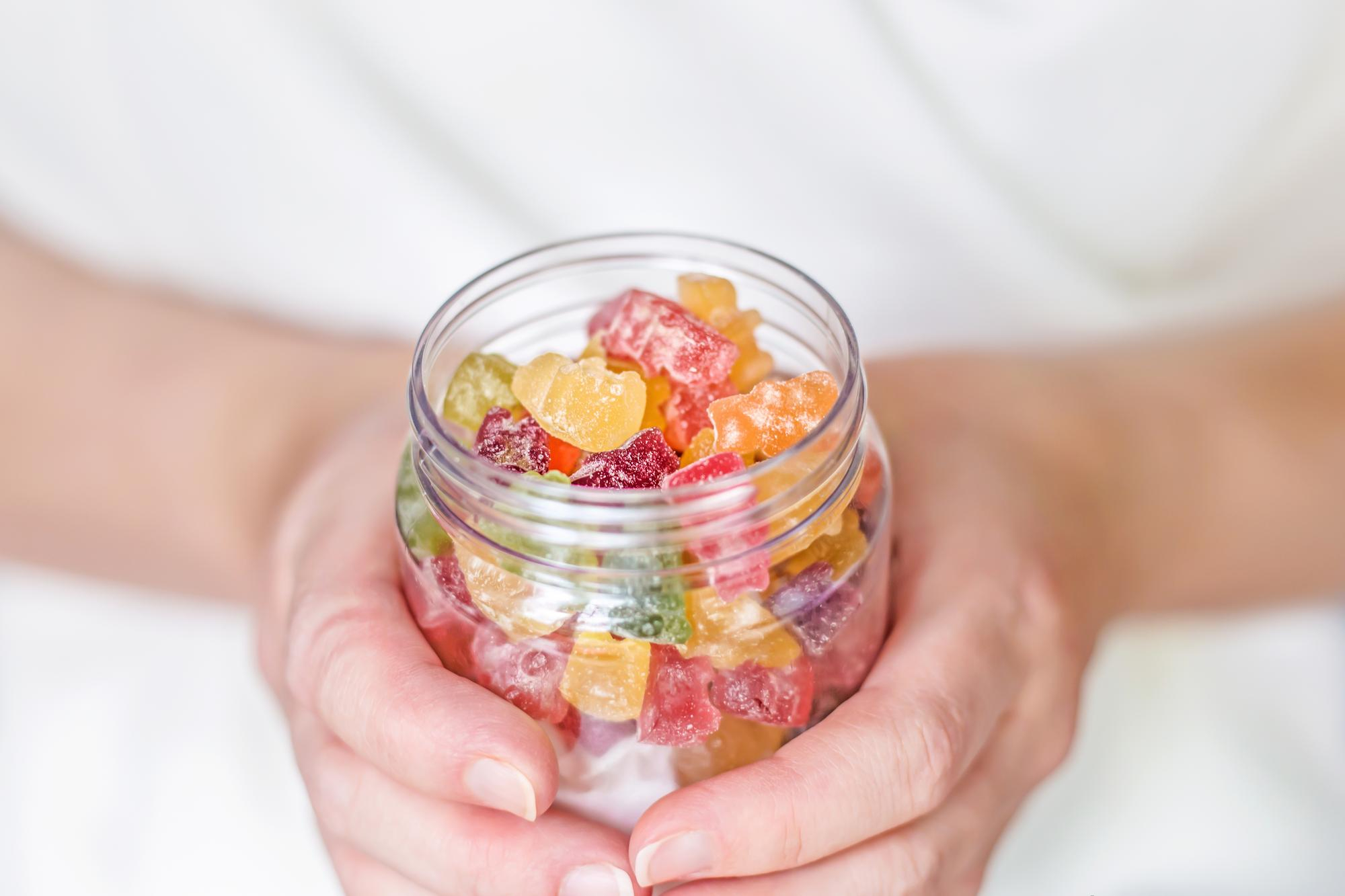
Weight loss gummies don’t have good evidence behind them as finished products. As of September 24, 2026, we found no published human trial of any weight loss, keto or apple cider vinegar gummy in the sources we could read, and the ingredients these gummies rely on showed small, inconsistent or no effects on body weight, usually at doses far above what a gummy serving holds.
Gummies sit in a legal gray zone that makes the confusion worse. FDA lists gummies among the forms a dietary supplement can take, and supplements don’t need FDA approval before they’re sold. So a bottle can say “supports metabolism” without anyone having shown that the gummy does. In 2021, the best-known apple cider vinegar gummy brand agreed, after a challenge inside the advertising industry’s own review system, to stop making weight loss, appetite and craving claims. Meanwhile, Walmart.com’s weight loss gummies category page listed 668 products on the day we looked, many of them with “keto” or “burn” branding.
This guide explains what weight loss gummies typically contain, how much of each ingredient one serving actually holds compared with the amounts used in research, what the evidence says about each ingredient, the safety issues that are specific to a candy-format supplement, what they cost per day, which marketing claims hold up, and what has better evidence for weight management. It’s written for women deciding whether a gummy is worth trying, and it’s meant to sharpen your questions for a pharmacist or clinician, not to replace their advice. It’s part of our wider coverage of weight loss pills for women.
Do Weight Loss Gummies Work? The Short Answer
The short answer comes first so you can check it against the rest of the guide. Each conclusion points to a section that shows the reasoning.
The Direct Answer and How Sure We Are
Two things need separating here: what the evidence says, and how much weight we’d put on each part of it.
Do Weight Loss Gummies Work?
Not in any way we could show. We found no published human trial of a weight loss, keto or apple cider vinegar gummy as a finished product, and the ingredient studies we read showed small, inconsistent or no effects on weight, usually at doses well above what a gummy serving contains. The evidence doesn’t support expecting weight loss from the gummy itself.
How Sure We Are About That Answer
We’re most confident about the legal points, because they come from FDA, FTC and industry self-regulatory documents, though we read most of those pages through summaries. We’re moderately confident about the ingredient evidence: the reviews point the same way, but many trials are small, short and funded by companies that sell the ingredient, and we read most of them as abstracts or page summaries. We have low confidence about what’s in any particular bottle, because the label listings we compared sometimes conflict with each other, and we found no independent lab results for weight loss, keto or berberine gummies. We rate each answer High, Moderate or Low on that basis.
Quick Answers to the Six Questions Most Shoppers Ask
Most searches for weight loss gummies come down to six questions. Table 1 answers each one briefly, with our confidence level and the main limitation on the answer.
The Summary Table
Read across each row before reading down a column, because an answer and its limitation belong together.
| Question | Short answer | Our confidence | Biggest limitation |
|---|---|---|---|
| Do weight loss gummies work? | We found no human trial of a finished weight loss gummy. Pooled analyses of their ingredients show effects from about −0.1 to −2.1 kg, several not statistically significant, and one ketone-salt trial found no added weight loss. | Moderate | Many ingredient trials are small, short and industry-funded, and we couldn’t search full journal databases |
| Do gummies contain the amounts used in studies? | Usually not. Two gummies of a leading brand supply roughly 50 mg of acetic acid by our estimate, against 750 to 1,500 mg a day in the best-known vinegar trial. | Moderate | Label amounts are the seller’s figures, and some listings conflict |
| Are they regulated like medicine? | No. They’re sold as dietary supplements without FDA approval, and the enforcement record we could find is mostly consumer alerts and industry self-regulation. | High | We read regulator pages through summaries and saw only the first page of FDA’s health fraud database |
| Are they safe? | Often low-risk at label doses, but they add sugar or sugar alcohols, some contain acid or caffeine, and garcinia has liver-injury reports. Gummies can also be mistaken for candy by children and pets. | Moderate | No safety data exist for the finished weight loss gummies, and poison-center data aren’t broken out by product type |
| What do they cost? | In our snapshot, about $0.13 to $2.00 a day at label directions, a 15-fold range, and price didn’t track evidence (Table 7). | Moderate | Prices and listings change daily and differ by seller |
| What works better? | Behavioral programs averaged about 2.4 kg more weight loss than usual care, and prescription medicines produced much larger average results in trials. | Moderate | Prescription options need a clinician, cost more and carry their own risks |
Table 1 method: answers summarize the sections that follow, and each row’s sources appear there. “High” means the answer rests on regulator documents; “Moderate” means consistent but limited evidence; “Low” means we couldn’t verify the answer. The 15-fold range compares the lowest and highest per-day figures in Table 7 and is a calculation, not a quoted price. The 50 mg figure is our estimate from a label amount and a stated percentage, explained in the section on dose.
What Our Ratings Mean
We use three ingredient ratings later in the guide. Limited means some human data suggest an effect on appetite or weight, but the studies are small, short or linked to the seller. Mixed means several human studies point in different directions. No benefit found means the best human evidence we found showed no meaningful effect on appetite or weight. These ratings describe the strength of evidence, not safety, and none of them means an ingredient is proven.
How We Evaluated Weight Loss Gummies
Reviews in this category can mean anything from hands-on testing to a summary of a seller’s own website. We’d rather be exact about what this guide is.
What We Reviewed
This guide is desk research. We read FDA, FTC, NIH and industry self-regulatory documents, national supplement-label records, systematic reviews and individual trials, and brand and retailer listings checked on September 24, 2026. We didn’t buy, take or lab-test any product, and nothing here describes personal experience with one.
What We Couldn’t Check
Several journal databases and one large retailer blocked automated access, so for many studies we relied on abstracts and page summaries, and we say so when it matters. We couldn’t verify what’s inside any bottle: retailer pages show what sellers say, and a few listings contradicted each other. The nine labels in Table 3 are examples, not a representative sample of a market with hundreds of products. Prices are one-day snapshots. And we didn’t rank brands, because a ranking would imply that some weight loss gummies have solid evidence behind them.
What Counts as a Weight Loss Gummy, and How U.S. Law Treats It
A gummy is a delivery format, not a type of medicine, and the law treats what’s inside it the way it treats any other supplement. That’s the starting point for judging every product in the rest of this guide.
Gummies as a Supplement Format
Two questions come first: what FDA says about the format, and what shoppers actually find under the “weight loss gummy” label.
What FDA Says About Gummy Supplements
FDA’s dietary supplement Q&A lists gummies among the forms supplements come in, next to tablets, capsules, powders and liquids, and it repeats the core rule for all of them: supplements don’t need FDA approval before they’re sold, and the maker is responsible for making sure the product is safe and the label is truthful. We found no FDA guidance that sets limits on how candy-like a gummy supplement can be or how much of an ingredient it has to contain. The format matters for a practical reason, though. A gummy has to hold its active ingredients inside a sweetened gel of pectin or gelatin, and that limits how much of a bulky ingredient one piece can carry, a point Table 4 puts in numbers.
The Kinds of Products Sold as Weight Loss Gummies
“Weight loss gummy” has no legal or scientific definition, and the label listings we read fell into five loose groups. Apple cider vinegar (ACV) gummies are the largest, led by brands such as Goli, Nature’s Bounty and OLLY. “Keto” gummies usually promote beta-hydroxybutyrate (BHB), a ketone the body makes when it burns fat for fuel, though several “keto” labels we checked listed no BHB at all. Fat-burner gummies add caffeine, green coffee, garcinia or L-carnitine. Berberine or “GLP-1 support” gummies lean on a plant compound or on a hormone name. And fiber or probiotic gummies promise fullness or gut balance. Walmart.com’s category pages gave a sense of the scale on the day we looked: 668 products under weight loss gummies, 433 under apple cider vinegar gummies and 441 under fat burner gummies, with plenty of overlap.
What a Weight Loss Claim Can and Can’t Say
A label can sound clinical without saying anything a court or a regulator could test. Knowing how the rules work makes that easier to spot.
Structure/Function Claims and What They Skip
Supplement makers may describe an ingredient’s effect on the body’s structure or function, such as “supports a healthy metabolism,” without FDA reviewing the wording first, but they can’t claim to diagnose, treat, cure or prevent a disease. The FTC separately expects health claims to be truthful and supported by competent and reliable scientific evidence, and HHS’s Office of Inspector General reported in 2012 that supplement structure/function claims failed to meet federal requirements. The practical result is that a phrase can be legal to print while saying nothing measurable. It’s why our claim audit later in this guide grades what a claim means, not only whether it’s allowed.
A Naming Trap: When “Gummy” Isn’t a Gummy
Product names don’t reliably tell you the format. GNC sells “EHP Labs OxyShred, Gummy Snake” as a 10-ounce powder with proprietary blends, and the name refers to a flavor. The same brand’s actual gummy lists each ingredient separately. So check the format, the serving size and the Supplement Facts panel before assuming that a page describes the gummy you have in mind.
What Has and Hasn’t Been Enforced
Consumers often assume that “someone must be checking.” For weight loss gummies, the record we could find is thin, and most of it comes from consumer alerts and industry self-regulation rather than from government cases.
The Record in Date Order
Table 2 lists the events we found that bear on gummy supplements, with the source type in the last column because a government action, an industry decision and a private lab report carry different weight.
| Date | Who | What happened | Why it matters for gummies | Type |
|---|---|---|---|---|
| Oct 21, 2020 | ConsumerLab | Reported 14 to 51 mg of acetic acid in ACV supplements in gummy, capsule or tablet form, against roughly 700 to 800 mg per serving of bottled vinegar; two supplements had about 20% less than their labels suggested | The only lab figures we found for ACV gummies; product-level results are paywalled | Private testing company |
| Mar 17, 2021 | NAD | Goli agreed to discontinue challenged claims, including weight loss, appetite control and reduced cravings; NAD recommended changes to the remaining energy and skin claims | A leading brand dropped weight-related claims after a competitor’s challenge | Industry self-regulation |
| Jan 27, 2022 | NAD | In a challenge by a vinegar maker, NAD found the health benefits tied to much more acetic acid than the gummies’ suggested intake supplies; Goli stopped claiming two gummies equal one dose of liquid vinegar | Puts the dose gap in an industry review body’s finding; NARB later found the product name not literally false | Industry self-regulation |
| Feb 16, 2023 | FTC | Alleged that The Bountiful Company hijacked Amazon ratings and reviews; Nature’s Bounty ACV gummies were among the products named; the final order followed on Apr 10, 2023 with $600,000 in consumer redress | Shows FTC scrutiny of gummy listings, but the alleged conduct concerned reviews, not weight loss claims | Government (FTC) |
| Feb 17, 2023 | FTC | Consumer alert about fake “Shark Tank” celebrity endorsements of weight loss and keto products | Fake endorsements are a recurring gummy sales tactic; the alert text as we read it doesn’t say “gummies” | Government (consumer education) |
| Apr 25, 2023 | JAMA research letter | 22 of 25 melatonin gummies were inaccurately labeled, with 74% to 347% of the labeled amount | Not a weight loss product, but it shows that a gummy label can be far off | Academic (figures via news reports) |
| Jan 2, 2024 | FTC | Consumer alert, “New year, new weight loss scams” | General red flags for weight loss promises; the text doesn’t mention gummies | Government (consumer education) |
| Mar 28, 2024 | CRN | Trade group issued voluntary gummy labeling guidelines with a 24-month compliance window | The industry itself recognizes gummy-specific labeling problems; the guidelines are voluntary | Industry trade group |
| Apr 22, 2024 | New York | Law barring sale of OTC diet pills and weight loss supplements to people under 18 took effect; a federal appeals court affirmed the denial of a preliminary injunction on Nov 13, 2025, and a petition to the Supreme Court is pending | Some gummy sellers now restrict New York shipments or require ID | State law |
| Dec 10, 2024 | FDA | Warning letter to Veronvy about a GLP-1 supplement sold as drops, not gummies | The only FDA warning letter on a GLP-1 supplement we found | Government (FDA) |
| Jul 13, 2026 | Bloomberg Law | Reported that FDA’s acting commissioner was aware of GLP-1-related supplement claims but described no planned action, and that the FTC declined to comment | As of that report, no government enforcement on GLP-1 supplement claims | News report |
Table 2 method: dates come from each source’s own page. NAD and NARB are the advertising industry’s self-regulatory bodies, not FDA or the FTC, and ConsumerLab is a private company, so the “Type” column matters. The list isn’t complete. Within the sources we could read, we found no FDA or FTC action against the maker of a weight loss, keto or ACV gummy over weight loss claims, and we saw only the first page of FDA’s Health Fraud Product Database.
What the Record Doesn’t Show
The gaps are as informative as the entries. Absence from the list doesn’t prove that no action exists, because we couldn’t search FDA’s health fraud database in full or read every warning letter. It does mean a reader shouldn’t assume regulators have checked a gummy’s weight loss claims. The strongest findings on the dose problem came from a competitor’s challenge and a private lab, not from a government review. And the New York age law, which a trade-press report dated September 24, 2026 described as the only such state law passed so far, is still being challenged, with the Supreme Court petition scheduled for a September 28 conference, so its future is unsettled.
What’s Inside a Weight Loss Gummy: Reading Real Labels
The name on the front tells you what a marketer wants you to think. The Supplement Facts panel tells you what the gummy contains. We compared nine label listings to see what the category actually puts in the gummy.
The Shared Core Formula Behind Many Gummies
Once you set the brand names aside, many ACV and “keto” gummies turn out to be close relatives.
What Most Apple Cider Vinegar Gummies Have in Common
The ACV gummies we compared shared a recognizable core: about 500 mg of apple cider vinegar per gummy, 1.2 to 1.5 micrograms of vitamin B12 per gummy, and small amounts of beet root and pomegranate. Goli’s brand page, Nature’s Bounty, Nutricost and Vitamatic all list 39 to 80 micrograms of each produce ingredient next to 500 to 1,000 milligrams of vinegar. A microgram is a thousandth of a milligram, so 40 micrograms next to 500 milligrams is about 0.008% of the vinegar amount. Those ingredients make the ingredient list and the front of the package look richer than the panel does. Goli’s brand page lists its beet and pomegranate amounts, while the retailer label we read puts them under “other ingredients” with no amount, a small example of how the same product can read differently from one page to the next.
“Keto” Gummies That List No Ketones
“Keto” on a gummy suggests that it contains ketones, the fuel molecules the body makes on a very low-carbohydrate diet. In four label records from NIH’s Dietary Supplement Label Database with “keto” in the product name (Turbo, Rillvo Amaze, Ikon and BioLyfe), the panels were nearly identical to one another: two gummies, 1,000 mg of ACV, 400 mcg of folate, a few micrograms of B12, 4 g of added sugar and 24 calories, with no beta-hydroxybutyrate (BHB) listed at all. A fifth label, from HerbTonics, did include goBHB but only inside a 500 mg proprietary blend with ACV, with neither amount disclosed. Our reading is that the four look like the same template sold under different names, though we couldn’t verify who makes them, and several of the records were marked as no longer on the market. The point for shoppers is simpler: a “keto” name doesn’t tell you a ketone is inside.
Nine Labels Side by Side
Table 3 puts nine listings next to one another. They’re a teaching sample, not a ranking, and the last column notes what each panel shows that the marketing doesn’t.
The Label Comparison Table
Read the serving size first, because every amount in the table is per serving and servings differ from one to nine gummies a day.
| Product (source) | Serving | Main actives per serving | Sugar and sweeteners | Label directions | What stands out |
|---|---|---|---|---|---|
| Goli ACV original (retailer label and NIH label record, 2025) | 2 gummies | ACV 1,000 mg (“5% acetic acid”); B12 2.4 mcg | 4 g added sugar; 25 calories | 1 to 2 gummies, 3 times daily (3 to 6 a day) | Up to 12 g added sugar a day at the maximum |
| Nature’s Bounty ACV (brand page) | 1 gummy | ACV 500 mg; B12 1.5 mcg; pomegranate and beet root 39 mcg each | 2 g added sugar; 10 calories | 1 gummy up to twice daily | A Kroger listing’s text puts 500 mg on a 2-gummy serving, so listings conflict |
| OLLY Metabolism (retailer label) | 1 gummy | ACV 300 mg; chromium 200 mcg; B12 10 mcg | 3 g added sugar; 20 calories; contains gelatin | 1 gummy a day | Its NSF certification matched NSF’s own listing |
| Force Factor ProbioSlim “Keto ACV” (iHerb label) | 1 gummy | ACV 500 mg (“5% acetic acid”); chromium 100 mcg; prebiotic blend 2 g; probiotic 3.4 mg; green tea, kiwi, papaya and pomegranate 100 mcg each | 0 g sugars; stevia; 5 calories | 1 gummy twice daily | “Keto” in the name, no ketone on the panel; the brand page says “no sweeteners” while the label lists stevia |
| Lemme Tone (brand page) | 2 gummies | ACV 500 mg; chromium 600 mcg; B12 25 mcg; ginger 10 mg | 3 g sugars (2 g added); 20 calories | 2 gummies a day | Per-gummy ACV is 250 mg |
| Hydroxycut Gummies +Women (U.S. iHerb label) | 3 gummies | Robusta coffee extract 200 mg (45% chlorogenic acids); collagen 150 mg; biotin 75 mcg; zinc 11 mg | 5 g sugars (4 g added); 30 calories | 1 serving twice daily, up to 6 gummies | Marketed as “non-stimulant,” but the caffeine amount isn’t listed |
| EHP OxyShred gummies (brand page) | 4 gummies (2 to 4 a day) | Caffeine 100 mg; L-carnitine 1,000 mg; green coffee 100 mg; white kidney bean 200 mg; chromium 200 mcg; inulin 400 mg | 8 g sugar alcohols (maltitol syrup, isomalt); 45 calories | 2 to 4 gummies a day | The only listing here with caffeine on the panel |
| Nobi Green Tea Fat Burner (iHerb label) | 2 gummies | Green tea 26 mg; garcinia 25 mg; raspberry 25 mg; green coffee 25 mg; caffeine 10 mg | Maltitol and isomalt; 5 g carbohydrate; 15 calories | 2 gummies a day | Four botanicals at about 25 mg each |
| “ACV Keto” template (label records for Turbo, Rillvo Amaze, Ikon and BioLyfe) | 2 gummies | ACV powder 1,000 mg; folate 400 mcg DFE; B12 2 mcg; pomegranate and beet root 80 mcg each | 4 g added sugar; 24 calories | 2 gummies a day (BioLyfe: 1 to 3 times daily) | Four near-identical panels under different names; no BHB listed |
Table 3 method: each row uses the label text shown on the brand page, retailer page or NIH label record on September 24, 2026, read through page summaries. Amounts are per the serving shown in column 2. Where two pages disagreed, we say so in the last column. Label records show the label as submitted on a given date, and some of these products are no longer on the market. The nine rows are examples, not a representative sample of the market.
What the Table Shows and What It Doesn’t
Three patterns stand out. The ACV gummies cluster around the same amount of vinegar and the same small vitamin doses. The fat-burner gummies rely on plant extracts at 25 to 200 mg per serving. And sugar or sugar alcohols show up in nearly every panel, in amounts that range from none to 12 g a day depending on the product and how many gummies you take.
What the table can’t show is what’s actually in the bottle. We saw no lab results for any of these products, and label amounts are the seller’s figures.
Traps on the Label
A few habits make it much easier to compare gummies fairly. All of them involve looking at numbers the front of the package leaves out.
Serving Size Changes the Number
Two gummies can carry the same amount of vinegar as one gummy of another brand. Goli’s serving is two gummies and 1,000 mg of ACV, while Nature’s Bounty’s serving is one gummy and 500 mg, so the “1,000 mg” in a product title is often a two-gummy figure. Directions matter as well. Goli’s label allows up to six gummies a day, which empties a 60-count bottle in 10 days rather than 30, and Hydroxycut’s 90-count bottle lasts 15 days at its maximum of six. Divide the count by the daily maximum before you trust a “30-day supply” headline.
Blends, Missing Units and Name Versus Panel
Some panels hide detail in a single blend total. Garden of Life lists a 500 mg ACV “fruit blend,” Force Factor lists a 2 g prebiotic blend, and Goli’s zero-sugar version lists an 8 mg probiotic blend, none with a per-ingredient breakdown. Probiotic doses are normally reported as colony-forming units (CFU), a count of live organisms, yet the Force Factor and Goli zero-sugar listings give milligrams only. Claims add another layer. A “non-stimulant” gummy that contains a coffee-derived extract makes it hard to know how much caffeine is present, and that amount isn’t on the panel. When the brand page, the retailer page and the panel disagree, treat the panel on the physical package as the tie-breaker, and be cautious with listings that never show one.

How Much Can a Gummy Hold? Label Doses Versus Study Doses
A benefit seen in a study belongs to the dose that was studied. So the most useful question about a weight loss gummy isn’t “does the ingredient work?” but “does one serving contain anything like the amount that was tested?”
Why Dose Is the Central Question
Two ideas frame the comparison that follows, one about the gummy and one about how to read it.
What a Gummy Has to Fit
An ingredient list starts with what a product contains most of, and gummy lists start with syrups, sugar and pectin. That tells you where most of a gummy’s mass comes from. Bulky doses such as 10 g of fiber or 24 g of ketone salt simply don’t fit in a piece of candy-format supplement without turning a serving into a handful.
How to Read the Comparison
Comparing a label with a study is a check on relevance, not a prediction of results. If a gummy holds 5% of the studied dose, the study can’t tell us what the gummy does. If it held 100% of the studied dose, the study would apply only to the same form, the same population and the same conditions, and most of the studies here were small, short or paid for by the ingredient’s seller. Table 4 sets the amounts side by side.
Label Doses Against Study Doses
Where we could find both numbers, we lined up the best-known human study dose against the amounts on the labels we read.
The Dose Gap Table
The last column shows what share of the studied dose a label amount represents. A share far below 100% doesn’t prove a gummy is useless, but it removes the study as evidence for it.

| Ingredient | Best-known human study dose | Label amount seen | Label as a share of the study dose | Comment |
|---|---|---|---|---|
| Apple cider vinegar | 750 or 1,500 mg of acetic acid a day, as vinegar in a drink, for 12 weeks | Goli: 500 mg ACV per gummy at “5% acetic acid,” about 25 mg of acetic acid per gummy by our estimate | About 3% to 7% at 2 gummies; about 10% to 20% at 6 gummies | ConsumerLab found 14 to 51 mg per serving in ACV supplements, including gummies |
| BHB ketone salts | About 24 g a day with a ketogenic diet for 6 weeks, with no added weight loss | 30 mg and 125 mg per 2 gummies on two brand pages | About 0.1% to 0.5% | The trial’s null result held even at the full dose |
| Berberine | 300 to 1,500 mg a day in capsule trials | 1,000 mg per 2 gummies (Kindnature); other brands’ listings conflict | Within the studied range | Only berberine gummy with a clear per-serving figure we read; no gummy trials |
| Fiber | Median 10 g a day in a pooled analysis of inulin-type fibers; 10 to 20 g of resistant dextrin in an appetite trial | 3 to 5 g per serving (Metamucil: 5 g per 3 gummies) | About 30% to 50% of 10 g per serving | Reaching 10 g takes about six Metamucil gummies |
| Chromium | 1,000 mcg a day of chromium picolinate in a craving and appetite trial | 100 to 600 mcg per serving (Force Factor, OLLY, Lemme Tone) | 10% to 60% | Pooled trials averaged −0.50 kg (Table 5) |
| Moro orange extract (Morosil) | 400 mg a day with diet and walking for 6 months | 400 mg per 2 gummies (Lemme Burn) | About 100% | Closest match to a study dose, but no trial tested the gummy itself |
| Garcinia | 1,000 to 2,800 mg a day of hydroxycitric acid (HCA) across pooled trials | 25 mg of garcinia extract per 2 gummies (Nobi) | At most 2.5%, even if all of it were HCA | Garcinia also has liver-injury reports (Table 6) |
Table 4 method: shares are label amounts divided by study amounts, using the doses in the sources named in this guide. The vinegar estimate multiplies the labeled 500 mg of ACV by the stated 5% acetic acid to get about 25 mg per gummy, which assumes the 5% applies to the powder amount on the panel; we couldn’t verify that, so treat it as an estimate. Study populations, durations and ingredient forms differ from the gummies, so a share is a relevance check, not a prediction. Berberine labels from other brands appeared only in low-reliability listicles that disagreed with each other, so we don’t quote them.
The Vinegar Calculation Step by Step
Vinegar is the ingredient most gummies are built around, so it’s worth showing the arithmetic. The best-known trial gave people 15 or 30 mL of vinegar a day in a drink, which works out to roughly 750 or 1,500 mg of acetic acid, the acid that gives vinegar its punch. One Goli gummy lists 500 mg of ACV at “5% acetic acid,” so about 25 mg of acid. Two gummies supply about 50 mg, which is 15 to 30 times less than the trial doses. Even the label’s maximum of six gummies supplies about 150 mg, still 5 to 10 times less.
Two independent findings point the same way. A vinegar maker’s challenge led the advertising industry’s review body to conclude that vinegar’s benefits are tied to much more acetic acid than these gummies supply, and ConsumerLab’s lab measured 14 to 51 mg of acetic acid in ACV supplements, including gummies, against 700 to 800 mg in bottled vinegar. Neither finding says a gummy does nothing. They say the gummy isn’t a small serving of the thing that was studied.
Can You Trust the Amount on the Label?
Even a small dose only means something if it’s really in the gummy. Testing of gummies gives reasons for caution, though almost none of it concerns weight loss products.
What Testing of Gummies Has Found
We found no independent lab survey of weight loss, keto or berberine gummies. The closest evidence comes from other gummy supplements. ConsumerLab reported that two of the ACV supplements it tested had about 20% less acetic acid than their labels suggested, though its summary doesn’t say which forms those were. A 2023 JAMA research letter found that 22 of 25 melatonin gummies were inaccurately labeled, with 74% to 347% of the labeled amount, according to news reports of the study that agreed with one another; the supplement industry’s trade group objected that the ±10% standard applied in that study was borrowed from drug regulation. Melatonin isn’t a weight loss ingredient, so this shows only that a gummy label can be far off, not that a diet gummy’s label is.
What FDA’s Rules Require
FDA’s labeling guide says a nutrient a maker adds to a supplement should be present at 100% of the declared amount, and 80% for naturally occurring nutrients, though we couldn’t confirm how those rules apply to non-nutrients such as acetic acid or berberine. The trade group’s voluntary gummy labeling guidelines, issued in 2024, suggest the industry sees a gummy-specific problem, but they’re voluntary. The practical upshot: a label is a claim the maker stands behind, not a measurement you can rely on, and a third-party seal that names a certifier is the clearest sign that someone checked. The section on claims returns to that point.
What Research Says About the Ingredients in Weight Loss Gummies
Because we found no trial of a weight loss gummy itself, the only evidence available concerns the ingredients, tested in other forms and usually at other doses. That evidence is worth knowing, as long as we keep in mind that it describes capsules, drinks and foods, not the gummy.
Apple Cider Vinegar and Ketone Salts
These two ingredients anchor the best-known gummy categories, and they have very different evidence.
Apple Cider Vinegar: A Modest Signal From Liquid, None From Gummies
The best-known vinegar trial gave Japanese adults with obesity 15 or 30 mL of vinegar a day for 12 weeks and reported lower body weight, BMI and waist size than the placebo group, but all of its authors worked for a vinegar maker. A systematic review of vinegar and appetite found that four of six short-term studies showed suppressed appetite, while none of the longer studies did. A 2024 trial of ACV in young adults was retracted on September 23, 2025, and a 2025 meta-analysis had included it, so we don’t quote a pooled figure.
The form matters too. In a 12-person crossover study, four vinegar tablets containing a labeled 1.5 g of acetic acid didn’t lower blood sugar after a meal, while liquid vinegar with 1.25 g did, by about 31%. That’s a small, short study on healthy young adults, and it isn’t a gummy, but it shows that a solid form can behave differently from the liquid. Goli’s own blog says almost no studies test the gummies at all. We rate the evidence for ACV Limited, and it applies to liquid vinegar at a dose that gummies don’t reach.
Ketone Salts (BHB): No Added Weight Loss Found
Beta-hydroxybutyrate is the ketone used in “keto” gummies, and the best trial we found tested it at a dose no gummy approaches. In a six-week trial funded by a supplement company, 37 people followed a reduced-calorie ketogenic diet with about 24 g a day of ketone salts or a placebo; the salt group lost 7.3 kg and the placebo group lost 8.0 kg, a difference that wasn’t statistically significant (p = 0.47). In another study of 22 women, a ketone salt dose based on body weight didn’t change appetite or how much they ate afterward. A review noted that weight-loss effects seen with a different form of ketone in animals are “yet to be replicated in humans.” Forbes Health, a consumer site, puts it more bluntly: no credible evidence shows that keto gummies start ketosis. We rate BHB No benefit found.
Plant Compounds, Fiber and Probiotics
These ingredients are common in “GLP-1 support” and “gut health” gummies, and their averages are small.
Berberine: Mixed Results, and Not a GLP-1
Berberine is a plant compound sold as a blood sugar and weight aid, and the evidence is mixed. Pooled analyses of randomized trials found a weight change of −0.11 kg that wasn’t statistically significant in one, −0.88 kg across 23 trials in another and −2.07 kg in a third. A 2025 review of 12 trials in people with metabolic syndrome, using 300 to 1,500 mg a day, found a small drop in body mass index of 0.435 points. All of these were capsule or tablet studies. UCLA Health notes that berberine acts through a different pathway (the enzyme AMPK) than GLP-1 medicines, which matters for the “GLP-1 gummy” claim discussed later. Berberine also has real safety questions, covered in the safety section. We rate the evidence Mixed.
Fiber and Probiotics: Small Averages, Doses Gummies Struggle to Reach
Fiber helps some people feel full, but the doses that showed effects are larger than a gummy serving. A pooled analysis of 32 trials of inulin-type fibers found an average weight change of −0.97 kg at a median dose of 10 g a day over about 12 weeks, in a review funded by a fiber supplier; a smaller trial of 10 to 20 g of resistant dextrin found no effect on appetite. Fiber gummies supply roughly 3 to 5 g a serving. We rate fiber Limited.
Probiotics show small pooled effects: about −0.60 kg in one review of trials and −0.52 kg in a 2026 analysis of 12 trials, mostly from East Asia. In a pooled analysis of trials in women only, the weight difference wasn’t statistically significant, though waist size fell. One trial of a specific Lactobacillus strain, with the study’s makers involved, found women lost about 2.6 kg more than placebo at 24 weeks while men saw no difference. Effects depend on the strain and the dose, and gummy labels often list neither a live-organism count nor a strain. We rate probiotics Limited.
Extracts Found in Fat-Burner Gummies
The “fat burner” gummies in our label comparison lean on a handful of extracts. Their evidence is uneven, and their amounts per serving are small.
Morosil, Garcinia and White Kidney Bean
Morosil, an extract of Moro blood orange, is the one ingredient with a gummy that matches a study dose. In a six-month trial funded by the extract’s maker, adults who took 400 mg a day while following a diet and walking plan lost 4.2% of body weight versus 2.2% on placebo, though only 98 of 180 people finished. A 2026 meta-analysis of three trials found −2.08 kg. The gummy itself hasn’t been tested. We rate Morosil Limited.
Garcinia extract, sold for its hydroxycitric acid, averaged −0.88 kg in one pooled analysis and −1.34 kg across eight trials in another, while NIH’s National Center for Complementary and Integrative Health says it’s unclear whether garcinia helps. Health Canada has reviewed liver-injury reports linked to it, discussed in the safety section. We rate it Mixed. White kidney bean extract averaged −1.62 kg across eight trials with substantial differences between them, while an earlier analysis found −1.77 kg that wasn’t statistically significant and described the trials as poor quality; we rate it Mixed too.
Chromium, L-Carnitine, B Vitamins and Cinnamon
Chromium picolinate averaged −0.50 kg across 11 studies, with authors calling the effect small and its relevance uncertain, and a trial in 42 women with carbohydrate cravings found less hunger at 1,000 mcg but a weight difference that missed significance (P = 0.08). L-carnitine averaged −1.33 kg versus placebo across nine trials. We rate both Limited. B12, B6 and biotin are common in gummy panels for “energy,” yet NIH’s Office of Dietary Supplements identifies no weight-loss role for them, and B12 hasn’t been shown to improve performance in people who aren’t deficient. We rate B vitamins No benefit found. NIH says it’s unclear whether cinnamon helps with weight loss. Green tea, caffeine and green coffee, which appear in some fat-burner gummies, are covered in our guide to the OTC appetite suppressant category.
What the Evidence Adds Up To
Table 5 collects the ratings in one place.
The Ingredient Evidence Table
The table lists the best human evidence we read for each ingredient, the rating and the main caveat.

| Ingredient | Best human evidence we found | Rating | Main caveat |
|---|---|---|---|
| Apple cider vinegar | 12-week liquid vinegar trial reported lower weight than placebo; 4 of 6 short-term studies suppressed appetite, none of the longer ones; tablets didn’t lower post-meal glucose in a 12-person study | Limited | Industry-linked liquid studies; a 2024 trial was retracted; no gummy trial |
| BHB ketone salts | −7.3 kg with salt versus −8.0 kg with placebo (p = 0.47); no appetite or intake change in 22 women | No benefit found | Small trials, and salts differ from the esters studied in animals |
| Berberine | −0.11 kg (not significant) to −2.07 kg pooled across analyses | Mixed | Capsule trials, often in people with metabolic conditions |
| Fiber | −0.97 kg across 32 trials at a median 10 g a day; no appetite effect from resistant dextrin | Limited | Doses of 10 g or more; both funded by fiber suppliers |
| Probiotics | About −0.5 to −0.6 kg pooled; weight not significant in women-only pooled analysis | Limited | Effects depend on strain and dose; labels rarely list a live-organism count |
| Morosil | 4.2% versus 2.2% weight loss over 6 months; −2.08 kg across 3 trials | Limited | Seller-funded, used with diet and walking, no gummy trial |
| Garcinia | −0.88 kg and −1.34 kg in pooled analyses; NIH: unclear whether it helps | Mixed | Liver-injury reports (Table 6) |
| White kidney bean | −1.62 kg across 8 trials with substantial differences; earlier analysis −1.77 kg, not significant | Mixed | Heterogeneous results; poor-quality earlier trials |
| Chromium | −0.50 kg across 11 studies; weight difference P = 0.08 in a craving trial | Limited | Effect small and relevance uncertain |
| L-carnitine | −1.33 kg versus placebo across 9 trials | Limited | Modest average; small trials |
| B vitamins | NIH fact sheets identify no weight-loss role; no B12 performance benefit if not deficient | No benefit found | Deficiency is a separate medical matter |
Table 5 method: effect sizes are the pooled or trial results as reported in each source, in kilograms or percent as given, and they come from different populations, durations and doses, so rows aren’t directly comparable. Ratings follow the definitions in the short-answer section. B vitamins are rated “No benefit found” because NIH fact sheets identify no weight-loss role for them, not because we read a weight-loss trial of them.
The Pattern Across Ingredients
Three patterns hold across the table. Averages are small, from about −0.1 to −2.1 kg, and the studies with the biggest effects tend to be small, short or funded by the ingredient’s seller. Several effects apply to doses that a gummy can’t hold, as the previous section showed. And none of the results describes a finished gummy. That combination is why we can say the ingredients have limited or mixed evidence, but can’t say the gummies work.
Safety, Side Effects and Who Should Be Cautious With Weight Loss Gummies
Most of the risks below are modest at label doses, and the sources we read don’t show that weight loss gummies commonly cause serious harm. But we found no safety data for the finished products, and a candy-format supplement raises a few issues that a capsule doesn’t. This section separates the format-related risks, the ingredient-related risks and the people who should be more careful.
Sugar, Sweeteners and Teeth
Because a gummy is a candy-like format, the sweetener system is part of its safety profile.
Added Sugar and Calories Per Day
The sugar in these gummies is small per serving and adds up when you follow the directions. Goli’s label lists 4 g of added sugar and 25 calories per two-gummy serving and allows up to three servings a day, so the maximum is 12 g of added sugar and 75 calories, about 48% of the 25 g daily limit the American Heart Association gives for women and about 4% of a 2,000-calorie day. The four “keto” template labels carry the same 4 g per serving, and Nature’s Bounty lists 2 g per gummy. The 2025–2030 Dietary Guidelines say no amount of added sugars is recommended and that one meal should contain no more than 10 grams. Those figures describe the handful of labels we read, not the whole category. The takeaway is proportion: a couple of gummies won’t change your day, and six a day starts to count.
Sugar Alcohols and Stomach Upset
“Sugar-free” gummies usually swap sugar for sugar alcohols, and some panels list them. EHP’s OxyShred gummies list 8 g of sugar alcohols at four gummies, made with maltitol syrup and isomalt, and Nobi’s list maltitol and isomalt too. FDA says sugar alcohols can cause gas, bloating and diarrhea in some people. The required laxative warning applies only to sorbitol and mannitol, at foreseeable intakes of 50 g and 20 g a day, so its absence from a label isn’t a safety signal. A review of tolerance studies put the amount of maltitol that caused diarrhea at about 90 g a day, so 8 g is well below it, though those studies were older and small, and sensitivity varies from person to person.
Teeth and Dental Work
Tufts dental faculty say gummies carry a cavity risk similar to candy because sugar and stickiness feed the bacteria that make acid, and that they can loosen fillings and crowns. That risk grows with repetition, and Goli’s label allows up to three servings spread across a day, which means repeated sugar exposure for your teeth. Many ACV gummies also add acid from ingredients such as citric and malic acid, and a dentist can advise on timing and rinsing if you use them regularly.
Ingredient-Specific Risks
The doses in gummies are usually lower than in capsules, which lowers some risks but doesn’t remove them.
Vinegar: Acid, Throat and Potassium
The serious vinegar injuries in the literature involved larger amounts than a gummy holds. ACV tablets caused an esophageal injury in one report, and the same team’s tests of eight tablet brands found acetic acid from 1.04% to 10.57% and pH from 2.9 to 5.7. A woman who drank about 250 mL of cider vinegar a day for six years developed low potassium and weakened bones. For gummies specifically, we found one case report: an 84-year-old woman who took a 1,000 mg ACV gummy for 30 days developed acute pancreatitis that the authors called “possibly linked” to it.
Whether ACV interacts with medicines is contested. Cleveland Clinic and Mayo Clinic name insulin and diuretics as possible interactions, while Memorial Sloan Kettering says none are known. When experts disagree, the reasonable move is to ask a pharmacist, especially if you take diabetes or blood pressure medicine.
Garcinia, Berberine, Caffeine and Biotin
Several other ingredients carry specific cautions. A Health Canada review of garcinia found 93 international reports of liver injury, with five involving garcinia as the only ingredient and four of those five needing a liver transplant, and NIH’s LiverTox rates garcinia’s liver-injury likelihood as B on a five-level scale. Berberine can interact with the transplant drug cyclosporine, and UCLA Health lists nausea, bloating and diarrhea as side effects and says it may make diabetes medicines more potent.
Caffeine varies by product. EHP’s gummies list 100 mg per four gummies and Nobi’s list 10 mg, while Hydroxycut’s “non-stimulant” gummies list a coffee extract with no caffeine amount. FDA says up to about 400 mg a day isn’t generally associated with adverse effects in healthy adults, and ACOG advises pregnant people to stay under 200 mg. Biotin, common in “hair, skin and nails” and metabolism gummies, can distort thyroid and heart-test results at high doses of about 10 mg or more, so tell the lab if you take it; the Hydroxycut +Women listing we read has 75 mcg.
Who Should Be Especially Careful
Some situations call for a conversation with a clinician or pharmacist before you try any of these products.
Pregnancy, Breastfeeding and Diabetes Medicines
Safety in pregnancy hasn’t been studied for most of these ingredients. MotherToBaby says most herbal products haven’t been well studied during pregnancy, LactMed says garcinia should probably be avoided while breastfeeding, and the labels we read say to consult a physician if you’re pregnant, nursing or taking medicines. If you use insulin or other diabetes medicines, ACV, berberine and ketone products may affect blood sugar, so the ingredient list is worth reviewing with your prescriber; Cleveland Clinic notes that keto products may lower blood sugar in people with type 2 diabetes.
Eating Disorders, Children and Pets
Diet products carry a psychological risk that no label mentions. In studies of young women, diet pill use for weight control predicted a later first eating disorder diagnosis, which is a reason for anyone with a history of disordered eating to skip them. The candy-like look creates a household risk. In one CDC report, gummies were the most common form in about 11,000 emergency visits over four years for young children who swallowed melatonin unsupervised, and U.S. poison centers logged 59,575 exposures to supplement, herbal and homeopathic products among children five and under in 2024; neither figure is specific to weight loss gummies. Some chewable supplements contain xylitol, which can be dangerous to dogs, but none of about a dozen weight loss gummy labels we read listed it. Keep every gummy out of reach of children and pets regardless.
The Safety Matrix and What to Do If Something Goes Wrong
Table 6 gathers the concerns in one place, and the closing section covers where to report a problem.
The Safety Matrix
Read the last column as a prompt to ask a professional, not as a diagnosis.
| Concern | Why it applies to gummies | What the sources say | Who should be especially careful |
|---|---|---|---|
| Added sugar and calories | Most panels list 1 to 4 g of added sugar per serving; up to 12 g a day at Goli’s maximum | AHA: women no more than 25 g a day; Dietary Guidelines 2025–2030: no amount recommended, no more than 10 g per meal | People tracking blood sugar or calories closely |
| Sugar alcohols | “Sugar-free” gummies use maltitol and isomalt; 8 g at four OxyShred gummies | FDA: can cause gas, bloating and diarrhea; laxative statement required only for sorbitol and mannitol | People with sensitive digestion |
| Teeth and dental work | Sticky, sugary and allowed up to three times a day | Tufts dental faculty: cavity risk like candy; can loosen fillings and crowns | People with crowns, fillings or frequent cavities |
| Vinegar acid and potassium | ACV adds acid; large amounts caused injury in reports | Esophageal injury from ACV tablets; low potassium after about 250 mL a day for 6 years; one gummy pancreatitis case report | Older adults, people with swallowing or reflux problems |
| Vinegar and medicines | Institutions disagree on interactions | Cleveland Clinic and Mayo name insulin and diuretics; Memorial Sloan Kettering says none known | People taking insulin or diuretics |
| Caffeine | EHP: 100 mg per 4 gummies; Nobi: 10 mg; Hydroxycut: amount not listed | FDA: about 400 mg a day not generally linked to harm in healthy adults; ACOG: under 200 mg in pregnancy | People who are pregnant, sensitive to caffeine or have heart rhythm concerns |
| Garcinia and the liver | Present in fat-burner gummies at small amounts | Health Canada: 93 international liver-injury reports, 4 of 5 sole-ingredient cases needed a liver transplant | People with liver conditions or who take other products that affect the liver |
| Berberine and medicines | Berberine gummies and “GLP-1 support” blends | Can interact with cyclosporine; may make diabetes medicines more potent; causes GI upset | People taking diabetes or transplant medicines |
| Biotin and lab tests | Biotin appears in “hair, skin and nails” and weight gummies | High doses (about 10 mg or more) can distort thyroid and heart-test results; Hydroxycut +Women lists 75 mcg | Anyone having blood tests |
| Children and pets | Candy-like appearance | Gummies were 47.3% of documented forms in ED visits for young children’s melatonin ingestion; FDA lists xylitol in some chewable supplements | Households with young children or dogs |
| Pregnancy and breastfeeding | Not studied for most ingredients | Most herbal products not well studied in pregnancy; garcinia should probably be avoided while breastfeeding | People who are pregnant, breastfeeding or trying to conceive |
| Eating disorders | Diet products can reinforce restriction | Diet pill use predicted a later first eating disorder diagnosis in young women | People with a history of disordered eating |
Table 6 method: each row summarizes the sources named in it, and the sources vary in type from clinical guidance to case reports, so a row shows what has been reported, not how common a problem is. The table isn’t a complete interaction list. Label amounts come from the listings in Table 3. The last column is general context, not medical advice.
When to Stop and Where to Report a Problem
Stop taking a gummy and contact a clinician if you develop symptoms such as severe stomach pain, yellowing of the skin or eyes, chest pain or a racing heart, or trouble swallowing, and call 911 for an emergency. For a child or pet that has swallowed gummies, call Poison Help at 1-800-222-1222 for people or a veterinary poison line for pets. You can report a problem with a supplement to FDA through its Safety Reporting Portal, which helps the agency spot patterns.
“GLP-1” Gummies: What the Name Does and Doesn’t Mean
“GLP-1 support” has become one of the most common phrases on gummy packaging. The name borrows from prescription medicines that produce large average weight loss, so it deserves a closer look at what’s actually inside.
What a GLP-1 Medicine Is and What a “GLP-1 Support” Gummy Is
The two things share a name and little else, and the difference is visible on the label.
What GLP-1 Medicines Are
GLP-1 is a hormone released by the gut that helps regulate appetite and blood sugar. Prescription medicines such as semaglutide (Wegovy) and tirzepatide (Zepbound) act on that system, and they’re FDA-approved for weight management in adults who meet the label criteria and are used under a clinician’s care. In their pivotal trials they produced average weight losses far larger than any supplement result in this guide, and they also carry warnings and side effects that a clinician weighs with the patient. Table 9 puts the trial numbers next to the supplement results.
What the Gummies Contain
None of the “GLP-1” gummy labels we read listed a GLP-1 medicine, and the contents varied widely. One Walmart product, Ananda Wellness GLP-1 Support, listed white mulberry leaf extract, a plant extract, with the amount not shown on the page we read. vitafusion’s GLP-1 Support turned out to be a 15-vitamin and mineral gummy priced at $9.99 to $12.99 for 90 gummies, worded as support for nutritional needs during reduced-calorie diets. Other “GLP-1” gummies lean on berberine, which UCLA Health says works through a different pathway (the enzyme AMPK) than GLP-1 medicines. Walmart’s “GLP-1 Support” shelf mixed weight-marketed gummies with fiber powders, digestive-relief chewables, protein drinks, bars and tortillas, which suggests the phrase works as a merchandising label, not a product category.
What Experts and Regulators Have Said
Clinicians and public-health researchers have been direct about the category, while regulators have been quiet.
What Clinicians Say
Christopher Still, DO, of Geisinger said in March 2026 that there is “little to no scientific evidence” behind GLP-1 supplements. Harvard T.H. Chan School of Public Health researcher S. Bryn Austin said in 2025 that GLP-1 supplements do not come close to the medicines’ effects and that using “GLP-1” in a product name is deceptive. We found no professional-society statement on GLP-1 supplements specifically, so these are individual experts’ views, but they match the evidence: no trial of a “GLP-1” gummy as a finished product turned up in our search.
What Regulators Have Done
The government record is thin. In July 2026, Bloomberg Law reported that FDA’s acting commissioner was aware of GLP-1-related supplement claims but described no planned action, and that the FTC declined to comment. The only FDA warning letter on a GLP-1 supplement we found, to Veronvy in December 2024, concerned drops, not gummies. Don’t confuse this with FDA’s warnings about compounded GLP-1 drugs, which are a separate issue: FDA’s page, dated September 1, 2026, cites 990 adverse-event reports for compounded semaglutide and more than 730 for compounded tirzepatide as of May 31, 2026, and those are prescription-type compounded drugs, not supplements. The practical rule is that a supplement using the GLP-1 name isn’t the same thing as the medicine, and a clinician can tell you which real options fit your situation.
What Weight Loss Gummies Cost, and What the Price Does and Doesn’t Tell You
Sticker prices for gummies look similar, mostly $14 to $30 a bottle, but the cost per day differs by a wide margin because bottle sizes and label directions differ. Comparing per-day cost is the only fair way to shop.
Cost Per Day for Thirteen Listings
Table 7 converts thirteen listings into cost per day using the price shown on September 24, 2026 and the directions printed on the label.
The Cost-Per-Day Table
Where the label gives a range, we show both ends, because a range of one to six gummies a day changes the bill sixfold.
| Product (retailer) | Price and count | Label directions | Cost per day | Days per bottle |
|---|---|---|---|---|
| Nutricost ACV (iHerb, Walmart) | $15.95 for 120 | 1 gummy a day | $0.13 | 120 |
| Nature’s Bounty ACV 500 mg (Walmart) | $13.72 for 60 | 1 gummy, up to twice daily | $0.23 to $0.46 | 60 to 30 |
| Garden of Life Organic ACV (iHerb) | $17.49 for 60 | 1 to 2 gummies a day | $0.29 to $0.58 | 60 to 30 |
| Force Factor ProbioSlim (iHerb) | $19.98 for 120 | 1 gummy twice daily | $0.33 | 60 |
| Nature’s Truth Organic ACV (Walmart) | $14.24 for 60 | 2 gummies a day | $0.47 | 30 |
| Vitamatic ACV (iHerb) | $13.99 for 60 | 2 gummies a day | $0.47 | 30 |
| OLLY Metabolism (Walmart) | $18.88 for 30 | 1 gummy a day | $0.63 | 30 |
| Nobi Green Tea Fat Burner (Walmart) | $19.95 for 60 | 2 gummies a day | $0.67 | 30 |
| Goli ACV original (Target) | $14.99 for 60 | 3 to 6 gummies a day | $0.75 to $1.50 | 20 to 10 |
| Goli ACV+ Zero Sugar (Walmart) | $17.97 for 60 | 3 to 6 gummies a day | $0.90 to $1.80 | 20 to 10 |
| Hydroxycut Gummies +Women (iHerb) | $28.97 for 90 | 3 to 6 gummies a day | $0.97 to $1.93 | 30 to 15 |
| Lemme Tone (brand, one-time price) | $30 for 60 | 2 gummies a day | $1.00 | 30 |
| EHP OxyShred (brand) | $59.95 for 120 | 2 to 4 gummies a day | $1.00 to $2.00 | 60 to 30 |
Table 7 method: cost per day is the listed price divided by the gummy count, multiplied by the number of gummies the label directs per day, rounded to the nearest cent; days per bottle is the count divided by gummies per day. Prices and counts are as displayed on each retailer’s or brand’s page on September 24, 2026, read through page summaries, and one retailer per product is shown, so other retailers’ prices differ. Directions are as transcribed from the label text and should be checked against the physical package. Product mix is a convenience sample, not a ranking.
What Drives the Difference
Three things drive the spread. The first is how many gummies you’re directed to take: Goli’s original costs $0.75 a day at three gummies and $1.50 at six. The second is how many gummies a bottle holds, which decides how long it lasts, so a “30-day supply” headline on a 60-count bottle only holds at two gummies a day. The third is the price per gummy, which ran from about $0.13 to about $0.63 across the thirteen listings.
The per-day range in Table 7 runs from $0.13 to $2.00, roughly a 15-fold gap, and it works out to about $4 to $60 for a 30-day supply. None of the thirteen products has been tested in a human trial as a finished gummy, so price isn’t a proxy for evidence. The most expensive per day at its label maximum, EHP’s OxyShred, lists caffeine, L-carnitine and several extracts, none of them tested as a gummy.
Prices, Subscriptions and Return Terms
The same gummy can cost noticeably different amounts depending on where you buy it, and the terms that come with the purchase differ too.
One Product, Several Prices
Same-day comparisons showed sizable gaps. The 60-count Goli original was $14.99 at Target and $18.98 at Walmart, which is 26.6% or $3.99 more, and the price strings on Goli’s own page conflicted in the text we read. Nature’s Bounty’s 60-count ACV gummies were $13.72 at Walmart and $20.99 at Kroger, a $7.27 or 53% difference. EHP’s 80-count OxyShred showed $29.98 on Walmart’s product page and $27.12 in Walmart’s list view the same day. Hydroxycut’s +Women 90-count was $24.99 on the brand’s site (sold out), $28.97 on iHerb and $29.88 on Walmart through iHerb as a marketplace seller. Check current prices at the moment you buy, and check who the seller is.
Subscriptions, Guarantees and Look-Alike Listings
Subscription discounts don’t always match their advertising. Lemme advertises 15% off for subscribers, but its listed subscription price of $26 against $30 works out to a 13.3% discount. Return terms varied too: OLLY’s site listed a 30-day return window, Hydroxycut’s product pages a 30-day return policy and Lemme lets subscribers pause or cancel anytime, while two third-party ACV gummies on Target were final-sale items that can’t be returned.
Marketplace look-alikes deserve extra caution. Walmart’s weight loss gummy listings included near-identical “Keto ACV” products with names such as Keto Accel, Fit for Less, Pure Slim Keto Extreme and Keto Genesis, sold in multi-packs with zero to three reviews, including a 10-pack of 600 gummies at $199.90, or about $0.33 a gummy. We couldn’t verify counts, doses or sellers for these. The Better Business Bureau warns that “keto” gummies and other weight loss products are often promoted with fake celebrity claims and hidden subscription charges, and the FTC has warned about fake Shark Tank endorsements. Reading the refund terms before you enter a card number is the simplest protection.
Marketing Claims on Weight Loss Gummies, Audited
The claims on a gummy bottle and its product page are the part most shoppers see first. We collected sixteen that recur across the listings we read and graded each one against the evidence in this guide.
How We Graded the Claims
A grade only means something if you know how it was assigned. The scale is short, and it grades meaning, not legality.
The Grading Scale
Reasonably supported means the sources we read back the claim as worded. Plausible but uncertain means some evidence supports it under conditions the gummy may not meet. Misleading without context means the wording is technically defensible but implies more than the evidence shows. Unsupported means we found no credible evidence for the claim as worded. Not rated means we couldn’t check the claim, usually because the page doesn’t provide the information needed. A grade is our reading of the sources on September 24, 2026, and it can change if new evidence appears.
Why Some Claims Are Not Rated
Two common claims, “third-party tested” and “non-stimulant,” can’t be graded from what a listing shows. A statement that testing occurred, with no lab or certifier named, can’t be checked, and the absence of a seal isn’t evidence that no testing happened. We mark those claims “Not rated” instead of guessing.
The Claim Audit
Table 8 lists each claim, where we saw it, the grade and the reason.
The Claim-by-Claim Table
Read the last column first, because it explains what would have to be true for the claim to hold.
| Claim | Where we saw it | Our grade | Why |
|---|---|---|---|
| “Burn fat,” “detox,” “cleanse” | EHP OxyShred; ACV gummy titles on Target | Unsupported | We found no evidence that any gummy ingredient burns fat or cleanses the body; L-carnitine averaged −1.33 kg and no gummy trial exists |
| “Keto” / puts you in ketosis | “Keto ACV” gummies | Unsupported | BHB salts showed no added weight loss, labels hold 0.1% to 0.5% of the studied dose, and four “keto” labels list no BHB |
| “GLP-1 support” | vitafusion, Ananda and others | Unsupported | A multivitamin and a plant extract aren’t a GLP-1 medicine, and experts say the phrase misleads |
| Two gummies equal a dose of liquid vinegar | Brand, competitor and dietitian pages | Unsupported | Equivalence figures conflict (2 to 4 gummies, 5 to 10 and about 30 for a tablespoon), and NAD found benefits tied to much more acetic acid |
| Celebrity or “Shark Tank” endorsements | Ads for “keto” gummies | Unsupported | The FTC warns that these endorsements are fabricated |
| “2X the weight loss” | Hydroxycut Gummies | Misleading without context | The claim doesn’t say what it is twice of, and we found no trial of the gummy |
| “Supports energy metabolism” | Goli, Nature’s Bounty, OLLY | Misleading without context | B12 has a role in metabolism, but no benefit was shown in people who aren’t deficient, and no weight benefit |
| “Clinically studied chromium” | OLLY, Lemme | Misleading without context | A pooled analysis averaged −0.50 kg and a craving trial used 1,000 mcg, while these labels list 200 to 600 mcg |
| “1,000 mg ACV” in the title | Vitamatic, MAV and others | Misleading without context | On the Vitamatic label it’s a two-gummy amount of vinegar powder, about 50 mg of acetic acid at “5%” by our estimate; MAV’s serving size wasn’t shown |
| “Sugar free” or “no sweeteners” | Nobi; Force Factor brand page | Misleading without context | Nobi’s panel lists maltitol and isomalt, and Force Factor’s label lists stevia despite the brand page’s wording |
| “Clinically studied Morosil” | Lemme Burn | Plausible but uncertain | The gummy matches the 400 mg trial dose, but the trial was seller-funded, used diet and walking, and didn’t test a gummy |
| “Curb cravings” | Lemme, MAV Nutrition | Plausible but uncertain | Chromium at 1,000 mcg reduced hunger in one small trial, but the gummies list less |
| “Non-stimulant” / “99% caffeine free” | Hydroxycut | Not rated | The panel lists a coffee-derived extract and no caffeine amount |
| “Third-party tested” | Nobi, MAV Nutrition | Not rated | No lab or certifier is named on the pages we read |
| “NSF Certified” | OLLY | Reasonably supported | OLLY’s Metabolism gummy appears in NSF’s own listing, though we couldn’t confirm the certification’s scope |
| “Vegan” / gelatin-free | Goli, Nature’s Bounty | Reasonably supported | Their ingredient lists show pectin and no gelatin, unlike OLLY’s, which lists gelatin |
Table 8 method: claims are wording seen on brand or retailer pages on September 24, 2026, and grades apply the scale above using the evidence and label data presented in earlier tables. A grade describes the claim, not the whole product, and doesn’t judge whether a claim is legal.
What the Grades Add Up To
Of sixteen claims, two earned “reasonably supported,” and both concern a certification or a format, not weight. Five were unsupported, five were misleading without context, two were plausible but uncertain and two couldn’t be rated. None of the weight loss or appetite claims earned “reasonably supported.” The pattern is that claims about what a gummy is (vegan, certified) hold up better than claims about what it does.
Fake Endorsements and Five Questions Worth Asking
Two habits protect you more reliably than any label reading.
Fake Celebrity Endorsements and Subscription Traps
The FTC has warned that scammers fabricate “Shark Tank” endorsements to sell weight loss and keto products, and its advice is to search the product’s name with words like “scam” or “complaints” and to confirm any endorsement on the celebrity’s or show’s own channel. The agency’s later alert on weight loss scams lists promises to watch for, such as losing weight without changing what you eat. The Better Business Bureau adds that subscription charges buried in trial offers are a common complaint, so read the terms before you enter a card number.
Five Questions to Ask About Any Gummy Claim
These questions take a minute and work on any weight loss product:
- What exactly is claimed, and about which ingredient? “Supports” and “helps” aren’t the same as “causes.”
- Is the amount per serving anywhere near the studied dose? Table 4 shows how to check.
- Was the finished gummy studied, or only an ingredient in another form?
- Who paid for the evidence, and was it independent of the seller?
- Which named group checked the label, and does that group’s own listing include this product?
What Has Better Evidence Than a Weight Loss Gummy
If gummies are weak, what isn’t? The honest answer has two parts: everyday strategies with modest but real research behind them, and prescription medicines with much larger average results and much more baggage. This section describes the evidence and doesn’t tell you what to do.
Everyday Strategies With Research Behind Them
None of these comes in a bottle, and none is glamorous. Several have been tested in randomized trials, though the effects are usually modest and follow-up short.
Protein, Water-Rich Foods and Sleep
A review of protein research found a modest fullness effect from higher-protein meals but limited and conflicting results in longer studies, and it put the range at 1.2 to 1.6 grams per kilogram of body weight a day, which for a 150-pound woman is roughly 82 to 109 grams. Our guide to protein for weight loss covers the practical side. In a year-long trial of 97 women with obesity, advice to add water-rich foods such as fruit and vegetables to a lower-fat diet was followed by a loss of 7.9 kg versus 6.4 kg among the 71 who finished, and less hunger; about a quarter of the women didn’t complete the trial. In a 12-week trial of 48 older adults on a reduced-calorie diet, drinking 500 mL of water before meals was followed by about 2 kg more weight loss. And adults with short sleep who added about 1.2 hours ate roughly 270 fewer calories a day.
Structured Behavioral Programs
The U.S. Preventive Services Task Force gave a Grade B recommendation in 2018 for clinicians to offer or refer adults with a BMI of 30 or higher to intensive behavioral programs. Across 67 studies and 22,065 people, participants lost 2.39 kg (about 5.3 pounds) more than controls at 12 to 18 months, and about one in eight more people lost at least 5% of their body weight (relative risk 1.94; number needed to treat 8). The effect is modest, and it exceeds every gummy-ingredient average in Table 5.
Prescription Medicines That Act on Appetite
Prescription weight-management medicines are the only appetite-related products with large, consistent trial results. They also require a prescription, screening and follow-up, so this is background for a conversation, not a suggestion to start one. Our comparison of prescription versus OTC weight loss pills covers the difference in more depth.
How They Work and What Guidelines Say
Wegovy and Zepbound belong to the GLP-1 class (Zepbound also acts on a second hormone, GIP), and their labels say the drugs decrease food or calorie intake. A 2026 guideline from the Obesity Society, the Obesity Medicine Association and the Obesity Action Coalition, read through a summary, lists semaglutide, tirzepatide and naltrexone-bupropion among the medications it recommends for adults with overweight or obesity. Our overview of weight loss medications goes into how they compare.
Trade-Offs to Weigh
Large average results come with real costs. In OASIS 4, nausea affected 46.6% of people taking oral semaglutide versus 18.6% on placebo, and Contrave’s 2014 label reports nausea of 32.5% versus 6.7%. These medicines are for use under supervision, and prices and coverage change often, so check current figures in our guides on weight loss pills versus injections and the Wegovy pill cost.
Putting the Options Side by Side
Table 9 sets the gummy-ingredient results beside the strategies above and the prescription trials.
The Indirect Comparison Table
The rows use different units and come from different trials, so read down one row at a time, not across.
| Option | Source | Who and how long | Average result reported | What it doesn’t show |
|---|---|---|---|---|
| Gummy ingredients (Table 5) | Reviews cited in Table 5 | Adults, mostly short trials of capsules or drinks | About −0.1 to −2.1 kg pooled, several not significant; BHB showed no added loss | No gummy has been tested in a human trial |
| Behavioral weight loss programs | USPSTF 2018, 67 studies | 22,065 adults; 12 to 18 months | −2.39 kg versus controls; 5% or more loss: relative risk 1.94 | Effect on hunger; who keeps the loss off |
| Sleep extension | Tasali 2022 | Adults with short sleep who added about 1.2 hours | About 270 fewer calories a day | Weight change over months |
| Water before meals | Dennis 2010 | 48 adults aged 55 to 75; 12 weeks, reduced-calorie diet | About 2 kg more loss than diet alone | Small trial |
| Lower-energy-density eating | Ello-Martin 2007 | 97 women with obesity; 1 year; 71 finished | 7.9 kg versus 6.4 kg lost; less hunger | Both groups lost weight; about a quarter didn’t finish |
| Wegovy injection | STEP 1 | 1,961 adults; 68 weeks; 74% women | −14.9% versus −2.4% with placebo | Side effects, cost, regain after stopping |
| Wegovy pill (oral semaglutide 25 mg) | OASIS 4 | 307 adults; 64 weeks | −13.6% versus −2.2% (regardless of adherence); nausea 46.6% versus 18.6% | Read through trial summaries, not the journal article |
| Zepbound (tirzepatide) | SURMOUNT-1 | 2,539 adults; 72 weeks; 68% women | −15.0%, −19.5% and −20.9% (5, 10, 15 mg) versus −3.1% | Results depend on dose; injection |
| Foundayo (orforglipron) | ATTAIN-1 | Adults; 72 weeks; 64% women | −11.1% (17.2 mg) versus −2.1% | Results at other doses; long-term outcomes |
| Contrave (naltrexone/bupropion) | COR-I, FDA 2014 label | Adults; 56 weeks; pooled trials 83% women | −5.4% versus −1.3%; nausea 32.5% versus 6.7% | Newer data; contraindicated in bulimia and anorexia nervosa |
| Qsymia (phentermine/topiramate) | CONQUER | 2,487 adults; 56 weeks; 70% women | −7.81% (lower dose) and −9.84% (higher dose) versus −1.24% | Pregnancy risk; available through a limited program |
Table 9 method: figures are as reported in the trials, labels and reviews, mostly read through abstracts, label pages and trial summaries. Prescription trials report percent of body weight and the other rows report kilograms or calories, and the trials differ in drug, dose, population, duration and analysis (for OASIS 4 we show the analysis regardless of adherence). This is an indirect comparison, not head-to-head evidence. The gummy-ingredient range summarizes the pooled figures in Table 5. The pound examples in the text multiply the reported percentages by 200 pounds.
How to Read the Numbers
For a woman who weighs 200 pounds, STEP 1’s average loss of 14.9% would be about 30 pounds, and the placebo group’s 2.4% would be about 5 pounds. None of the gummy-ingredient averages comes close to the first figure, and none of the gummy results describes a gummy. These are population averages, and individual results vary widely in both directions.
What Women Should Raise With a Clinician
Some label details matter more if you’re of childbearing age, in perimenopause or trying to protect muscle.
Pregnancy, Contraception and Eating Disorders
The Wegovy label says to stop the drug at least two months before a planned pregnancy, and Zepbound’s label says women using oral hormonal contraceptives should switch to a non-oral method or add a barrier method for four weeks after starting and after each dose increase. Contrave is contraindicated in bulimia and anorexia nervosa, so eating-disorder history is a screening question. Mention it even if it feels awkward, because it changes which options are safe.
Muscle and What Happens After You Stop
Weight loss can include some lean tissue, and midlife women are already losing muscle as they age; the Menopause Society cites 3% to 8% a decade after 30. That makes protein and strength work worth discussing whichever route you choose, and our guide to muscle preservation during weight loss covers it in detail. NIDDK notes that some weight is likely to return after stopping a medicine, so ask up front about the maintenance plan.
Questions Women Ask Before Trying Weight Loss Gummies
These questions come up often and the sections above answer them only in part. Each answer is short and points to where the evidence sits.
Health Conditions, Medications and Pregnancy
Life stage and health history change the risk more than the brand does. These three questions come up most.
Can Weight Loss Gummies Help With Menopause or PCOS Weight Gain?
We found no evidence that any weight loss gummy helps with weight gain linked to menopause or PCOS, and no guidance recommending one. The Menopause Society calls aging the main driver of midlife weight gain, and the international PCOS guideline says weight-management medicines may be considered on the same basis as for the general population.
The factors with the most research behind them, such as sleep, protein and structured programs, appear in Table 9. If your hunger has changed noticeably, tell a clinician, because appetite has causes that a gummy won’t touch. Our guide to the best appetite suppressants for women looks at how women’s circumstances change the picture.
Can I Take Weight Loss Gummies With Prescription Medicines?
Ask a pharmacist first. Cleveland Clinic and Mayo Clinic name insulin and diuretics as possible interactions with vinegar, berberine can interact with cyclosporine and may make diabetes medicines more potent, and every label we read says to consult a physician if you take medications.
We haven’t run a full interaction check for every product, so treat those as examples, not a complete list. Tell your prescriber about every product you take, gummies included.
Is It Safe to Take Weight Loss Gummies While Pregnant or Breastfeeding?
Safety hasn’t been established. Most herbal products haven’t been well studied during pregnancy, LactMed says garcinia should probably be avoided while breastfeeding, and the labels we read say to consult a physician if you’re pregnant or nursing.
Caffeine adds a second concern, because ACOG advises staying under 200 mg a day during pregnancy and one gummy product we read lists 100 mg per four gummies. If you’re pregnant, breastfeeding or trying to conceive, ask your obstetric clinician before taking any weight loss supplement.
Formats, Sweeteners and Age Checks
A few practical questions come up when you’re comparing formats or standing at an online checkout.
Are Weight Loss Gummies Better Than Vinegar Liquid or Capsules?
Not that we could show. Gummies are easier to take, but the acetic acid in a labeled dose is a small fraction of what vinegar trials used, and a small study found that vinegar tablets didn’t lower post-meal blood sugar while liquid vinegar did.
The main advantage of the gummy format is taste and convenience, and it comes with sugar or sugar alcohols. Liquid vinegar isn’t risk-free either, since large daily amounts caused harm in the cases we found. Our guide to natural appetite suppressants looks at plant-based options more broadly.
Are Sugar-Free Weight Loss Gummies a Better Choice?
It depends on what replaces the sugar. In the labels we read, sugar-free gummies used sugar alcohols such as maltitol and isomalt, fiber or stevia. That removes sugar but can cause gas, bloating or diarrhea in some people, and it doesn’t remove the acid or the sticky texture.
Goli’s zero-sugar version, for example, lists 0 g of sugar and 3 g of fiber per two gummies, while OxyShred lists 8 g of sugar alcohols at four gummies. Check the panel, not the front label.
Why Was I Asked for ID When I Ordered a Weight Loss Gummy?
New York has barred sales of OTC diet pills and weight loss supplements to people under 18 since April 22, 2024, and some sellers now require age checks. GNC’s Goli ACV+ page, for example, prohibits purchases by people under 18 and requires an adult’s signature and valid ID on delivery, and OLLY said it stopped shipping its Metabolism gummies to New York.
The law is still being challenged, so rules can change: a federal appeals court affirmed the denial of a preliminary injunction in November 2025, and a Supreme Court petition was pending as of September 24, 2026. An ID request doesn’t mean a product is dangerous, and it doesn’t mean it works.
The Bottom Line on Weight Loss Gummies
The category is easier to understand once you separate the pitch from the proof. Here’s what the whole picture means, what’s worth taking from it and what to do next.
What the Total Evidence Means for You
Taken together, the sources point the same way. We found no human trial of a weight loss gummy as a finished product. The ingredients behind them have limited, mixed or no evidence, with pooled averages from about −0.1 to −2.1 kg, and the labels we compared held a small fraction of the studied dose of vinegar (about 3% to 20%), ketone salts (about 0.1% to 0.5%) and garcinia (at most 2.5%). None of the weight loss or appetite claims in our audit earned a “reasonably supported” grade. Behavioral programs, sleep, water-rich foods and protein have more research behind them, and prescription medicines have far larger average results, with trade-offs that need a clinician.
The Biggest Realistic Benefit
The most realistic upside is modest and has little to do with weight. A gummy can be an easy way to take a vitamin or a small dose of fiber if capsules don’t suit you, and one ingredient, Morosil, is present at the studied dose in at least one product, though its evidence is limited and seller-funded. There’s also a knowledge benefit: once you can read a Supplement Facts panel, divide by servings and interrogate a claim, you’re much harder to sell to.
The Biggest Limitation and Safety Concern
The biggest limitation is missing evidence, and the biggest practical concern is missing verification. We found no trial of a weight loss gummy, and no independent lab results showing that a weight loss, keto or berberine gummy contains what its label says. On safety, the everyday issues are sugar or sugar alcohols taken up to several times a day, acid and interactions with some medicines, and liver-injury reports for garcinia. Candy-like gummies also carry a risk for children and pets, and diet products carry a risk for anyone with a history of disordered eating.
A Rational Next Step
You don’t need to buy anything to move forward, and you don’t need to sort this out alone. A pharmacist can check a product against your medicines, and a clinician can talk through options that have evidence.
Questions Worth Bringing to a Clinician or Pharmacist
If you’re weighing a gummy or any other weight management option, these questions give a professional something to work with:
- Given my health history, medications and any plans for pregnancy, which options with clinical trial evidence fit me, and which should I avoid?
- Would a structured program, a prescription medicine or a supplement make sense, and what would each cost me over a year?
- Could something like thyroid disease, PCOS, perimenopause or poor sleep be affecting my hunger or weight?
- Do any supplements I already take, including gummies with vinegar, berberine or caffeine, interact with my prescriptions?
- If I’ve had disordered eating, how should that shape which options are safe for me?
- How will we judge whether something is working, and when will we reassess?
What to Re-Check Before You Spend Money
Several facts in this guide have a short shelf life. Before you buy, or make a decision that depends on them, re-check these:
- Prices and listings: every price, pack count and listing in Tables 3 and 7 was read on September 24, 2026 through page summaries, and several listings conflicted with each other.
- The label on your package: formulas and serving sizes change, so compare the current package with what you read here, and check for a certifier’s seal that appears in that certifier’s own listing.
- The seller and the terms: search FDA’s Health Fraud Product Database for the brand name, and read the refund and subscription terms before you enter a card number.
- New regulator and court developments: FDA and FTC actions, and New York’s age-limit law, can change at any time, and the Supreme Court was scheduled to consider a petition on that law at a September 28, 2026 conference.
- New research: a search of ClinicalTrials.gov and the medical literature for the ingredient name and “gummy” would reveal trials published after this guide.
Sources
These are the main sources behind this guide, chosen because they are the ones to check first for current facts. Regulator pages and retail listings change, so confirm the latest version before you make decisions.
- U.S. Food and Drug Administration. Questions and answers on dietary supplements (page dated August 27, 2026). https://www.fda.gov/food/information-consumers-using-dietary-supplements/questions-and-answers-dietary-supplements
- U.S. Department of Health and Human Services, Office of Inspector General. Dietary supplements: structure/function claims fail to meet federal requirements (OEI-01-11-00210, October 2012). https://oig.hhs.gov/oei/reports/oei-01-11-00210.pdf
- BBB National Programs, National Advertising Division. NAD finds certain Goli Nutrition ACV gummies claims supported, recommends others be modified or discontinued; advertiser to appeal (press release, January 27, 2022). NAD is an industry self-regulatory body, not a government agency. https://www.prnewswire.com/news-releases/national-advertising-division-finds-certain-goli-nutrition-acv-gummies-claims-supported-recommends-others-be-modified-or-discontinued-advertiser-to-appeal-301469699.html
- ConsumerLab (private subscription testing company). ConsumerLab tests reveal best apple cider vinegar supplements (news release, October 21, 2020). Product-level results are behind a paywall. https://www.consumerlab.com/news/best-apple-cider-vinegar/10-21-2020/
- Batsis JA, et al. A systematic review of dietary supplements and alternative therapies for weight loss. Obesity. 2021. doi:10.1002/oby.23110
- U.S. Food and Drug Administration. Structure/function claims (page dated March 28, 2024). https://www.fda.gov/food/nutrition-food-labeling-and-critical-foods/structurefunction-claims
- U.S. Department of Health and Human Services and U.S. Department of Agriculture. Dietary Guidelines for Americans, 2025-2030 (January 2026). https://cdn.realfood.gov/DGA.pdf
- Geisinger. What to know about GLP-1 supplements (March 6, 2026). https://www.geisinger.org/health-and-wellness/wellness-articles/2026/03/06/15/13/glp-1-booster-supplements
- U.S. Preventive Services Task Force. Behavioral weight loss interventions to prevent obesity-related morbidity and mortality in adults (2018) and evidence summary. https://www.uspreventiveservicestaskforce.org/uspstf/recommendation/obesity-in-adults-interventions
- Federal Trade Commission, Consumer Alert. New year, new weight loss scams (January 2, 2024). https://consumer.ftc.gov/consumer-alerts/2023/12/new-year-new-weight-loss-scams