
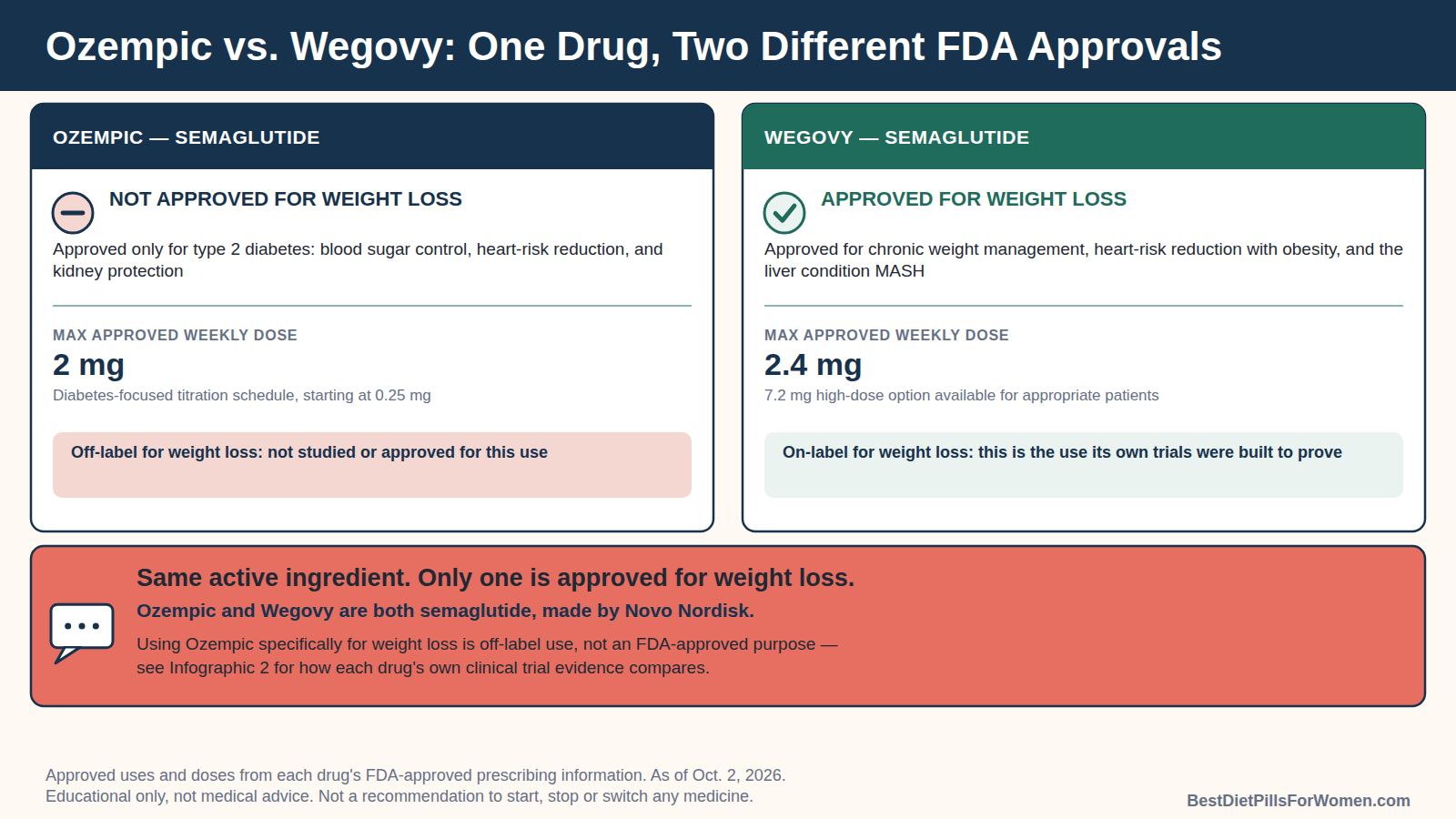
Ozempic is not FDA-approved for weight loss. It’s approved for adults with type 2 diabetes, to improve blood sugar control and to reduce cardiovascular and kidney risk in people who already have heart disease or chronic kidney disease alongside diabetes. Any use of Ozempic specifically to lose weight, in someone who doesn’t have type 2 diabetes, is what’s known as off-label use.
That distinction matters more than it might seem, because it’s gotten blurry in everyday conversation. Ozempic and Wegovy both contain the exact same active ingredient, semaglutide, made by the same manufacturer. Wegovy is the version that’s actually approved for chronic weight management. The confusion between the two brand names has fueled a lot of the hype, and a lot of the off-label prescribing, around Ozempic specifically as a weight-loss drug.
This guide separates the two conversations. We’ll walk through what Ozempic’s own clinical trial program, called SUSTAIN, actually recorded about body weight in people with type 2 diabetes, and why that’s a different kind of evidence than Wegovy’s own trials, called STEP, which tested semaglutide specifically for weight loss in people without diabetes. We’ll also cover Ozempic’s dosing and safety profile, who tends to get it prescribed off-label and why that’s created real controversy over access and insurance, and what the more direct alternative looks like for a reader whose actual goal is weight loss rather than diabetes management.
Our assessment is based on each drug’s current FDA-approved prescribing information, the published SUSTAIN and STEP trial results, federal health-agency background on this drug class, and current pricing and insurance-coverage reporting, read and cross-checked close to this guide’s publication date. We haven’t purchased, taken, or tested either product; this is a research-based evidence review, not a firsthand account.
Is Ozempic Approved for Weight Loss? The Short Answer
No. Ozempic (semaglutide injection) doesn’t carry an FDA-approved weight-loss indication. Its label covers three uses, all tied to type 2 diabetes: improving blood sugar control, reducing major cardiovascular events in people with diabetes and existing heart disease, and slowing kidney decline in people with diabetes and chronic kidney disease. Weight loss shows up in Ozempic’s own trials only as a secondary measurement, not as the reason the drug was approved.
What Ozempic Is Actually Approved to Treat
The Three FDA-Approved Uses for Ozempic
Ozempic’s current prescribing information lists exactly three indications. The first and original one is as “an adjunct to diet and exercise to improve glycemic control in adults with type 2 diabetes.” The second, added later, is to reduce the risk of major adverse cardiovascular events, like heart attack and stroke, in adults with type 2 diabetes who already have established cardiovascular disease. The third is to reduce the risk of sustained kidney function decline, end-stage kidney disease, and cardiovascular death in adults who have both type 2 diabetes and chronic kidney disease. Every one of these indications requires a type 2 diabetes diagnosis.
Why Weight Loss Isn’t on the List
Weight loss isn’t absent from Ozempic’s data by accident. The drug was studied, tested, and approved as a diabetes and cardiometabolic medication. Its trial program measured blood sugar control as the primary outcome, with body weight recorded alongside it as a secondary measurement rather than the thing the trials were designed to prove. A secondary measurement can still be real and worth discussing, but it’s a different regulatory and evidentiary bar than the one Wegovy had to clear specifically for a weight-management claim.
How Ozempic Is Dosed for Diabetes
Ozempic’s dosing schedule is built around a slow climb, not a flat dose. Treatment starts at 0.25 mg once weekly for four weeks, a dose meant to help the body adjust rather than to treat diabetes effectively on its own. After four weeks, the dose steps up to 0.5 mg weekly, and from there a clinician can increase it further to 1 mg or, at the top of the approved range, 2 mg weekly, depending on blood sugar response. For adults being treated specifically for chronic kidney disease alongside type 2 diabetes, the label specifies a target maintenance dose of 1 mg weekly. That 2 mg ceiling is the important number to remember, since it’s lower than the 2.4 mg (and 7.2 mg high-dose option) approved for Wegovy, a gap that matters when comparing what each product has actually been tested to deliver.
Why People Still Lose Weight on Ozempic
Same Active Ingredient as Wegovy, Different Approval
Here’s the part that trips a lot of people up: Ozempic and Wegovy are the same molecule, semaglutide, from the same manufacturer, Novo Nordisk. What differs is the approved use, the maximum studied and approved dose, and the population each one was tested in. Ozempic tops out at a 2 mg weekly dose, approved for type 2 diabetes. Wegovy goes up to 2.4 mg weekly (with a higher-dose option for some patients), approved specifically for chronic weight management in adults and certain adolescents with obesity, or overweight plus a weight-related health condition. Because they share the same active ingredient and a similar mechanism, Ozempic predictably produces weight loss in many people who take it, even though that was never the reason it was approved.
What “Off-Label” Actually Means in Practice
Off-label prescribing is legal and common across medicine, and it isn’t automatically a red flag. A clinician can prescribe an approved drug for a use its label doesn’t cover if they judge it’s appropriate for a specific patient. What off-label use does mean is that the drug hasn’t gone through the FDA’s formal review of safety and effectiveness data for that specific purpose. For Ozempic and weight loss, that means the strongest, most directly applicable clinical-trial evidence doesn’t actually come from Ozempic’s own studies. It comes from Wegovy’s, which is why this guide treats the STEP trials, not the SUSTAIN trials, as the more relevant weight-loss evidence.
| Ozempic | Wegovy | |
|---|---|---|
| Active ingredient | Semaglutide | Semaglutide |
| Manufacturer | Novo Nordisk | Novo Nordisk |
| FDA-approved use | Type 2 diabetes blood sugar control; cardiovascular risk reduction and kidney protection in adults with diabetes | Chronic weight management in adults and adolescents (12+) with obesity, or overweight with a weight-related condition; cardiovascular risk reduction in adults with obesity/overweight and heart disease; a liver condition called MASH |
| Approved for weight loss alone | No | Yes |
| Maximum weekly maintenance dose | 2 mg | 2.4 mg (7.2 mg option for select patients) |
| Typical use in someone without diabetes | Off-label | On-label |
| Pivotal trial program | SUSTAIN (diabetes outcomes; weight a secondary measure) | STEP (weight loss as the primary outcome) |
Table 1 method: figures reflect each drug’s current FDA-approved prescribing information as read in this research session, dated 05/2026 for Ozempic and 03/2026 for Wegovy. Labels are updated periodically, so confirm the current version before publication.
How Semaglutide Is Supposed to Produce Weight Loss
A proposed mechanism explains why semaglutide plausibly reduces body weight. It doesn’t, by itself, prove how much weight a given person will lose, or confirm that weight loss was the outcome a particular trial was built to measure. Understanding the biology first makes the trial evidence that follows easier to interpret, since a plausible mechanism and a demonstrated outcome are two different kinds of proof, and this guide treats them that way throughout.
The Biology Behind the Appetite Effect
GLP-1 Receptors, Satiety, and Slower Digestion
Semaglutide belongs to a drug class called GLP-1 receptor agonist medications, sometimes described as incretin mimetics. It mimics a natural gut hormone, GLP-1, that the body releases after eating. According to the National Institutes of Health’s NIDDK, these medications “reduce appetite” and “slow down gastric emptying, which can increase a sense of fullness and decrease hunger”. GLP-1 receptor agonists also stimulate insulin release in response to food and suppress glucagon, a hormone that otherwise raises blood sugar, which is the piece most directly tied to blood sugar control in type 2 diabetes. Separately, GLP-1 receptors sit in appetite-regulating areas of the brain, including the hypothalamus and brainstem, where activating them is thought to dial down hunger signals independent of the gut effect. The appetite effect and the blood-sugar effect come from the same underlying biology, which is exactly why a diabetes drug and a weight-loss drug can share one active ingredient.
Why This Differs from Older Appetite Suppressants
Older prescription appetite suppressants, like phentermine, work mainly through the central nervous system, nudging stimulant-type signals that reduce hunger. Semaglutide’s effect is different: it leans heavily on slowing digestion and dialing down hunger signals between the gut and the brain, with a once-weekly injection instead of a daily pill. That’s part of why its most common side effects are gastrointestinal rather than the jitteriness or elevated heart rate associated with stimulant-based appetite suppressants, a distinction worth knowing before comparing the two categories.
What the Mechanism Can and Can’t Tell Us
Mechanistic Plausibility vs. Proven Outcomes
A biologically plausible mechanism is not the same thing as a demonstrated clinical outcome. The fact that semaglutide slows digestion and reduces hunger signals explains why weight loss is a reasonable thing to expect; it doesn’t tell a reader how much weight loss to expect, how reliably, or in which populations. That gap is exactly why this guide leans on actual trial results, both Ozempic’s own SUSTAIN data and Wegovy’s STEP data, rather than stopping at the biology.
Why Individual Response Varies
Not everyone responds to a GLP-1 medication the same way. Dose reached, how long someone stays on treatment, baseline body weight, other medications, and individual biology all affect the result. Clinical trials report averages across a study population; they don’t predict any one person’s specific outcome. That’s a theme that comes up again when we look at the actual numbers from both the SUSTAIN and STEP programs below.
What Ozempic’s Own Trials Show About Weight Loss (SUSTAIN Program)
Before looking at Wegovy’s evidence, it’s worth seeing exactly what Ozempic’s own research recorded, since that’s the data most directly tied to the brand name most people mean when they say “Ozempic.” The short version: real weight loss, at a noticeably smaller average scale than Wegovy’s trials, in a population that was never selected for a weight-management study in the first place.
How the SUSTAIN Trials Were Designed
Population, Duration, and Primary Endpoint
Ozempic’s approval rested on a series of trials called the SUSTAIN program, which enrolled adults with type 2 diabetes and measured blood sugar control, usually HbA1c (a marker of average blood sugar over roughly three months), as the primary outcome. Different SUSTAIN trials compared semaglutide against placebo or against other diabetes medications, including dulaglutide and canagliflozin, typically over roughly 30 to 56 weeks. Every participant, by definition, had type 2 diabetes going in, which is a materially different starting population than the people studied in Wegovy’s trials.
Where Body Weight Fit Into the Results
Body weight was tracked throughout the SUSTAIN trials, but as a secondary endpoint, meaning the studies weren’t statistically designed or powered around proving a weight-loss claim. That distinction is a regulatory one with real consequences: it’s part of why Ozempic’s own data, however real the weight changes it recorded, couldn’t by itself support an FDA weight-management indication.
The Breadth of the SUSTAIN Program
SUSTAIN wasn’t a single study; it’s a whole family of trials, numbered roughly SUSTAIN 1 through 10 plus later additions, each comparing semaglutide against a different thing: placebo, insulin glargine, the GLP-1 drug exenatide, the SGLT2 inhibitor canagliflozin, and dulaglutide among them. That breadth is why Ozempic’s label eventually grew to cover three separate indications over time, glycemic control first, then cardiovascular risk reduction, then kidney protection, as different trials in the broader semaglutide research program targeted different outcomes. None of those trials, across the whole program, was built the way Wegovy’s STEP trials were: as a dedicated test of weight loss as the primary outcome in people without diabetes.
The Weight Numbers From SUSTAIN
SUSTAIN 1: Semaglutide vs. Placebo
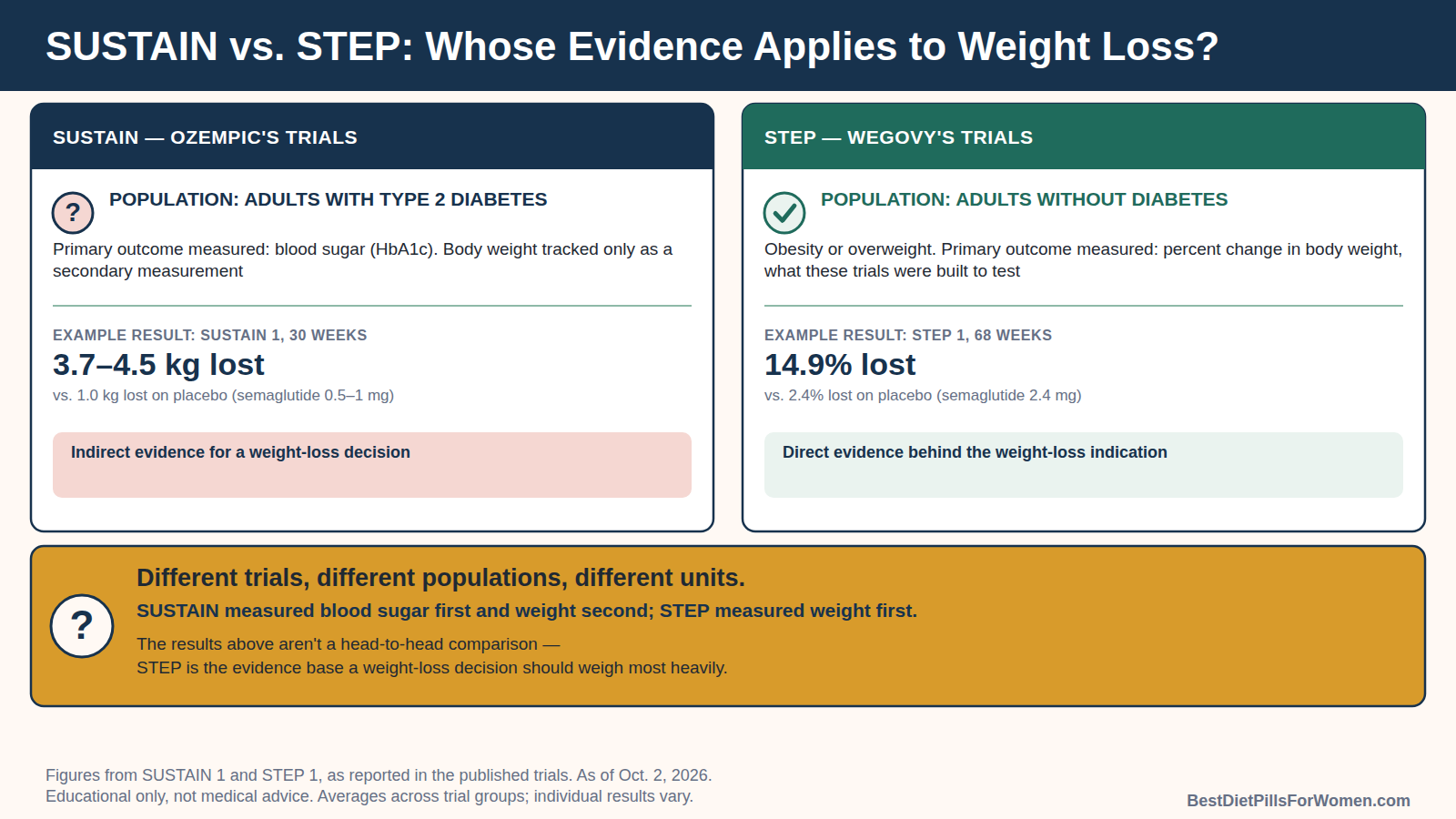
The clearest placebo-controlled look at Ozempic’s own dose range comes from SUSTAIN 1, a 30-week trial of semaglutide 0.5 mg and 1 mg as a standalone (monotherapy) treatment in adults with type 2 diabetes who hadn’t yet needed other diabetes medication. Average weight loss came in at about 3.7 kg (roughly 8 lbs) on the 0.5 mg dose and 4.5 kg (roughly 10 lbs) on the 1 mg dose, compared with about 1.0 kg on placebo; around 45% of people on the 1 mg dose lost at least 5% of body weight, versus 7% on placebo. Put side by side with STEP 1’s 14.9% average weight loss on Wegovy’s 2.4 mg dose, the gap is substantial — a meaningful part of which tracks with Ozempic’s dose ceiling landing well below Wegovy’s.
SUSTAIN 7: Semaglutide vs. Dulaglutide
One trial in the program, SUSTAIN 7 (registered as NCT02648204), compared semaglutide against another injectable diabetes drug, dulaglutide, in adults with type 2 diabetes. Reporting on this trial has described weight reductions in the range of roughly 3.6 to 7.6 kg (about 8 to 17 lbs) across the semaglutide doses studied, compared with smaller reductions, roughly 0.9 to 3.8 kg, on dulaglutide. These figures came from a trial comparing two diabetes drugs against each other, in people who all had type 2 diabetes — not a placebo-controlled weight-loss trial in people without diabetes.
Why These Numbers Don’t Equal a Weight-Loss Drug Trial
It would be a mistake to read SUSTAIN’s weight figures the same way you’d read a dedicated obesity trial’s results. People with type 2 diabetes often have different baseline metabolic conditions, may be on other glucose-lowering medications that themselves affect weight (some diabetes drugs cause weight gain, others weight loss, which can muddy a simple before-and-after comparison), and weren’t selected or monitored the way participants in a weight-management trial would be. Some SUSTAIN participants were also managing insulin resistance or longstanding diabetes-related complications that have nothing to do with a healthy-weight reader’s starting point. The SUSTAIN numbers are real, but they describe what happened to body weight as a side observation in a diabetes trial, not the main event, and they shouldn’t be read as a prediction for someone without diabetes starting the same drug for a different reason.
| SUSTAIN Program (Ozempic) | STEP Program (Wegovy) | |
|---|---|---|
| Population | Adults with type 2 diabetes | Adults with obesity, or overweight plus a weight-related condition, without diabetes (STEP 1) |
| Primary outcome measured | Blood sugar control (HbA1c) | Percent change in body weight |
| Body weight’s role | Secondary endpoint | Primary endpoint |
| Maximum dose studied in cited trial | 0.5-1 mg weekly (SUSTAIN 1, placebo-controlled) | 2.4 mg weekly (STEP 1) |
| Typical reported weight change vs. placebo | About 3.7-4.5 kg vs. 1.0 kg on placebo at 30 weeks (SUSTAIN 1) | -14.9% vs. -2.4% on placebo at 68 weeks (STEP 1) |
| Comparator | Placebo (SUSTAIN 1); also tested vs. active diabetes drugs like dulaglutide in SUSTAIN 7 | Placebo, plus identical lifestyle counseling in both arms |
| Relevance to an off-label weight-loss decision | Indirect; describes a diabetes population at a lower dose than Wegovy’s | Direct; this is the evidence base the weight-loss indication was built on |
Table 2 method: figures for SUSTAIN 1 and SUSTAIN 7 are as reported through secondary summaries of the published trials (Sorli et al.; Pratley et al.); figures for STEP 1 are as reported in the published trial (Wilding et al., 2021). The two programs enrolled different populations under different protocols and over different durations, so this table lines them up for context, not as a head-to-head comparison.
What Wegovy’s Trials Show, and Why They’re the More Relevant Evidence
This is the section most readers researching “Ozempic for weight loss” actually need, even though the drug it describes by brand name is Wegovy. Because both products share semaglutide as the active ingredient, Wegovy’s own placebo-controlled, weight-loss-focused trial program is the closest thing available to a direct answer for “how much weight might this active ingredient help someone lose.”
Inside the STEP Program
STEP 1: Design and Population
Wegovy’s approval rested primarily on the STEP trials, a program built specifically to test semaglutide for weight loss. STEP 1, published in the New England Journal of Medicine, enrolled 1,961 adults with obesity (BMI 30 or higher), or overweight (BMI 27 or higher) with at least one weight-related condition, none of whom had diabetes. Participants were randomized roughly 2-to-1 to semaglutide 2.4 mg weekly or placebo, both groups also receiving lifestyle counseling aimed at a calorie deficit and roughly 150 minutes of weekly physical activity, over 68 weeks.
STEP 1: Headline Results
At 68 weeks, the semaglutide group lost an average of 14.9% of body weight, compared with 2.4% on placebo, an estimated treatment difference of about 12.4 percentage points. This is a placebo-controlled result, in a population selected specifically for a weight-management study, with weight loss as the trial’s primary outcome — which is exactly the kind of evidence that was missing from Ozempic’s own SUSTAIN data. This is Wegovy’s evidence, not Ozempic’s, even though both drugs share semaglutide as the active ingredient.
STEP 2: What the Higher Dose Does Even in People With Diabetes
A related trial, STEP 2, offers a particularly useful bridge between the two drug programs, because it tested Wegovy’s 2.4 mg dose in a population that actually had type 2 diabetes, the same population Ozempic’s own trials studied, rather than in people without diabetes. Over 68 weeks, more than 1,200 adults with type 2 diabetes and overweight or obesity lost an average of about 21.4 lbs on semaglutide 2.4 mg, compared with about 7.7 lbs on placebo; roughly 69% lost at least 5% of body weight, half lost at least 10%, and a quarter lost at least 15%. That’s a materially larger result than what’s typically reported in Ozempic’s own SUSTAIN trials, in a comparably diabetic population, and the difference lines up with the dose gap: STEP 2 used the higher 2.4 mg dose that Ozempic’s label doesn’t reach.
How Many People Respond, and By How Much
Responder Rates at 5%, 10%, and 15% Weight Loss
Averages can hide a lot of variation, so STEP 1 also reported how many participants hit specific thresholds. About 86.4% of the semaglutide group lost at least 5% of body weight, versus 31.5% on placebo. Roughly 69.1% lost at least 10%, versus about 12% on placebo. And about half, 50.5%, lost at least 15%, compared with 4.9% on placebo. Most people who stayed on treatment experienced meaningful weight loss, but the range of individual results was wide, and a meaningful minority didn’t reach the 10% or 15% thresholds at all.
What Happens When Semaglutide Is Stopped
A follow-up analysis of the STEP 1 trial followed participants after they stopped taking semaglutide and found that they regained, on average, around two-thirds of the weight they had lost within about a year off the drug, alongside some reversal of the cardiometabolic improvements seen on treatment. That finding has shaped how many clinicians talk about GLP-1 medications: as a treatment that may need to be continued long-term to maintain results, similar to how a blood pressure medication is often framed, rather than a short course with a permanent effect. Some more recent real-world data suggests regain may be smaller when people combine stopping the drug with structured follow-up care, but the STEP 1 extension data remains the controlled evidence on what happens with no other intervention.
Ozempic Safety: Side Effects and Serious Risks
Ozempic’s safety profile doesn’t change based on why someone is taking it. The side effects and warnings below apply whether Ozempic is used on-label for diabetes or off-label for weight loss, because the dose range and the drug itself are the same. For a side-by-side look at how these risks compare across the whole GLP-1 category, see this site’s GLP-1 medication side effects guide.
Common Side Effects
Gastrointestinal Effects and Why They Happen
The most frequently reported side effects with Ozempic are gastrointestinal: nausea (reported in roughly 16-20% of patients across trials), vomiting (about 5-9%), diarrhea (about 8-9%), abdominal pain (about 6-7%), and constipation (about 3-5%). These happen because slowing digestion, the same mechanism behind the appetite effect, also means food sits in the stomach longer, which commonly produces nausea and other digestive symptoms, especially early in treatment.
Managing Side Effects During Dose Escalation
Most gastrointestinal side effects cluster around the dose-escalation period, when the dose is being increased from the starting 0.25 mg weekly toward a maintenance dose. That’s part of why Ozempic’s label specifies a gradual titration schedule rather than starting at the full dose. Eating smaller meals, avoiding high-fat foods right after a dose increase, and giving the body time to adjust before the next step up are common practical strategies clinicians discuss with patients, though they don’t eliminate the risk of side effects entirely.
Hypoglycemia Risk and Injection-Site Reactions
Ozempic by itself carries a relatively low risk of hypoglycemia (dangerously low blood sugar), but that risk rises meaningfully when it’s combined with insulin or a sulfonylurea-type diabetes medication, both of which also lower blood sugar directly. This matters even for someone using Ozempic off-label for weight loss, if they’re also managing prediabetes or diabetes with another medication. Mild injection-site reactions, redness, itching, or a small lump where the dose was given, are also reported, though they’re generally minor and tend to resolve on their own; rotating the injection site each week is a simple practical step that can reduce them.
Serious Risks and Warnings
Thyroid C-Cell Tumor Boxed Warning
Ozempic carries a boxed warning, the FDA’s most serious category of label warning, about thyroid C-cell tumors. In rodent studies, semaglutide caused dose-dependent and treatment-duration-dependent thyroid C-cell tumors at clinically relevant exposure levels. Whether Ozempic causes these tumors, including a rare cancer called medullary thyroid carcinoma, in humans is unknown. Because of this, Ozempic is contraindicated in anyone with a personal or family history of medullary thyroid carcinoma or a genetic condition called Multiple Endocrine Neoplasia syndrome type 2 (MEN 2).
Pancreatitis, Gallbladder Disease, and Kidney Concerns
Ozempic’s label also addresses several other serious risks. Pancreatitis has been reported, and the label instructs discontinuing the drug if it’s suspected. Gallbladder problems, including gallstones, occurred in roughly 0.4-1.5% of patients across trial arms, compared with 0% on placebo in some analyses. Acute kidney injury has occurred, usually linked to dehydration from gastrointestinal side effects like vomiting or diarrhea. Diabetic retinopathy complications were reported slightly more often with Ozempic (about 3.0%) than placebo (about 1.8%) in trial populations, which matters specifically for people who already have diabetic eye disease. A more complete rundown of how these risks interact with other medications belongs in this site’s dedicated GLP-1 drug interactions guide; this section focuses on what’s specific to Ozempic’s own label.
| Effect | Type | Approximate frequency | What it means in practice |
|---|---|---|---|
| Nausea | Common | 15.8-20.3% | Usually most noticeable right after a dose increase; often eases over a few weeks |
| Vomiting | Common | 5-9.2% | Can contribute to dehydration; worth mentioning to a clinician if persistent |
| Diarrhea | Common | 8.5-8.8% | Can also contribute to dehydration and kidney strain if severe |
| Constipation | Common | 3.1-5% | Often manageable with fluids and fiber; discuss if it doesn’t improve |
| Gallbladder disease | Less common, serious | 0.4-1.5% | Watch for upper right abdominal pain, especially after fatty meals |
| Pancreatitis | Rare, serious | Not precisely quantified in the label | Severe abdominal pain radiating to the back warrants urgent medical attention |
| Thyroid C-cell tumors | Boxed warning | Unknown in humans | Avoid entirely with a personal or family history of medullary thyroid cancer or MEN 2 |
Table 3 method: frequencies are as stated in Ozempic’s current FDA-approved prescribing information’s adverse-reactions data. “Approximate” reflects that trial-reported ranges vary by dose and by which trial’s data is cited; this isn’t a complete list of every reaction in the label.
Who Should Be Cautious or Avoid Ozempic
Thyroid Cancer History and MEN 2
Beyond the contraindication itself, anyone with a family history of thyroid cancer, even without a confirmed personal diagnosis, has reason to raise it specifically before starting any semaglutide product. This conversation matters regardless of whether the goal is diabetes management or off-label weight loss, since the boxed warning doesn’t depend on why the drug is prescribed.
Pregnancy, Breastfeeding, and Planning a Pregnancy
Semaglutide isn’t recommended during pregnancy, and current guidance generally suggests stopping it before a planned pregnancy, since animal studies raised concerns about fetal risk and human data in pregnancy remains limited. Anyone who is pregnant, breastfeeding, or trying to conceive should bring this up directly with a clinician before starting or continuing Ozempic, and this is an area where the specifics can change as more data accumulates, so it deserves a current conversation rather than relying on general information.
Situations That Call for Extra Discussion With a Clinician
Diabetic Retinopathy and Eye Health
Because diabetic retinopathy complications occurred slightly more often in Ozempic’s trial data, anyone with existing diabetic eye disease, or a rapid drop in blood sugar from any cause, should have their eye health monitored closely while on the medication. This is a nuance that’s easy to overlook when the conversation is focused only on weight.
Disordered Eating History and Other Medications
A history of disordered eating is a reasonable thing to disclose before starting any appetite-suppressing medication, since rapid, significant changes in eating patterns can interact with that history in ways a clinician should know about. It’s also worth reviewing every other medication and supplement in use, since combining semaglutide with insulin or sulfonylurea-type diabetes drugs raises the risk of low blood sugar (hypoglycemia), even in someone being treated primarily for weight.
Who Actually Gets Prescribed Ozempic Off-Label, and Why It’s Complicated
The evidence and safety picture above explains what Ozempic can plausibly do and what it risks. This section looks at who’s actually receiving it off-label in the real world, and why that pattern has become a genuine point of friction between patient demand, drug supply, and insurance policy, not just a matter of individual choice.
The Scale of Off-Label Use
What Real-World Prescribing Data Shows
Off-label use of Ozempic for weight loss isn’t a fringe phenomenon. One analysis of U.S. health-system data, covering more than 120,000 patients who received a first-time prescription for Ozempic or a similar drug, Mounjaro, between January 2020 and April 2023, found that 56% of those new patients didn’t have a type 2 diabetes diagnosis. That’s a preliminary, non-peer-reviewed analysis, but it points to off-label use making up a substantial share, possibly a majority, of new prescribing in that window.
Who Is Most Likely to Receive It Off-Label
The same analysis found that off-label use skewed more female (69%) than on-label use (61%), and that younger adults, particularly those 18 to 45, accounted for a larger share of off-label prescriptions than of on-label ones. For a site focused on women’s weight-management decisions, that pattern is directly relevant: a lot of the real-world off-label Ozempic conversation is happening among women who don’t have diabetes and are using a diabetes-labeled drug for a purpose its own trials weren’t built to prove.
The Role of Telehealth and Social Media Demand
A meaningful share of the surge in off-label Ozempic interest has been attributed to social media, where before-and-after posts and casual mentions of “being on Ozempic” turned a diabetes drug into a cultural shorthand for rapid weight loss, and to telehealth platforms that made it comparatively easy to get a prescription without an in-person visit to a primary care doctor or endocrinologist. Neither trend changes the underlying regulatory facts above, but together they help explain why so much of the demand arrived quickly, concentrated among people who were never the drug’s intended population, and why the conversation about appropriate prescribing became a public one rather than staying a quiet clinical judgment call.
Why This Pattern Matters for Women Specifically
Because off-label GLP-1 use skews heavily female, the on-label/off-label distinction isn’t an abstract regulatory footnote for this site’s readers; it’s a practical question a lot of women are actually facing when a prescriber mentions Ozempic. Some of that interest overlaps with conditions this site covers in their own dedicated guides, including weight gain linked to perimenopause and menopause and the metabolic effects of PCOS, both of which involve hormonal patterns that can make weight harder to manage through diet and exercise alone. Those life-stage factors are worth their own conversation with a clinician; they don’t change Ozempic’s off-label status for weight loss, but they’re often part of why a woman and her prescriber end up discussing a GLP-1 medication in the first place.
The Access and Ethics Questions
Shortages and the Effect on Diabetes Patients
When Ozempic demand spiked in 2022 and 2023, driven heavily by weight-loss interest, it contributed to supply shortages that made the drug harder for people with type 2 diabetes, its actual approved population, to access consistently. Pharmacies reported running out of certain pen strengths for weeks at a time, and some patients with diabetes had to switch medications or ration doses through no fault of their own. That created a real ethical tension that extended beyond any one patient’s decision: widespread off-label use of a diabetes medication can crowd out the people the drug was approved and manufactured for, a concern raised repeatedly by endocrinologists and diabetes advocacy groups during the shortage period, even as individual off-label patients were, in most cases, simply following a prescription a clinician had written for them.
Insurance Coverage Gaps for Weight Loss Alone
Insurance coverage reinforces the on-label/off-label split rather than smoothing it over. Survey data on employer-sponsored plans found about 60% cover GLP-1 drugs for diabetes, while only 36% cover them for both diabetes and weight loss. Marketplace (ACA) plans are far more restrictive, Medicare Part D generally excludes weight-loss indications from coverage outright, and Medicaid coverage for obesity medications varies by state and has been contracting in some states rather than expanding. In practice, this means a person seeking Ozempic specifically for weight loss is far less likely to have insurance pick up the cost than someone using the same drug for its approved purpose, even when the prescription itself is medically reasonable. This site’s GLP-1 insurance coverage guide walks through plan types and appeal options in more depth than fits here.
Ozempic vs. Wegovy: Which One Actually Fits a Weight-Loss Goal
Everything covered so far points toward one practical question: if the actual goal is weight loss rather than diabetes management, is Ozempic even the right product to be discussing? This section lays out the case for and against reaching for Ozempic specifically, alongside what the cost and insurance picture actually looks like for each option.
The Practical Case for Choosing Wegovy Instead
On-Label Access, Dosing, and Insurance Considerations
For a reader whose actual goal is weight loss and who doesn’t have type 2 diabetes, Wegovy is the more direct, on-label option built from the same active ingredient. It was tested specifically for weight management, carries a higher approved maximum dose (2.4 mg, with a 7.2 mg option for some patients) than Ozempic’s 2 mg ceiling, and because it’s the on-label product for this use, insurance plans that do cover GLP-1 weight-loss treatment are more likely to authorize Wegovy than an off-label Ozempic prescription for the same purpose. This site’s own Wegovy guide goes deeper into its dosing, cost, and trial evidence than fits in a side-by-side comparison here.
When a Clinician Might Still Consider Ozempic
There are scenarios where a clinician might still reach for Ozempic in someone without a diabetes diagnosis: cost differences between the two products at a given pharmacy, insurance formulary quirks that favor one brand over the other, or a patient who has prediabetes and could reasonably be managed under a broader metabolic framework. None of that changes the regulatory reality that Ozempic itself isn’t approved for weight management, and a thoughtful clinician will generally be transparent that this specific use is off-label.
What Switching From Ozempic to Wegovy Typically Involves
There’s no official dose-equivalence table published on either label for converting an existing Ozempic dose directly into a Wegovy dose, since the two products were titrated and studied separately. In practice, a clinician moving a patient from off-label Ozempic to on-label Wegovy will generally treat it as starting the Wegovy titration schedule from an appropriate point based on current tolerance, rather than assuming a 1-to-1 dose match, and will usually want a fresh conversation about insurance authorization, since switching products often means resubmitting paperwork under Wegovy’s own approval criteria.
Cost and Coverage Realities
Current List Prices and the 2027 Price Cut
As of this review, Ozempic’s reported U.S. list price without insurance runs around $1,000 or more per month across its approved pen strengths, according to pricing-tracking sites, though actual pharmacy cash prices can run higher still. Novo Nordisk has separately announced a list-price reduction for both Ozempic and Wegovy, bringing each to roughly $675 a month, effective January 1, 2027. That cut hadn’t taken effect at the time of this review, so a reader checking prices before that date should expect current prices, not the reduced ones, and should re-verify both figures directly with NovoCare before making any cost-based decision.
What Changes (and Doesn’t) When Insurance Is Involved
List price is rarely what an insured patient actually pays, but coverage itself depends heavily on diagnosis code. A prescription written and billed for type 2 diabetes is working within Ozempic’s approved use and is more likely to clear insurance review; a prescription for the same drug billed or understood as being for weight loss alone is attempting to get an off-label use covered, which insurers are considerably less willing to do. Many plans that do cover GLP-1 treatment still require prior authorization, documentation of a qualifying diagnosis, and sometimes proof that lower-cost options were tried first, a process called step therapy. A denied claim isn’t necessarily final; an appeal, supported by a clinician’s documentation, sometimes succeeds where an initial request didn’t, though there’s no guarantee. This is one of the more concrete, practical reasons the on-label/off-label distinction isn’t just a technicality.
| Ozempic (off-label for weight loss) | Wegovy (on-label for weight loss) | |
|---|---|---|
| Current reported list price, per month | Roughly $1,000+ (pricing-tracker estimate; verify directly) | Generally priced in a comparable range; verify current figure directly with NovoCare |
| Announced 2027 price change | Cut to about $675/month, effective Jan. 1, 2027 | Cut to about $675/month, effective Jan. 1, 2027 |
| Insurance likelihood for this specific use | Lower; billing for weight loss on a diabetes-labeled drug is an off-label use | Higher, where a plan covers GLP-1 weight-loss treatment at all, since this is the on-label product |
| Manufacturer savings card eligibility | Generally tied to the approved (diabetes) use | Generally available for the approved weight-management use |
Table 4 method: list-price figures are as reported by consumer pricing-tracking sources and Novo Nordisk’s own pricing announcement, read in this research session; these change and should be re-verified directly with NovoCare immediately before publication or before any reader makes a purchasing decision.
Realistic Alternatives to Consider
Ozempic, used off-label, isn’t the only path toward medically supported weight loss, and it often isn’t the most direct one. The options below range from other on-label prescription medications to the kind of structured behavioral support that was part of every arm of Wegovy’s own pivotal trials, including the placebo group.
Other GLP-1 and Dual-Agonist Medications
Zepbound (Tirzepatide) as an On-Label Option
Tirzepatide, sold as Mounjaro for type 2 diabetes and as Zepbound for chronic weight management, follows a similar split-brand pattern to semaglutide, but it works on two gut-hormone receptors (GIP and GLP-1) rather than one, with an approved weekly dose range of 2.5 mg up to 15 mg. Zepbound is FDA-approved on-label for chronic weight management and, more recently, for obstructive sleep apnea in adults with obesity. For a reader comparing on-label weight-loss medications rather than relying on an off-label diabetes drug, it’s a legitimate point of comparison alongside Wegovy, each with its own trial evidence, dosing schedule, and cost picture; this site’s Wegovy vs. Zepbound comparison and semaglutide vs. tirzepatide guide walk through that evidence side by side in more depth than fits here.
Other Prescription Weight-Management Medications
Beyond the GLP-1 and dual-agonist class, older FDA-approved weight-management medications remain available on-label, including phentermine-topiramate (Qsymia), naltrexone-bupropion (Contrave), and orlistat. Each works through a different mechanism, generally produces smaller average weight loss than semaglutide or tirzepatide in head-to-head trial context, and carries its own distinct safety profile and contraindications. These are worth a direct conversation with a clinician for anyone who isn’t a candidate for a GLP-1 medication or who wants to understand the full on-label landscape before deciding; this site’s full guide to weight loss medications and its pillar guide to diet pills and weight-management options for women both map out that broader landscape.
How Older Weight-Loss Medications Compare, in General Terms
Phentermine-topiramate, naltrexone-bupropion, and orlistat all remain FDA-approved, on-label options for chronic weight management, each with its own mechanism: phentermine-topiramate combines a stimulant-type appetite suppressant with an anticonvulsant; naltrexone-bupropion works through brain pathways tied to reward and appetite regulation; and orlistat blocks a portion of dietary fat from being absorbed in the gut. In published trials, this older generation of medications has generally produced smaller average weight loss than semaglutide or tirzepatide, though exact figures vary by trial and population and are outside the scope of this guide’s sourcing. Each also carries a distinct side-effect and contraindication profile, so “smaller average effect” doesn’t automatically mean “wrong choice” for every individual; it’s one more factor for a clinician and patient to weigh together.
Non-Medication Approaches Worth Discussing
Structured Lifestyle Programs
Every arm of the STEP trials, including the placebo group, received structured lifestyle counseling: a calorie deficit target and roughly 150 minutes of weekly physical activity. That’s a reminder that even semaglutide’s own pivotal evidence wasn’t drug alone; it was drug plus a real behavioral program. A structured, clinician-or-dietitian-guided lifestyle program, whether that’s working with a registered dietitian, a medically supervised weight-management clinic, or a structured commercial program with real accountability built in, is a reasonable starting point or complement for many people, even though its average results are typically smaller than a GLP-1 medication’s. For someone whose relationship with food and eating is complicated, a program that includes behavioral or psychological support, not just a meal plan, is often a more appropriate starting point than jumping straight to medication.
When Supplements Are (and Aren’t) a Reasonable Substitute
Over-the-counter supplements marketed for appetite control or metabolism are not a substitute for a GLP-1 medication’s demonstrated trial results, and none of them have been shown in good-quality human trials to come close to semaglutide’s or tirzepatide’s effect sizes. That doesn’t make every supplement worthless for every person, but it does mean the comparison isn’t apples-to-apples, and claims that a supplement can replicate a prescription GLP-1 medication’s results deserve real skepticism.
Frequently Asked Questions About Ozempic and Weight Loss
These are the specific questions readers tend to ask once they understand the basic on-label/off-label split, from how the evidence translates to day-to-day decisions, to what happens with cost, coverage, and long-term use.
Questions About Effectiveness and Evidence
Does Ozempic Really Cause Weight Loss If You Don’t Have Diabetes?
Semaglutide, Ozempic’s active ingredient, has been shown in Wegovy’s own trials to produce substantial average weight loss in people without diabetes, since Wegovy and Ozempic share that ingredient. But Ozempic itself isn’t approved or tested as a weight-loss drug, and its own SUSTAIN trials, conducted entirely in people with diabetes, only recorded weight as a secondary measurement. The honest answer is that the same active ingredient plausibly works similarly, but the direct supporting evidence belongs to Wegovy, not to Ozempic.
How Much Weight Can Someone Realistically Expect to Lose on Ozempic?
There’s no dedicated, placebo-controlled Ozempic weight-loss trial in people without diabetes to answer this precisely. The closest available population-matched estimate comes from Wegovy’s STEP 1 trial, where semaglutide 2.4 mg produced an average 14.9% weight loss over 68 weeks, compared with 2.4% on placebo. Ozempic’s own maximum dose (2 mg) is lower than Wegovy’s (2.4 mg), and Ozempic hasn’t been tested the same way, so this figure is a reasonable point of reference, not a guarantee transferable to Ozempic specifically.
Why Do Doctors Cite Wegovy’s Studies Instead of Ozempic’s When Talking About Weight Loss?
Because Wegovy’s STEP trials were built specifically to test weight loss as the primary outcome, in a population selected for a weight-management study, with weight-focused monitoring throughout. Ozempic’s SUSTAIN trials were built to test blood sugar control in people who already had diabetes, with weight tracked only secondarily, at a lower maximum dose than Wegovy ever reaches. When a clinician wants to discuss realistic weight-loss expectations for semaglutide, the STEP data is simply the more directly applicable evidence, even when the drug being discussed in the room, or the one a patient has actually been prescribed, is Ozempic. It’s a bit like describing what a car can do on the highway by citing data from a test track built for a different trim level of the same model; related, but not quite the same vehicle.
Does Ozempic’s Lower Dose (2 mg) Work as Well as Wegovy’s Dose?
Not necessarily, and that’s precisely the gap this guide keeps coming back to. Ozempic’s approved maximum is 2 mg weekly, while Wegovy’s approved maintenance dose is 2.4 mg, with a 7.2 mg option for some patients. STEP 2, which tested the 2.4 mg dose in people with type 2 diabetes, produced substantially more weight loss than what’s typically reported at Ozempic’s lower doses in the SUSTAIN trials. A lower dose of the same active ingredient reasonably plausibly produces less weight loss, though no trial has directly tested Ozempic’s exact dose head-to-head against Wegovy’s for a weight-loss outcome specifically.
Questions About Safety, Cost, and Practical Use
Is It Safe to Take Ozempic for Weight Loss Without Diabetes?
Ozempic’s safety profile, including its boxed warning for thyroid C-cell tumors and its gastrointestinal side effects, doesn’t change based on why it’s prescribed. What does change is the benefit-risk conversation: for someone with diabetes, Ozempic’s benefits are tied to its approved, studied uses. For someone without diabetes using it off-label for weight loss, that same safety profile applies, but without the backing of a trial program specifically designed to measure weight outcomes, which is part of why the more thorough conversation about risk and expected benefit for weight management belongs with Wegovy’s own data.
Will Insurance Cover Ozempic If It’s Prescribed for Weight Loss?
It’s considerably less likely than coverage for its approved use. Many employer plans that cover GLP-1 drugs do so for diabetes but not for weight loss, marketplace plans rarely cover GLP-1 weight-loss treatment at all, and Medicare Part D generally excludes weight-loss indications from coverage. A prescription billed under a weight-loss rationale for a diabetes-labeled drug is especially likely to face a coverage denial, since it’s asking an insurer to pay for an off-label use.
What Happens to Weight After Stopping Ozempic?
The best available controlled data on this comes from Wegovy’s STEP 1 extension study, which found that participants regained roughly two-thirds of their lost weight within about a year of stopping semaglutide. There’s no reason to expect a fundamentally different pattern with Ozempic, since it’s the same active ingredient, though Ozempic itself hasn’t been studied this way in a dedicated weight-focused discontinuation trial. This is one more reason clinicians increasingly frame GLP-1 treatment as a long-term commitment rather than a short course.
Is Compounded or Generic Semaglutide a Safer or Cheaper Alternative?
Compounded semaglutide products, made by a compounding pharmacy rather than dispensed as manufacturer-produced Ozempic or Wegovy, aren’t FDA-approved, and the agency doesn’t review them for safety, effectiveness, or precise dosing accuracy the way it reviews the approved products. A lower price tag doesn’t offset that lack of independent verification, and quality has varied across compounders. Anyone considering a compounded or gray-market semaglutide product should understand that they’re stepping outside the FDA-approved supply chain for either brand, with correspondingly less certainty about what’s actually in the vial; this site’s guide to weight-loss drug scams and red flags covers how to spot the riskiest versions of this gray market.
The Bottom Line on Ozempic for Weight Loss
Pulling everything in this guide together: the active ingredient behind Ozempic genuinely helps many people lose a clinically meaningful amount of weight, but the strongest proof of that belongs to a different, on-label product built from the same molecule, at a higher approved dose, with its own dedicated evidence base.
What the Evidence Adds Up To
The Realistic Benefit
Semaglutide, the active ingredient in both Ozempic and Wegovy, has strong, trial-backed evidence for producing substantial average weight loss in people without diabetes, specifically through Wegovy’s own STEP program, and a similarly strong result even in people with diabetes when the higher 2.4 mg dose is used, as STEP 2 showed. That’s a real, meaningful benefit for appropriate candidates, and it’s the honest reason so many people have sought out this active ingredient in the first place, whichever brand name they first heard it under.
The Biggest Limitation and Safety Watch-Out
The biggest limitation isn’t about whether semaglutide works; it’s about which product someone is actually taking, at what dose, and why. Ozempic itself was never tested or approved as a weight-loss drug, its approved dose tops out below Wegovy’s, it carries the same boxed warning and gastrointestinal risks regardless of the reason it’s prescribed, and using it off-label can mean less insurance support and, during past shortage periods, has meant competing for supply with patients who need it for diabetes. Anyone considering Ozempic specifically for weight loss should go in clear-eyed about that off-label reality, rather than assuming the brand name on the pen is a technicality.
A Practical Next Step
Questions Worth Bringing to a Clinician or Pharmacist
A reasonable starting conversation includes: Is this prescription being written for an approved use or an off-label one, and does that affect insurance coverage? What dose and timeline would realistically apply, and how does that compare with what Wegovy’s own trials tested? What does my personal and family medical history, especially around thyroid cancer, pancreatitis, gallbladder disease, or disordered eating, mean for this specific medication? And what’s the plan, both clinically and financially, if treatment needs to continue long-term to maintain results, given how much weight tends to return after stopping?
When Wegovy Is the More Direct Option
For a reader without type 2 diabetes whose actual goal is weight management, Wegovy is the on-label product built from the same active ingredient, backed by a trial program designed specifically to measure weight loss, and approved up to a higher dose than Ozempic ever reaches. It isn’t automatically the right choice for every person, and cost, insurance, and individual health history all still matter, but it’s the more direct, evidence-matched answer to “I want to lose weight,” rather than reaching for a diabetes medication and hoping the off-label math works out the same way.
Related Reading
Sources
These are the main sources behind this guide, chosen because they are the ones to check first for current facts. Labels, prices and regulator pages change, so confirm the latest version before you make decisions.
- U.S. Food and Drug Administration. OZEMPIC (semaglutide) injection, full prescribing information, label revision dated 05/2026 (application 209637, supplement 038). https://www.accessdata.fda.gov/drugsatfda_docs/label/2026/209637s038lbl.pdf
- U.S. Food and Drug Administration. WEGOVY (semaglutide) injection, full prescribing information, label revision dated 03/2026 (application 215256, supplement 029). https://www.accessdata.fda.gov/drugsatfda_docs/label/2026/215256s029lbl.pdf
- National Institute of Diabetes and Digestive and Kidney Diseases (NIDDK), National Institutes of Health. “New in Medications for Weight Management.” https://www.niddk.nih.gov/health-information/professionals/diabetes-discoveries-practice/new-in-medications-for-weight-management
- Wilding JPH, Batterham RL, Calanna S, et al. Once-Weekly Semaglutide in Adults with Overweight or Obesity (STEP 1 trial). N Engl J Med. 2021;384(11):989-1002. https://pubmed.ncbi.nlm.nih.gov/33567185/ (figures read through a peer-reviewed trial summary; the full journal text was not directly accessible in this research session).
- Sorli C, et al. Efficacy and safety of once-weekly semaglutide monotherapy versus placebo in patients with type 2 diabetes (SUSTAIN 1): a double-blind, randomised, placebo-controlled, parallel-group, multinational, multicentre phase 3a trial. Lancet Diabetes Endocrinol. 2017. (figures read through a secondary clinical-research summary; the full journal text was not directly accessible in this research session; editor to verify against the original Lancet Diabetes & Endocrinology publication before use).
- Davies M, et al. Semaglutide 2.4 mg once a week in adults with overweight or obesity and type 2 diabetes (STEP 2): a randomised, double-blind, double-dummy, placebo-controlled, phase 3 trial. Lancet. 2021. (figures read through a secondary clinical-news summary; the full journal text was not directly accessible in this research session; editor to verify against the original Lancet publication before use).
- Wilding JPH, et al. Weight regain and cardiometabolic effects after withdrawal of semaglutide: The STEP 1 trial extension. Diabetes Obes Metab. 2022. (read through a secondary summary; the full journal text was not directly accessible in this research session; editor to verify against the original Diabetes, Obesity and Metabolism publication before use).
- Truveta Research. Analysis of real-world U.S. GLP-1 prescribing patterns for Ozempic, Wegovy, and Mounjaro, including off-label use and demographic patterns (preliminary analysis, not peer-reviewed). https://www.truveta.com/blog/research/ozempic-wegovy-and-mounjaro/
- HealthInsurance.org. Does Health Insurance Cover GLP-1 Medications for Weight Loss? https://www.healthinsurance.org/faqs/does-health-insurance-cover-glp-1-medications-for-weight-loss/
- Novo Nordisk list-price reduction for Ozempic and Wegovy to approximately $675/month effective January 1, 2027, as reported by HealthDay. https://www.healthday.com/health-news/weight-loss/novo-nordisk-cuts-prices-of-ozempic-and-wegovy-starting-january-2027

