
Metformin vs. Zepbound comes down to this: metformin is a decades-old, inexpensive type 2 diabetes pill that produces a small and inconsistent weight effect when it’s used off-label for that purpose, while Zepbound is a dual-hormone injectable that FDA specifically approved for chronic weight management. In Zepbound’s own pivotal trial, the highest dose produced roughly ten times more average weight loss than metformin’s best-documented results in people with prediabetes, at a monthly price that can run from a few hundred dollars to well over a thousand depending on how it’s purchased.
That gap doesn’t make metformin useless, and it doesn’t make Zepbound automatically the right choice for every woman weighing this comparison. The two drugs aren’t approved for the same thing, they were never tested against each other in the same trial, and they show up in a woman’s life in very different ways: one is a cheap tablet many women already take for diabetes, prediabetes or PCOS, the other is a once-weekly injection with a label built entirely around weight and, more recently, sleep apnea. Comparing them fairly means being honest about what each one was actually built and studied to do, not just lining up two percentages and calling it a day.
This guide puts metformin and Zepbound side by side on the dimensions that matter for an actual decision: how each drug is thought to work, how much weight loss their own trials found, how their safety profiles differ, what each one costs right now, and who tends to be a more realistic fit for each. It’s built from current FDA prescribing information, the trials behind each drug’s approval or off-label use, and current pricing pages, not from a hands-on test of either medication. Nothing here is personalized medical advice, and nothing in this guide is a reason to start, stop or change a prescription medicine without a clinician who knows your own health history.
Metformin vs. Zepbound: The Short Answer
Start with the conclusions, then check them against the sections that back each one up.
The Direct Answer and How Sure We Are
Two separate questions are worth answering up front: what the evidence shows, and how confident we are in that evidence.
What’s the Real Difference Between Metformin and Zepbound for Weight Loss?
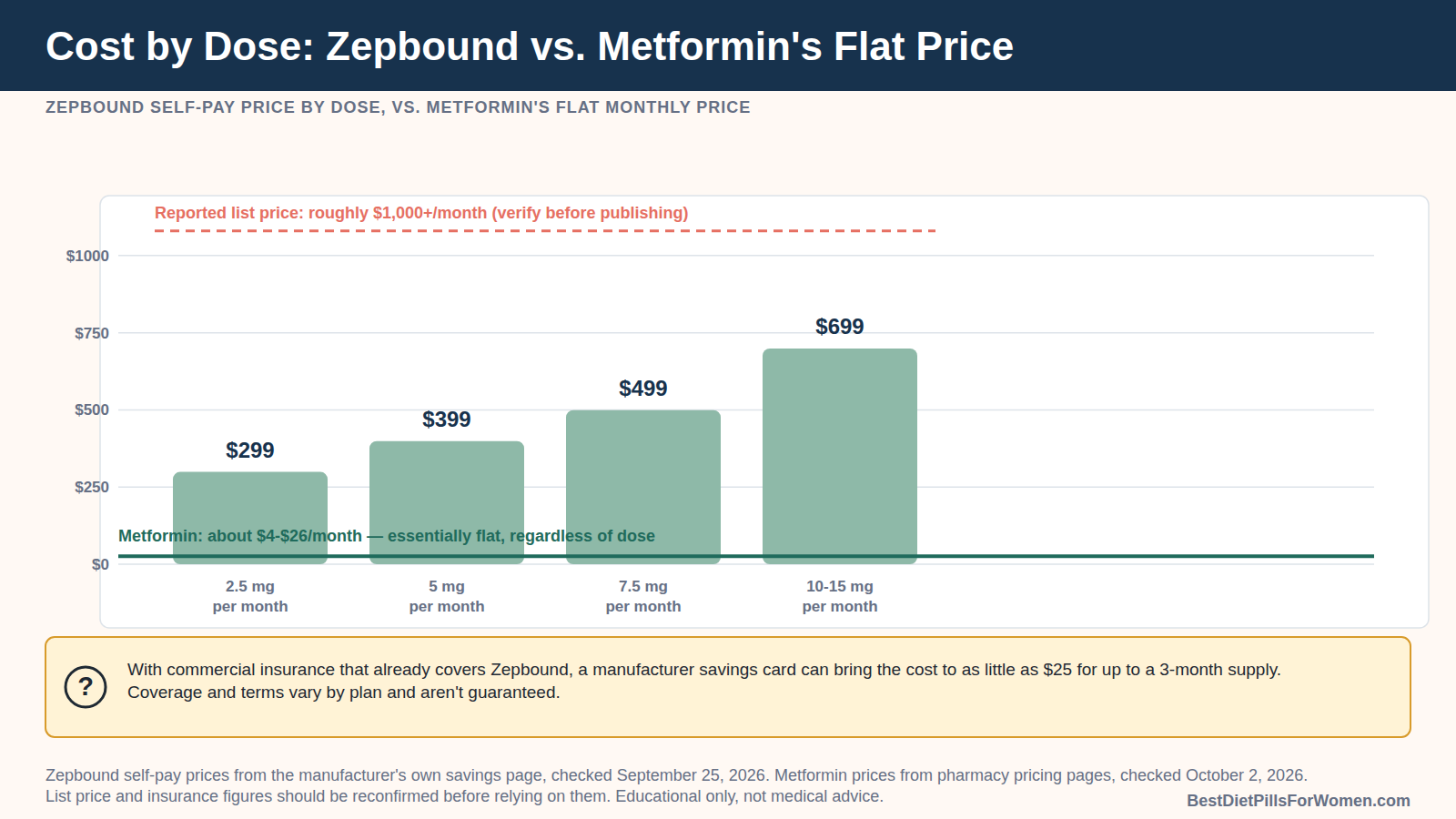
Metformin is a generic diabetes medicine that produces a small, inconsistent weight effect when used off-label; Zepbound is a once-weekly tirzepatide injection that FDA approved specifically for chronic weight management, and its pivotal trial found an average 21.4% to 22.5% body-weight loss at 72 weeks on the two higher doses, versus 2.4% on placebo. Cost tracks a wide range rather than a single gap: metformin commonly runs about $4 to $26 a month in cash prices at major pharmacies, while Zepbound’s self-pay price through the manufacturer’s own direct program runs from $299 to $699 a month depending on dose, and its list price has been publicly reported in the neighborhood of $1,000 to $1,100 a month.
Neither drug is a stand-in for diet, activity or, for many women, an ongoing relationship with a prescriber who can adjust the plan over time.
How Sure We Are About That Answer
We’re highly confident about the direction and rough size of the effectiveness gap, since it comes from Zepbound’s own FDA-reviewed pivotal trial on one side and a mix of prediabetes and PCOS trials on metformin’s side, all pointing the same way. We’re less confident about a single precise number for metformin’s weight effect, because the trials behind it measured different populations, used different doses, and reported results in different units, from kilograms to BMI points. We’re also confident that neither drug’s weight effect is a permanent, one-time event; both require ongoing use to maintain their effect.
Readers comparing Zepbound to other GLP-1 or dual-hormone medicines may find our guide comparing semaglutide and tirzepatide useful for that separate, adjacent question, since Zepbound and Wegovy are different drugs in the same broader incretin-based category rather than the same medicine under two names.
How We Compared the Two Drugs
A fair comparison needs criteria that don’t quietly favor one side, so we set them out before looking at any results.
The Four Criteria We Used
We compared metformin and Zepbound on four dimensions: how each drug is thought to work, the quality and size of the human evidence behind its weight effect specifically, the realistic safety picture for each, and the practical trade-offs of cost and access. We left out brand marketing, influencer claims and social media buzz, none of which reflects clinical evidence. We also deliberately kept each drug’s approved, on-label purpose in view throughout, rather than judging metformin purely as a disappointing weight-loss drug, since that’s not the job it was built or approved to do in the first place.
What This Comparison Is and Isn’t
This is a desk-research comparison built from FDA prescribing information, published trial data, a peer-reviewed journal article, and current pricing pages, not a hands-on test of either drug. We didn’t take, prescribe or lab-test anything described here, and nothing in this guide is personal experience. It’s also not a head-to-head clinical trial: metformin and Zepbound have never been tested against each other in the same study for weight loss, so every comparison here lines up separate trials with different populations, doses and durations. We say so explicitly wherever it affects how a number should be read, including in Table 1 below. It’s also not a ranking that declares one drug universally “better,” since the two aren’t competing for the same job in the first place; a fairer way to think about this guide is as a side-by-side look at two different tools that happen to get compared to each other constantly in real conversations between women and their prescribers.
| Dimension | Metformin | Zepbound (tirzepatide injection) |
|---|---|---|
| FDA-approved for | Type 2 diabetes, as an adjunct to diet and exercise for glycemic control | Chronic weight management in adults with obesity, or overweight plus a weight-related condition; and, separately, moderate-to-severe obstructive sleep apnea in adults with obesity |
| Weight-loss indication | Off-label; not an FDA-reviewed use | On-label; the reason this drug exists |
| Typical form | Oral tablet, once or twice daily, or an extended-release tablet once daily | Once-weekly subcutaneous injection, as a prefilled pen or single-dose vial |
| Key trial behind the weight numbers in this guide | A mix of sources: the Diabetes Prevention Program (prediabetes) and PCOS-specific meta-analyses | SURMOUNT-1, the pivotal trial behind the chronic-weight-management approval |
| Average weight result in that trial | Modest; roughly 2 to 2.5 kg over several years in the diabetes-prevention trial, or a BMI-point reduction in PCOS trials | 16.0% to 22.5% of body weight lost on average across the three approved doses, versus 2.4% on placebo, at 72 weeks |
| Most common side effects | Diarrhea, nausea, stomach upset, a metallic taste | Nausea, diarrhea, vomiting, constipation, abdominal pain, generally more frequent and more intense |
| Serious boxed warning | Lactic acidosis, a rare but potentially life-threatening buildup of lactic acid | Thyroid C-cell tumors in rodent studies; contraindicated with a personal or family history of medullary thyroid cancer |
| Typical monthly cost (checked October 2026) | About $4 to $26 at major pharmacy discount programs | $299 to $699 self-pay by dose through the manufacturer’s own program, or roughly $1,000-plus at list price |
Table 1 method: figures are as reported in the FDA labels, trial summaries and pricing pages, read as of October 2, 2026. The metformin and Zepbound rows draw on different trials with different populations and durations, so this table is a side-by-side summary, not a head-to-head study result.
What Metformin and Zepbound Actually Are
Before comparing results, it helps to be clear about what each drug actually is, since that explains a lot of what follows.
Metformin: A Decades-Old Diabetes Pill Used Off-Label for Weight
Metformin has been a mainstay of diabetes care for decades, which is both its biggest strength and the reason its weight-loss evidence looks the way it does.
What Metformin Is Approved For
Metformin’s FDA-approved use is narrow: it’s indicated as an adjunct to diet and exercise to improve blood sugar control in adults with type 2 diabetes, and weight loss doesn’t appear anywhere in that approved indication. It’s sold as a generic under several formulations, including immediate-release tablets taken once or twice a day and extended-release tablets taken once daily, and it’s one of the most commonly prescribed medicines in the country for type 2 diabetes specifically because of its long track record and low cost. Major diabetes-care guidelines have for years named metformin as a typical first medicine to try for type 2 diabetes, before adding or switching to other drug classes, which is a large part of why so many women have already encountered it long before anyone raises the subject of weight specifically.
Why Clinicians Prescribe It Off-Label for Weight-Related Reasons
Clinicians prescribe metformin off-label in several situations where weight and insulin resistance overlap: for women with polycystic ovary syndrome (PCOS), where insulin resistance is common and metformin can improve insulin sensitivity and, modestly, weight and body-mass index; for people with prediabetes, where it’s used to delay or prevent progression to type 2 diabetes; and sometimes alongside antipsychotic medications known to cause weight gain. “Off-label” doesn’t mean unsafe or improper, and it’s an extremely common practice in medicine generally. It means FDA hasn’t reviewed clinical trial data specifically asking whether metformin works for weight loss as its own standalone goal, the way it has for Zepbound.
Typical starting doses run around 500 mg once or twice daily, with the dose increased gradually over several weeks toward a usual maintenance range of 1,500 to 2,000 mg a day, specifically to reduce the digestive side effects covered later in this guide’s Safety section. That slow-and-steady titration pattern, not a single large starting dose, is standard practice for metformin regardless of why it’s being prescribed.
Zepbound: A Dual-Acting Medicine Built for Weight Management
Zepbound belongs to a newer class of medicines that were studied, and approved, with weight loss itself as the primary question.
What Zepbound Is Approved For
Zepbound (tirzepatide) is FDA-approved to reduce excess body weight and maintain that weight reduction long term in adults with obesity, or in adults with overweight who also have at least one weight-related health condition, and separately to treat moderate-to-severe obstructive sleep apnea in adults with obesity. FDA originally approved Zepbound for chronic weight management in November 2023, and the obstructive-sleep-apnea indication followed later as a separate approval. Unlike metformin, there’s no diabetes diagnosis required to qualify for Zepbound; weight itself, plus the BMI and comorbidity criteria in its label, is the basis for the prescription. Notably, Zepbound doesn’t currently carry the cardiovascular-risk-reduction indication that some other weight-management injectables in this drug class have separately picked up, which is a labeling detail worth asking about if heart disease is a major part of why you’re considering treatment.
How Zepbound Relates to Mounjaro (and Why They Aren’t Interchangeable)
Zepbound and Mounjaro are both brand names for tirzepatide made by the same manufacturer, but they’re approved for different things: Mounjaro is approved for type 2 diabetes, while Zepbound is approved for chronic weight management and obstructive sleep apnea, and the two aren’t interchangeable just because they share an active ingredient and a similar dosing schedule. Tirzepatide itself is a first-in-class dual GIP and GLP-1 receptor agonist, the first weight-management drug approved in the United States to work through two separate incretin-hormone receptors rather than one. This guide focuses on Zepbound specifically, since the weight-management label and the SURMOUNT trial program are what a woman comparing it to metformin for weight purposes actually needs; readers specifically weighing GLP-1-class options against each other may also want our comparison of semaglutide and tirzepatide, and our separate Zepbound cost guide goes deeper into pricing and coverage than this comparison has room for. Both Zepbound and Mounjaro require a prescription and the same upfront screening for thyroid-cancer history and other contraindications covered later in this guide’s Safety section; the approved use changes who qualifies and what insurers look for, but it doesn’t change the underlying drug class or its core safety considerations.
How Each Drug Is Thought to Work
The size of the weight-loss gap between these two drugs isn’t a coincidence. It traces directly back to how differently they act on the body.
Metformin’s Mechanism: Less Sugar Made, More Sugar Used
Metformin’s job, by design, is managing blood sugar, not appetite, and that distinction matters for what it can and can’t do for weight.
Hepatic Glucose Output and Insulin Sensitivity
Metformin’s primary actions are reducing how much glucose the liver releases into the bloodstream, known clinically as hepatic gluconeogenesis, and improving how sensitive muscle and other tissues are to insulin, so the body uses the glucose it already has more efficiently. It also modestly reduces how much glucose the intestines absorb from food. None of those actions directly targets hunger or appetite in the brain the way a dual-hormone medicine does.
Why This Mechanism Produces Only a Modest Weight Effect
Because metformin’s core mechanism is about glucose handling rather than appetite signaling, any weight change tends to be a secondary, smaller effect that shows up more reliably in people who start out with meaningful insulin resistance, like those with prediabetes or PCOS, than in the general population. That’s a proposed explanation consistent with the pattern across the trials in this guide, not a demonstrated cause-and-effect finding on its own; a sound, well-documented mechanism for improving insulin sensitivity hasn’t translated into a large or consistent weight-loss effect across the trials covered in the next section, which is exactly why this guide treats trial outcomes, not mechanism alone, as the deciding evidence.
Tirzepatide’s Mechanism: A Dual Hormone Receptor Approach
Tirzepatide, the active ingredient in Zepbound, works through a different system entirely, one built around two separate gut hormones at once.
GIP and GLP-1 Receptors, Appetite, and the Brain
Tirzepatide is a dual agonist that activates receptors for both GIP (glucose-dependent insulinotropic polypeptide) and GLP-1 (glucagon-like peptide-1), two natural gut hormones involved in insulin release, appetite and energy use. Activating both receptor types, rather than GLP-1 alone, is the proposed reason tirzepatide’s trial-reported weight loss runs larger than most single-hormone GLP-1 medicines; appetite reduction and increased satiety, not willpower, are the mechanism this drug class is built around.
Slower Gastric Emptying and Its Trade-offs
Tirzepatide also slows how quickly food leaves the stomach, which extends the feeling of fullness after a meal but is also the same mechanism behind the nausea, bloating and other digestive side effects covered later in this guide’s Safety section. The same action that makes a smaller meal feel satisfying is, for a meaningful share of users, the reason the drug is hard to tolerate at first. Zepbound’s label calls for a gradual dose increase, starting at 2.5 mg weekly for four weeks and stepping up in 2.5 mg increments roughly every four weeks toward a maintenance dose of 5 mg, 10 mg or 15 mg, specifically to give the body time to adjust before reaching a full dose. Skipping ahead in that schedule, or restarting at a higher dose after a long gap off the medicine, is one of the more common reasons people experience worse side effects than the label’s own escalation plan is designed to prevent.
How Zepbound Is Actually Administered
Zepbound is injected once a week under the skin of the abdomen, thigh or upper arm, rotating the injection site each time, and unopened pens or vials need refrigeration, while a pen already in use can typically be kept at room temperature for a limited number of days per the label’s storage instructions. Prescribers typically see a patient back at each dose-increase interval during the first few months, both to check tolerability and to decide whether to advance, hold at the current dose, or pull back, which is a meaningful practical difference from metformin, where dose changes are usually less frequent once a stable, tolerated dose is reached. Both drugs benefit from a baseline set of labs, including kidney function, before starting, and from a woman telling her prescriber about every supplement and over-the-counter product she’s using, not only her other prescriptions.
How Much Weight Loss Each Drug Actually Produces
This is where the two drugs diverge most sharply, and where it matters most to read the numbers in context rather than side by side as if they came from the same study.
Zepbound’s Trial Evidence From the SURMOUNT Program
Zepbound’s approval rests on one of the largest, most specifically designed weight-loss trial programs in this comparison.
The SURMOUNT-1 Trial Numbers
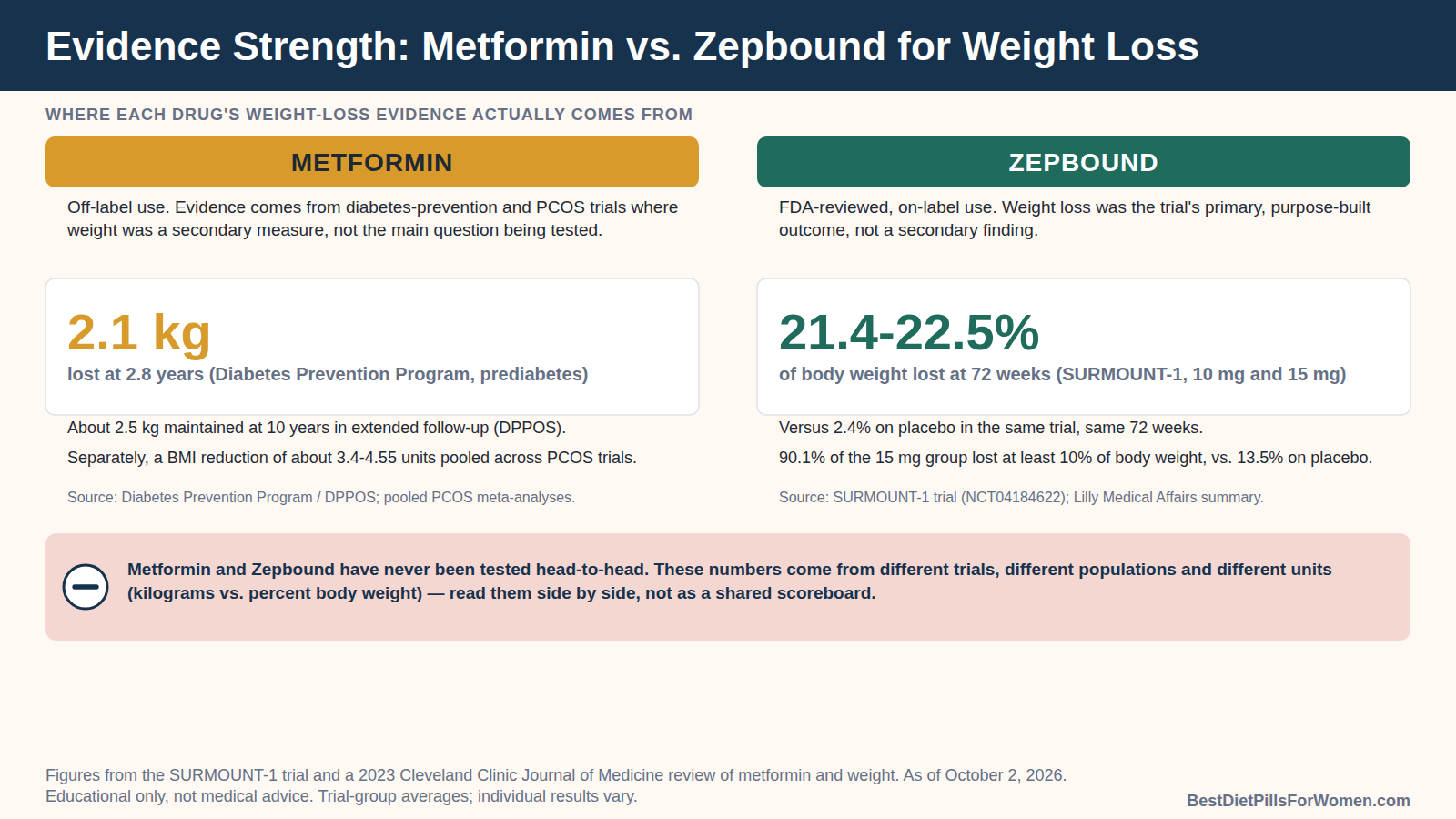
In SURMOUNT-1, the pivotal trial behind Zepbound’s chronic-weight-management approval, 2,539 adults with obesity or overweight and a weight-related condition, with type 2 diabetes excluded, were randomly assigned to tirzepatide 5 mg, 10 mg or 15 mg weekly, or placebo, for 72 weeks. At the two higher doses, participants lost an average of 21.4% (10 mg) and 22.5% (15 mg) of body weight, compared with 2.4% on placebo; the 5 mg dose produced an average 16.0% loss. Between 89.4% and 96.3% of people on tirzepatide lost at least 5% of their starting weight across the three doses, versus 27.9% on placebo, and 90.1% of the 15 mg group lost at least 10%, versus 13.5% on placebo. Treatment discontinuation because of adverse events ranged from 4.3% to 7.1% across the tirzepatide doses, compared with 2.6% on placebo.
SURMOUNT-2 Results in Adults With Type 2 Diabetes
A companion trial, SURMOUNT-2, tested tirzepatide in adults who had both obesity or overweight and type 2 diabetes, a group excluded from SURMOUNT-1, and found weight loss up to roughly 15% at the highest dose over the same 72-week design, smaller than the SURMOUNT-1 result but still substantially larger than metformin’s documented weight effect in any population. That smaller result in people with diabetes is a pattern seen across this entire drug class: incretin-based medicines tend to produce somewhat less weight loss in people who already have type 2 diabetes than in people who don’t, which is a reason this guide treats the SURMOUNT-1, non-diabetes result as the headline figure for a reader simply comparing metformin and Zepbound for weight, rather than for blood-sugar control.
For side effects specifically, our dedicated guide to GLP-1 medicine side effects goes deeper into how to manage the gastrointestinal effects common across this drug class, including Zepbound.
Metformin’s Trial Evidence
Metformin’s weight data comes from a patchwork of trials that were mostly designed to answer a different question first.
The Diabetes Prevention Program and Prediabetes Data
The Diabetes Prevention Program, a large NIH-funded trial in adults with prediabetes, randomly assigned participants to metformin, intensive lifestyle change, or placebo, and found that over an average of 2.8 years, the metformin group lost about 2.1 kg, compared with 5.6 kg in the lifestyle group and 0.1 kg on placebo. An extended follow-up study, the Diabetes Prevention Program Outcomes Study, tracked many of the same participants for 10 years and found metformin’s group maintained roughly 2.5 kg of weight loss, while the lifestyle group’s early, larger loss partly reversed over time; about 30% of people randomized to metformin lost more than 5% of their starting body weight in the first year. The practical takeaway echoes the mechanism discussed earlier: metformin’s weight effect in this population wasn’t dramatic, but it was durable, which fits a drug that works through a steady metabolic change rather than a strong, direct effect on appetite.
PCOS-Specific Evidence
Metformin’s evidence in women with PCOS tells a similar story of modest but real benefit. Meta-analyses pooling multiple randomized trials in women with PCOS have found metformin associated with a body-mass-index reduction of roughly 3.4 to 4.55 BMI units, alongside improved insulin sensitivity and, for some women, improved menstrual regularity. A separate meta-analysis of metformin used for antipsychotic-associated weight gain, a different but related off-label use, found a mean weight loss of about 3.27 kg across 12 studies and 743 participants. Office on Women’s Health materials describe metformin as improving insulin’s ability to lower blood sugar and, for some women with PCOS, modestly lowering body mass, while noting plainly that it isn’t FDA-approved for PCOS and tends to have little effect on PCOS-related acne or excess hair growth.
Why This Isn’t a Head-to-Head Comparison
Every number in the two subsections above comes from a different trial, and that difference matters more than a quick glance suggests.
Different Trials, Different Populations, Different Endpoints
SURMOUNT-1 studied adults with obesity or overweight who didn’t have diabetes, with weight loss as the trial’s primary outcome, measured as a percentage of starting body weight over 72 weeks. The Diabetes Prevention Program studied adults with prediabetes, with diabetes prevention as the primary outcome and weight as a secondary measure, reported in kilograms over years rather than weeks. The PCOS meta-analyses pooled trials in a specific hormonal condition, measuring BMI in kilograms per square meter rather than percent body weight. None of these trials put metformin and tirzepatide in the same room, let alone the same randomized comparison, so a reader should treat every side-by-side number in this guide as a summary of separate evidence, not a shared scoreboard.
Why a Percentage Doesn’t Tell the Whole Story for Every Body Size
Percent-of-body-weight figures, like SURMOUNT-1’s 21.4% to 22.5%, translate into very different absolute numbers depending on where someone starts. For a woman who weighs 200 pounds, a 22% loss works out to roughly 44 pounds; for a woman who weighs 160 pounds, the same percentage is closer to 35 pounds. Metformin’s smaller, often kilogram- or BMI-based results have the same quirk in reverse: a modest, several-pound change can represent a meaningful shift for someone already close to a healthy range, and a smaller fraction of total body weight for someone starting from a higher BMI. Neither direction makes one drug’s evidence more or less real; it’s a reason to think in terms of your own starting point rather than a single headline percentage from either drug’s trials.
| Study | Design | Population | Sample size | Duration | Intervention | Comparator | Outcome | Key limitation |
|---|---|---|---|---|---|---|---|---|
| SURMOUNT-1 | Randomized, double-blind, placebo-controlled | Adults with obesity, or overweight plus a weight-related condition; diabetes excluded | 2,539 | 72 weeks | Tirzepatide 5, 10 or 15 mg weekly | Placebo | -16.0% to -22.5% vs. -2.4% body weight; 89.4%-96.3% vs. 27.9% lost at least 5% | Manufacturer-funded; excludes people with type 2 diabetes |
| SURMOUNT-2 | Randomized, double-blind, placebo-controlled | Adults with obesity or overweight AND type 2 diabetes | 938 | 72 weeks | Tirzepatide 10 or 15 mg weekly | Placebo | Weight loss up to about 15% at the highest dose, smaller than SURMOUNT-1 | People with diabetes tend to lose somewhat less weight on incretin therapies than people without diabetes |
| Diabetes Prevention Program / DPPOS | Randomized, 3-arm, NIH-funded | Adults with prediabetes | About 3,234 enrolled, with long-term follow-up in DPPOS | 2.8 years, with extended follow-up to 10 years | Metformin 850 mg twice daily | Intensive lifestyle change, and placebo | 2.1 kg lost at 2.8 years, about 2.5 kg maintained at 10 years; lifestyle group’s larger early loss partly reversed | Weight was a secondary outcome; population was selected for prediabetes, not obesity treatment |
| PCOS metformin meta-analyses | Pooled randomized trials | Women with PCOS | Varies by meta-analysis | Mostly months to about a year | Metformin, with or without lifestyle change | Lifestyle change and/or placebo | BMI reduction of roughly 3.4 to 4.55 BMI units pooled across studies | Reported in BMI units, not percent body weight; study quality and duration vary across the pooled trials |
Table 2 method: figures are as reported in each cited trial, trial summary or journal article, read as of October 2, 2026. Rows come from different trials with different populations, doses and durations; none of them tested metformin against tirzepatide directly.
Safety, Side Effects, and Who Should Be Cautious
Side effects and serious risks look different for these two drugs, and the pattern is more specific than “the stronger drug is the riskier one.”
Metformin’s Safety Profile
Metformin has one of the longest safety track records of any medicine still in common use, which makes its risk profile unusually well characterized.
Common Side Effects
Metformin’s most common side effects are digestive: diarrhea affected about 10% of people in clinical trials versus 3% on placebo, and nausea or vomiting affected about 7% versus 2%, with smaller shares reporting abdominal discomfort, bloating, gas, dizziness, headache or a metallic taste. These effects are usually most noticeable when starting the medicine or increasing the dose, and they often ease with time, with food, or with a switch to an extended-release formulation. Taking metformin with a meal rather than on an empty stomach, and starting at a lower dose before working up to a full prescribed amount, are both standard, label-consistent ways prescribers try to reduce how disruptive these early side effects feel.
Serious Risks: Lactic Acidosis and Vitamin B12 Deficiency
Metformin carries a boxed warning for lactic acidosis, a rare but potentially life-threatening buildup of lactic acid in the blood, with risk concentrated in people with significant kidney impairment, liver disease, heavy alcohol use, certain other medical conditions, or situations like major surgery or an imaging procedure that uses contrast dye. Postmarketing cases of metformin-associated lactic acidosis have included death, low body temperature, low blood pressure and dangerous heart-rhythm problems, which is why the warning is taken seriously despite its rarity. Separately, about 7% of people in the 29-week trials behind metformin’s label had a measured drop to subnormal vitamin B12 levels, which is why current labeling supports periodic blood testing, including vitamin B12, for people on long-term metformin therapy.
Zepbound’s Safety Profile
Zepbound’s side-effect pattern is dominated by the same gastrointestinal system its mechanism works through, generally at a higher intensity than metformin’s.
Common Side Effects and the Boxed Warning
In Zepbound’s clinical trials, the most common side effects, each affecting at least 5% of users, were nausea (28%), diarrhea (23%), vomiting (13%), constipation (17%), abdominal pain (10%), dyspepsia (10%), injection-site reactions (8%), fatigue (7%), hypersensitivity reactions (5%), burping (5%), hair loss (5%) and acid reflux (5%). For comparison, metformin’s most common side effects affect a noticeably smaller share of users and a narrower symptom list. These digestive effects tend to be worst during the first several weeks after each dose increase and then settle somewhat once the body adjusts, which is the practical reason behind the slow titration schedule described earlier in this guide’s mechanism section. Zepbound carries a boxed warning because tirzepatide caused thyroid C-cell tumors in rodent studies at clinically relevant exposures; whether that risk applies to humans remains unknown, and the drug is contraindicated for anyone with a personal or family history of medullary thyroid carcinoma or multiple endocrine neoplasia syndrome type 2.
Pancreatitis, Gallbladder Disease, and Kidney Concerns
Acute pancreatitis, including rare fatal and non-fatal hemorrhagic or necrotizing cases, has been reported with Zepbound, and the label advises discontinuing the drug if pancreatitis is suspected. Gallbladder disease is a documented concern as well: cholecystitis, a gallbladder inflammation, occurred in about 0.7% of Zepbound users in trials, versus 0.2% on placebo. FDA’s label also notes postmarketing reports of acute kidney injury associated with GLP-1-based medicines as a class, often tied to dehydration from severe nausea, vomiting or diarrhea, which is a reason to contact a prescriber if gastrointestinal side effects become severe rather than waiting them out.
Who Needs Extra Caution With Either Drug
Beyond each drug’s own warnings, a few situations call for a specific conversation before starting either one.
Pregnancy, Breastfeeding, and Family-Building Plans
Zepbound’s label advises against use during pregnancy, and current clinical guidance for this drug class generally calls for stopping treatment with enough lead time before a planned pregnancy for the medicine to clear the body; an obstetric provider or prescriber should set that specific timeline for an individual rather than relying on a general rule. Metformin has a longer track record around pregnancy, including use for gestational diabetes in some cases, but any use in pregnancy or while breastfeeding, for either drug, needs individualized guidance from an obstetric provider rather than a general comparison like this one. For a woman actively trying to conceive, the practical planning timelines are genuinely different between the two drugs, which is itself a reason to raise family-building plans early in any conversation about starting either one, not after a prescription is already written.
Kidney Function and Other Red Flags
Metformin’s lactic acidosis risk is tied closely to kidney function: current labeling advises against starting it when estimated kidney function (eGFR) is between 30 and 45, and it’s contraindicated outright below an eGFR of 30, with a temporary pause often recommended around procedures using contrast dye or major surgery. Zepbound doesn’t carry the same kidney-specific contraindication, but severe, persistent vomiting or diarrhea from the drug can affect kidney function indirectly, which is its own reason to contact a prescriber if GI side effects become severe. A baseline kidney-function blood test before starting either drug, and periodic rechecks after, is standard practice precisely because both drugs interact with kidney health in different but meaningful ways. Anyone with a personal or family history of thyroid cancer or multiple endocrine neoplasia syndrome type 2 has a specific, documented reason to raise that history before starting Zepbound rather than after, since it’s a contraindication rather than merely a caution.
| Drug | Most common side effects | Frequency (drug vs. comparator) | Serious risk to know |
|---|---|---|---|
| Metformin | Diarrhea, nausea/vomiting, stomach discomfort, metallic taste | Diarrhea about 10% vs. 3%; nausea/vomiting about 7% vs. 2% | Lactic acidosis (rare, boxed warning); vitamin B12 deficiency with long-term use |
| Zepbound | Nausea, diarrhea, vomiting, constipation, abdominal pain | Nausea 28%; diarrhea 23%; vomiting 13%; constipation 17%, each from SURMOUNT-1 | Thyroid C-cell tumor warning (boxed); acute pancreatitis; gallbladder disease (cholecystitis about 0.7% vs. 0.2%) |
Table 3 method: figures as reported in each drug’s current FDA prescribing information, read as of October 2, 2026. The two rows come from different trial programs and aren’t a head-to-head safety comparison.
Combining the Two Medications, and Drug Interactions
What a woman is already taking changes the calculus for either of these drugs, and the “versus” framing of this comparison doesn’t always reflect how they’re actually used in practice.
What Can Interact With Each Drug
Metformin and Zepbound have fairly different interaction profiles, since one works mainly through the kidneys and liver and the other works mainly through digestion.
Metformin’s Interactions
Heavy alcohol use raises the risk of lactic acidosis with metformin, and the drug is often paused temporarily around imaging procedures that use iodinated contrast dye or around major surgery, since both can affect kidney function at least briefly. Combining metformin with insulin or certain other diabetes medicines, like sulfonylureas, can increase the risk of low blood sugar. Because metformin can modestly lower vitamin B12 absorption over time, a woman taking it long-term has a specific reason to mention any B12 or multivitamin supplement she’s using to her prescriber or pharmacist.
Zepbound’s Interactions
Because tirzepatide slows gastric emptying, it can change how quickly other oral medications are absorbed, which matters most for drugs with a narrow safety margin or that need to reach a precise blood level quickly. A pharmacist is best positioned to review a woman’s complete medication list against this specific mechanism before she starts Zepbound, including any hormonal birth control, since absorption timing is exactly the kind of detail a pharmacist can check against a particular product. In people who also have type 2 diabetes, combining Zepbound with insulin or a sulfonylurea raises the risk of hypoglycemia, which calls for closer blood sugar monitoring; this usually isn’t a concern for someone using Zepbound for weight management alone, without diabetes or those other medicines on board.
Can Metformin and Zepbound Be Used Together?
For a woman with type 2 diabetes who also has obesity, it’s common for a prescriber to keep metformin as a foundation for blood sugar control while adding a GLP-1 or dual-hormone medicine for additional weight and glycemic benefit, since the two drugs work through different mechanisms rather than competing for the same biological target. That combination reflects standard practice in diabetes and obesity care, not an unusual pairing of two unrelated drugs; from a prescriber’s point of view, metformin’s low cost and long safety record make it a sensible foundation to build on, while a dual-hormone medicine added on top addresses weight in a way metformin alone usually can’t reach for a given patient.
Why This Combination Already Happens in Practice
Clinical treatment approaches for type 2 diabetes have increasingly favored layering medicine classes with different mechanisms, rather than pushing a single drug to its maximum dose before adding anything else, which is part of the broader context behind why this specific combination has become common in practice. None of that changes the core comparison for a reader without diabetes who’s weighing metformin against Zepbound as two separate paths to weight loss on their own.
What That Doesn’t Mean for a Reader Comparing the Two
For a reader whose goal is purely weight management without a diabetes diagnosis, the evidence gap described throughout this guide still applies, and combining the two isn’t something to try on your own initiative; it’s a decision for a prescriber based on a full picture of your health, not a do-it-yourself stacking strategy. If your goal is purely weight management, the relevant comparison for you really is the one this guide walks through end to end, not a combination most prescribers wouldn’t reach for outside a diabetes diagnosis in the first place.
Cost, Access, and Insurance Coverage
Few parts of this comparison are as lopsided as price, and the gap has real consequences for who can realistically use each option long-term.
What Metformin Costs
Metformin’s price is, by a wide margin, the cheapest line item in this entire comparison.
Cash Price and Insurance Coverage
Generic metformin commonly costs about $4 to $26 a month in cash prices for a standard 500 mg supply at major pharmacy chains, with discount-card prices at or near the lower end of that range, and it’s typically covered by insurance, including Medicare and Medicaid, as a low-tier generic. A small number of pricing pages list a higher, no-discount “average retail” price for a less common strength or formulation; that figure appears to reflect a sticker price few people actually pay rather than a typical real-world cost, since a discount card or standard insurance usually brings the price down substantially. Medicaid programs, which cover a meaningful share of reproductive-age women, typically place metformin on their lowest-cost generic tier as well, though exact terms vary by state program.
Why It’s So Inexpensive
Metformin has been available as a generic medicine for decades, with many manufacturers producing it and no patent protection left to support a premium price, which is the main reason its price floor sits so far below almost every other medicine in this comparison. That long track record and low cost are exactly why it remains a first-line diabetes medicine even as newer, pricier options have entered the market.
What Zepbound Costs
Zepbound’s price sits at the opposite end of the spectrum, and the picture is more complicated than a single number, since it depends heavily on dose and how it’s purchased.
List Price Versus Self-Pay Pricing Through LillyDirect
Zepbound’s published list price, the figure typically used for insurance billing, has been widely reported in the range of $1,000 to $1,100 a month, though the exact current figure should be reconfirmed before publication since list prices are reviewed periodically. Separately, Eli Lilly’s own direct-to-consumer program offers self-pay pricing by dose for the single-dose vial and prefilled pen, with prices on the manufacturer’s own savings page running from $299 a month for the starting 2.5 mg dose up to $699 a month for the 10 mg, 12.5 mg and 15 mg maintenance doses, as last checked on this page on September 25, 2026.
Insurance Coverage, Savings Cards, and the Medicare Question
Even when a plan covers Zepbound, coverage usually depends on meeting specific diagnosis and prior-authorization requirements. Eli Lilly’s own savings program states that a woman whose commercial plan already covers Zepbound may pay as little as $25 for up to a three-month supply, while someone with commercial insurance that doesn’t cover Zepbound specifically may still use the savings card for a reduced self-pay price around $299 for a one-month supply of the prefilled pen. Many commercial plans, and a large share of Medicare Part D plans, have historically excluded anti-obesity medications from coverage entirely or required documentation of a weight-related condition and a prior unsuccessful weight-loss attempt before approving one. That said, Zepbound’s own savings page references a Medicare “GLP-1 Bridge” program advertising a cost of no more than $50 a month for people who qualify, which suggests an expanding, though still limited and qualification-dependent, government coverage picture as of our October 2026 check; confirm the current scope of that program and your own plan’s specific terms before assuming it applies to you.
| Item | Metformin | Zepbound |
|---|---|---|
| Typical form | Generic oral tablet | Brand-name prefilled pen or single-dose vial, injectable |
| Cash price without insurance | About $4-$26 a month at major pharmacy discount programs | Self-pay through the manufacturer: $299-$699 a month by dose; list price reportedly around $1,000-plus a month |
| With commercial insurance that covers it | Usually a low, Tier 1 generic copay | As low as $25 for up to a 3-month supply with the manufacturer’s savings card, if the plan covers Zepbound |
| With commercial insurance that doesn’t cover it | Rarely an issue; metformin is on nearly every formulary | About $299 for a 1-month supply of the prefilled pen through the manufacturer’s savings card |
| Government coverage | Widely covered by Medicaid and Medicare Part D for diabetes | Traditionally excluded from most Medicare Part D plans for weight loss; a Medicare “GLP-1 Bridge” program referenced on the manufacturer’s site advertises costs of no more than $50 a month for qualifying patients |
| Date price information checked | October 2, 2026 | October 2, 2026 (self-pay figures as the manufacturer’s page showed on September 25, 2026) |
Table 4 method: prices as listed on manufacturer and pricing pages, read as of October 2, 2026; this table doesn’t calculate an annual cost, since Zepbound’s dose, and therefore its price, is designed to change over the first several months of treatment as the dose is titrated upward.
Who Each Option Might Realistically Fit
Everything above is about the two drugs in the abstract. This section is about which one, if either, tends to make more sense for a specific kind of situation, recognizing that the honest answer for a lot of women isn’t a clean either-or but a sequence of trade-offs weighed against a specific budget, health history and goal.
When Metformin Might Be the More Realistic Starting Point
Metformin’s narrower, gentler effect fits some situations better than a far stronger but far more expensive option would.
PCOS, Prediabetes, and Insulin Resistance
A woman with PCOS, prediabetes or another insulin-resistance-related condition is in the population where metformin’s modest weight effect is most consistently documented, and where the drug is already likely to be part of her care for reasons beyond weight alone, including blood sugar control and, for some women with PCOS, improved cycle regularity. For her, metformin isn’t really “instead of” a weight-loss drug; it’s a treatment for an underlying condition that happens to carry a small weight benefit too. Our deeper guide to the best weight loss pills for PCOS covers how metformin fits alongside other PCOS-specific options, including other insulin-sensitizing supplements like berberine, which some women compare to metformin because of its similar, modest proposed mechanism. Insulin resistance also shifts for many women around midlife, which is a reason some readers in that life stage end up having this same metformin conversation; our guide to weight loss pills for women over 40 covers that broader context.
When Budget or Access Rules Out a GIP/GLP-1 Medicine
For a woman without insurance coverage for weight-management drugs, or for whom even Zepbound’s lowest self-pay tier isn’t realistic, metformin’s low cost and wide insurance coverage make it a far more accessible option, even knowing upfront that its weight effect will likely be modest. A smaller, well-tolerated and affordable change is a reasonable starting point for some people, as long as the expectation is set accurately from the start rather than borrowed from Zepbound’s very different trial results. It’s also worth revisiting over time rather than treating as a permanent decision, since insurance coverage, personal finances and a woman’s own health picture can all change.
When Zepbound Might Be the More Realistic Starting Point
Zepbound was studied in, and approved for, a fairly specific population, and that population is the clearest fit for the drug.
BMI and Weight-Related Health Conditions, Including Sleep Apnea
Zepbound is approved for adults with a BMI of 30 or higher, or 27 or higher with a weight-related condition such as high blood pressure, high cholesterol, type 2 diabetes or obstructive sleep apnea, and it’s separately approved to treat moderate-to-severe obstructive sleep apnea in adults with obesity in its own right. A woman in either of those groups, especially one with sleep apnea or another comorbidity that meaningful weight loss could improve, is the population SURMOUNT-1’s strongest results actually describe, and the sleep-apnea indication specifically is a reason to raise that symptom with a prescriber if it applies to you, since it can open a different path to coverage than a weight-only diagnosis.
When a Larger, Faster Result Matters Most
For someone whose main goal is the largest, most consistent weight loss covered in this guide, nothing in metformin’s evidence base comes close to SURMOUNT-1’s results, and that gap alone is often the deciding factor once cost and access aren’t limiting. Anyone with a personal or family history of thyroid cancer, a history of pancreatitis, or a current or planned pregnancy has a specific, documented reason from this guide’s Safety section to raise that history before starting Zepbound rather than after.
Realistic Alternatives Worth Knowing About
Metformin and Zepbound aren’t the only two options on the table, and a fuller decision usually benefits from knowing what else exists.
Other GIP/GLP-1 Medicines and Non-Drug Approaches
Semaglutide, sold as Wegovy for weight management, is a GLP-1-only medicine with its own large, FDA-reviewed weight-loss trial program; it’s a reasonable comparison point for a woman weighing GLP-1-class options against each other, and our semaglutide vs. tirzepatide comparison and our Wegovy cost guide go deeper into that specific question. Older prescription options sit at different points on the cost-and-intensity spectrum: phentermine, an appetite-suppressing stimulant approved only for short-term use, is inexpensive and produces weight loss in the moderate range in its own short-duration trials, but it isn’t meant for long-term use the way metformin or Zepbound are, and its stimulant effects (faster heart rate, trouble sleeping, jitteriness) rule it out for some women. Orlistat, sold by prescription as Xenical and over the counter at a lower dose as Alli, works through an entirely different mechanism, blocking some dietary fat from being absorbed in the gut, and its average trial-documented weight loss is more modest than Zepbound’s, with digestive side effects tied directly to how much fat is in a given meal. Our guide to prescription and OTC weight loss pills covers both of these, and other options, in more depth than this comparison has room for.
Structured Lifestyle Change
The Diabetes Prevention Program’s own lifestyle arm, which combined dietary change, physical activity and behavioral coaching, produced a larger early weight loss than metformin did in the same trial, even though some of that loss was regained over the following years. A structured program isn’t a drug and doesn’t carry a prescription-medicine safety profile, but it also demands sustained personal effort that a pill or injection doesn’t, which is its own trade-off worth naming plainly rather than treating lifestyle change as a free option with no real cost of its own.
Frequently Asked Questions About Metformin and Zepbound
A few questions come up often enough in this comparison to answer directly, even where the answer repeats a point made earlier in more depth.
Questions About Effectiveness and Evidence
Is Zepbound More Effective Than Metformin for Weight Loss?
In the trials behind each drug, yes, by a wide margin, but that doesn’t mean every individual woman will see the same gap. SURMOUNT-1 found an average 21.4% to 22.5% body-weight loss with tirzepatide’s two higher doses, while metformin’s own best-documented weight results are smaller, in the range of a few kilograms or a few BMI points depending on the population. Individual responses vary within every drug category, and a small share of people see less benefit, or more side effects than they can tolerate, from even the strongest option in a given comparison.
Can Metformin Alone Cause Meaningful Weight Loss?
For most people without PCOS, prediabetes or another insulin-resistance-related condition, metformin’s weight effect on its own tends to be small and inconsistent across trials. In the populations where its weight evidence is strongest, like prediabetes and PCOS, the effect is still modest, described in this guide’s own sources as a few kilograms or a few BMI points rather than a dramatic transformation. That doesn’t mean it can’t help; it means the honest expectation, based on the evidence, is modest rather than comparable to a purpose-built weight-management drug.
Why Does Metformin Produce Less Weight Loss Than Zepbound?
Metformin’s core mechanism targets glucose handling in the liver and muscles, not appetite, so any weight effect tends to be a smaller, secondary byproduct rather than the drug’s main action; tirzepatide, by contrast, directly targets hunger and fullness signals through two separate hormone receptors at once, which is a more powerful lever for weight specifically.
Questions About Safety, Cost, and Switching
Is It Safe to Take Metformin and Zepbound at the Same Time?
That’s a decision for a prescriber who knows your full health picture, not a question this guide can answer for an individual reader, but combining the two is standard practice for some people with type 2 diabetes who also have obesity, since the drugs work through different mechanisms. If you don’t have diabetes and your goal is purely weight management, this combination is less commonly reached for, and it isn’t something to try on your own initiative.
Does Insurance Cover Zepbound If You’re Already Taking Metformin?
Taking metformin doesn’t by itself change whether your plan covers Zepbound; coverage depends on your specific plan’s formulary, prior-authorization rules, and the diagnosis documentation it requires, which commonly includes BMI and comorbidity criteria rather than anything related to metformin use. Checking your plan’s specific terms before assuming coverage either way is worth the phone call.
What Happens to Weight If You Stop Either Medication?
With Zepbound, clinical experience and trial data with this drug class generally show that appetite tends to return toward its prior baseline once the medicine is stopped, and a meaningful share of the weight lost during treatment can return over the following months without continued use or significant lifestyle changes to offset it. Metformin’s weight effect, being smaller and more tied to underlying insulin sensitivity, doesn’t carry the same dramatic rebound pattern, partly because there’s less weight change to begin with; the Diabetes Prevention Program’s extended follow-up describes a loss that stayed fairly durable over a 10-year window while participants remained on the medicine.
Can I Ask My Doctor for Metformin Instead of Zepbound to Save Money?
You can certainly raise it as an option, and for some women, especially those with PCOS, prediabetes or insulin resistance, it’s a reasonable starting conversation. What a prescriber can’t responsibly do is promise metformin will produce anything close to Zepbound’s trial-documented results, since the evidence behind the two drugs for weight loss specifically isn’t comparable in size or consistency. The honest framing for that conversation is “a cheaper, gentler option with modest expectations” rather than “a budget version of the same result.”
The Bottom Line on Metformin vs. Zepbound
Everything in this guide points toward the same underlying answer, worth stating plainly before you decide anything.
What the Total Evidence Means for You
The gap between these two drugs isn’t a marketing difference. It’s a direct reflection of what each one was built, studied and approved to do.
The Biggest Realistic Benefit of Each
Zepbound’s biggest realistic benefit is the largest, most consistently documented weight loss in this entire comparison, backed by a trial program FDA reviewed specifically for a weight-management approval, plus a separate approved use for obstructive sleep apnea. Metformin’s biggest realistic benefit is accessibility: it’s inexpensive, widely covered by insurance, and already has a well-established role in treating conditions like PCOS and prediabetes where a modest weight benefit comes alongside its primary purpose.
The Biggest Limitation or Safety Concern of Each
Zepbound’s biggest limitation is cost and access: even its lowest self-pay tier runs a few hundred dollars a month, its list price is reportedly several times that, and insurance coverage depends heavily on a woman’s specific plan and documented diagnosis. Metformin’s biggest limitation is simply that it isn’t built to produce large weight loss for most people, and anyone expecting Zepbound-level results from it is likely to be disappointed. On the safety side, Zepbound’s thyroid-tumor boxed warning, pancreatitis risk and gallbladder-disease risk sit alongside metformin’s rarer but more acute lactic-acidosis risk and its subtler, long-term vitamin B12 concern; neither drug is risk-free, and the two risk profiles simply look different rather than one being clearly safer than the other across every situation.
A Rational Next Step
None of this is a reason to assume one drug is simply right and the other simply wrong. It’s a reason to be specific about what you’re actually choosing between.
Questions for a Clinician
If Zepbound is on the table, ask what your specific plan’s prior-authorization and continuation requirements actually are, whether anything in your personal or family history, especially thyroid cancer or pancreatitis, might rule it out, and what a realistic timeline for results looks like for someone with your starting point. If you’re leaning toward metformin, ask directly what weight result is realistic for your specific situation, since the honest answer, based on the evidence in this guide, is usually “modest” rather than “comparable to a dual-hormone injectable.” Either way, our broader guide to the best weight loss pills for women covers more of the options beyond just these two. Bring this guide’s tables with you if it’s useful; a prescriber working from the same specific numbers you’ve already seen can usually have a more efficient, more productive conversation than one starting from scratch.
What to Re-Check Before You Spend Money
Prices, insurance prior-authorization rules, and FDA label updates for both drugs can change within weeks of when this guide was checked. Before spending money on either option, reverify current pricing directly with the manufacturer or your pharmacy, confirm your specific plan’s current coverage rules for Zepbound, and ask your prescriber whether anything in your personal health history has changed since you last discussed either medicine. The drug with the strongest evidence for weight loss specifically isn’t automatically the right or only choice for every woman’s budget and health picture, and the drug with the lowest price isn’t automatically the wrong one either. Metformin and Zepbound will likely keep getting compared to each other in casual conversation precisely because they’re both common, well-known names in weight-related care, but a fair comparison, as this guide has tried to show throughout, means holding onto the fact that they were built for different jobs even as they sometimes get asked to do the same one.
Related Reading
Sources
These are the main sources behind this guide, chosen because they are the ones to check first for current facts. Labels, prices and trial summaries change, so confirm the latest version before you make decisions.
- U.S. Food and Drug Administration. ZEPBOUND (tirzepatide) injection, for subcutaneous use — prescribing information, label archive version 217806s042 (2026 posting; confirm no newer archived version exists before publication). https://www.accessdata.fda.gov/drugsatfda_docs/label/2026/217806s042lbl.pdf
- ClinicalTrials.gov, National Institutes of Health. A Study of Tirzepatide (LY3298176) in Participants With Obesity or Overweight (SURMOUNT-1). NCT04184622. https://clinicaltrials.gov/study/NCT04184622
- Eli Lilly and Company. How did Zepbound (tirzepatide) compare with placebo for weight reduction in people without diabetes? Lilly Medical Affairs. https://medical.lilly.com/us/products/answers/how-did-zepbound-tirzepatide-compare-with-placebo-for-weight-reduction-in-people-without-diabetes-163853
- Healio. SURMOUNT-2: Tirzepatide confers up to 15.7% weight loss for adults with obesity, diabetes (April 27, 2023). https://www.healio.com/news/endocrinology/20230427/surmount2-tirzepatide-confers-up-to-157-weight-loss-for-adults-with-obesity-diabetes
- Eli Lilly and Company. Zepbound Savings and Support (self-pay and savings-card pricing; page as last checked September 25, 2026). https://zepbound.lilly.com/savings-support
- U.S. Food and Drug Administration. Metformin hydrochloride tablets — prescribing information, label archive version 021748s020. Other metformin products carry the same core boxed-warning and safety language. https://www.accessdata.fda.gov/drugsatfda_docs/label/2017/021748s020lbl.pdf
- Rodriguez P, Pantalone KM, Griebeler ML, Burguera B. Should I consider metformin therapy for weight loss in patients with obesity but without diabetes? Cleveland Clinic Journal of Medicine. 2023;90(9):545-548. https://www.ccjm.org/content/90/9/545
- Office on Women’s Health, U.S. Department of Health and Human Services. Polycystic ovary syndrome (PCOS). https://www.womenshealth.gov/a-z-topics/polycystic-ovary-syndrome
- GoodRx. Metformin prices, coupons and patient assistance programs. https://www.goodrx.com/metformin
- Eli Lilly and Company. FDA Approves Lilly’s Zepbound (tirzepatide) for Chronic Weight Management, a Powerful New Option for the Treatment of Obesity or Overweight With Weight-Related Medical Problems. Investor press release. https://investor.lilly.com/news-releases/news-release-details/fda-approves-lillys-zepboundtm-tirzepatide-chronic-weight

